
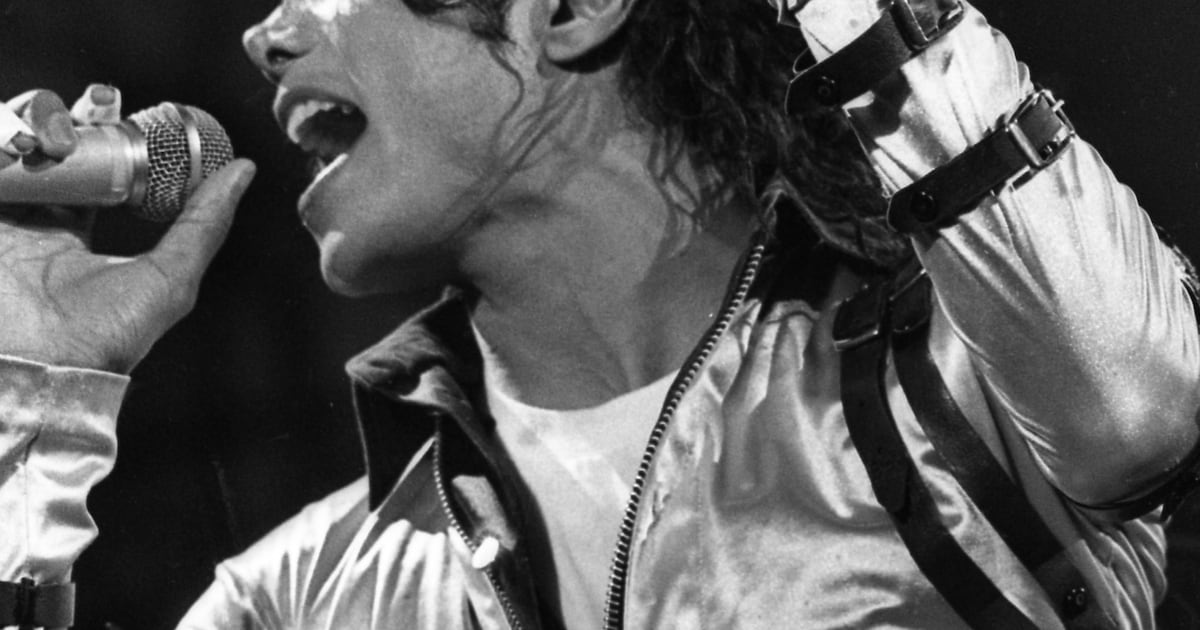
Michael Jackson looked every bit a pop god among mortals when he materialised on stage at Páirc Uí Chaoimh on a balmy Cork evening in the summer of 1988.
He was slight to the point of seeming underweight, with a tangle of curls that had aspirations towards mullethood and a silver jacket apparently stitched together from tinfoil. But there was no mistaking his aura, a dazzling, almost feral charisma too ferocious for the tumbledown concrete bowl to fully contain.
Jackson arrived in a puff of smoke and plunged into Wanna Be Startin’ Somethin’. As with many of his best songs, the track is fuelled by raw fury. If apparently meek and mouselike offstage, Jackson sounded like the angriest man in the world when he sang. In Cork he was here to entertain. But there were also demons to be vented as he negotiated a hit parade that grew in intensity as he ripped through Beat It, Billie Jean and Bad, each more furious than the last.
There are times in everyone’s life when you look back and wonder if a precious memory was real or a dream. For me it was the first of Jackson’s two performances in Cork. It’s incredible to recall how singular a star he was in the late 1980s. There was MJ and there was everyone else – a phenomenon modern audiences will be brought up to speed on with the release today of Michael, the Jackson estate’s sanitised new biopic about the singer.
All of us in Cork knew we were observing history unfold right in front of us: by that night of July 30th, 1988, we were well aware that Jackson was one of those rare stars who are bigger than their music and maybe even bigger than pop itself. Seeing Jackson live was like watching The Beatles in the 1960s or Elvis Presley in the 1950s. The moment he stepped out of that swirl of smoke you were witnessing something life-changing.
In my case there was the added relief at having made it at all. Because this was the 1980s, and nobody had any money, our household budget had stretched to three seats – for a family of six. This was back in the wild west of the GAA, when kids were allowed in for free, as was anybody else if the crowd kicked down the gates and streamed in, which seemed to happen all the time at Croke Park.
So my parents had bought three tickets, reasoning that this would be enough to secure admission for two adults and four kids. If it was good enough for a Munster final, then why not Jacko down the Páirc?
All was going well until it was the turn of my father and my younger sister, at which point the man on the gate had enough and told him he should have bought the extra ticket. Four tickets for a family of six? That was fair. Three? That was taking it too far.
Old enough to be embarrassed by my parents, I watched the unfolding drama in silent mortification. Not that this made any difference to my indignant father, who told the jobsworth to stop wasting everyone’s time and pushed on.
And that was that: a peak 1980s-parenting moment that would not be matched until I found myself in the back of a car reversing down the motorway after we’d missed a turn-off en route to an All-Ireland final.
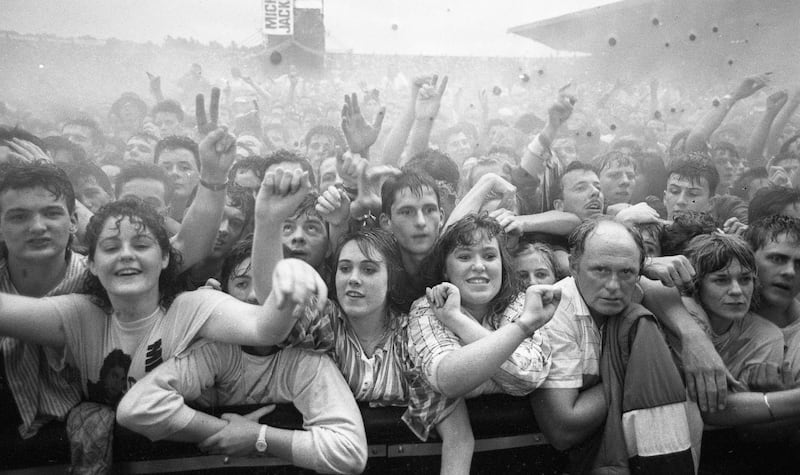 Páirc Uí Chaoimh: Michael Jackson fans at the Cork stadium in July 1988. Photograph: INM/NLI/Getty
This was my first concert, and it might as well have been my last – that’s how breathtaking it was. Rock with You, Smooth Criminal, Thriller: of the 18 tunes Jackson ripped through, at least half a dozen are among the most perfect pop songs ever. Even the filler was fantastic: two tracks in, he was crate-digging for Heartbreak Hotel, aka This Place Hotel, a funk thunderclap from his days with The Jacksons, his family troupe.
What we didn’t know, of course, is that there were two Michael Jacksons: the public megastar and the private … well, what was he in private? Back at Jurys Hotel on the Western Road, where Jackson was staying while in town, journalists covering the visit had an inkling of something darker. Jackson had flown into Cork with 10-year-old James Safechuck, a child actor he had met while shooting the Pepsi commercial in which the singer suffered serious burns.
Safechuck’s presence was no secret. A headline in the Mirror proclaimed him “the luckiest boy in the world”. The Sun told us that “Jimmy Safechuck is an ordinary Californian schoolboy who just happens to be sharing the stage, the limo … and the run of Hamleys toy shop after hours with Michael Jackson … The lucky lad was invited on a world tour as Jacko’s personal guest and has rarely left his side since.”
He did leave Jackson’s side when the singer was on stage at Páirc Uí Chaoimh. As Jackson was ripping through the hits, Safechuck was closeted in his hotel room, the windows blanked out with curtains. This sat strangely with reporters – including Sam Smyth and Eamon Dunphy – who were mooching about for titbits, so much so that they asked one of the staff to slip him a note.
It read: “Dear Little Jimmy Safechuck, we are in the residents’ lounge … and if you are being held against your will or if you need rescuing contact us.”
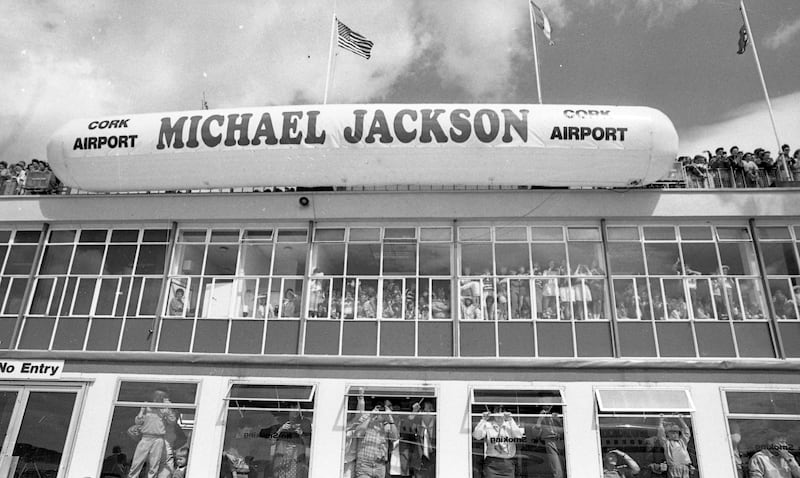 Michael Jackson visit: fans greet the singer at Cork airport in 1988. Photograph: Tom Burke/INM/NLI/Getty
Smyth would later recall the experience as profoundly unsettling. “I remember thinking at the time … it’s very odd for a man in his 30th year to have his very best friend as this boy called Little Jimmy Safechuck, who was 10. The whole thing was odd and deeply suspicious. Certainly not anything that I would ever want for anyone belonging to me.”
There was no response from Safechuck, though it would later become clear that he indeed needed rescuing. In the devastating 2019 documentary Leaving Neverland the now-grown-up Safechuck recalled how Jackson had groomed and abused him. “I f**ked up. I failed to protect him,” his mother says of her son’s “friendship” with Jackson, whom she described as a paedophile.
[ From the archive: Michael Jackson – The boys, the king, the shouting matchOpens in new window ]
Those claims have always been denied by the singer’s estate – the star was never convicted of child molestation, and the Jackson family maintain his innocence – and they are hand-waved away in Michael, which focuses on his rise to greatness, culminating in the Bad tour I was at with my family.
Jackson would never perform again in Cork, although he did return to the city in 2006 to attend a Bob Dylan concert at the Live at the Marquee venue. By that point Jackson was in free fall, his career overshadowed by abuse allegations, his finances a smoking crater after years of profligate spending.
He would soon make Ireland a refuge, settling down at the Grouse Lodge studio complex in Co Westmeath, having arrived in the country from Bahrain. He appeared to have a genuine love for Ireland, though he could never quite give up being Michael Jackson; in the recent BBC documentary Michael Jackson: An American Tragedy, his cosmetic surgeon in Ireland, Dr Patrick Treacy, recalled Jackson stuffing his coat with expensive treatments, then laughing it off when asked to empty his pockets.
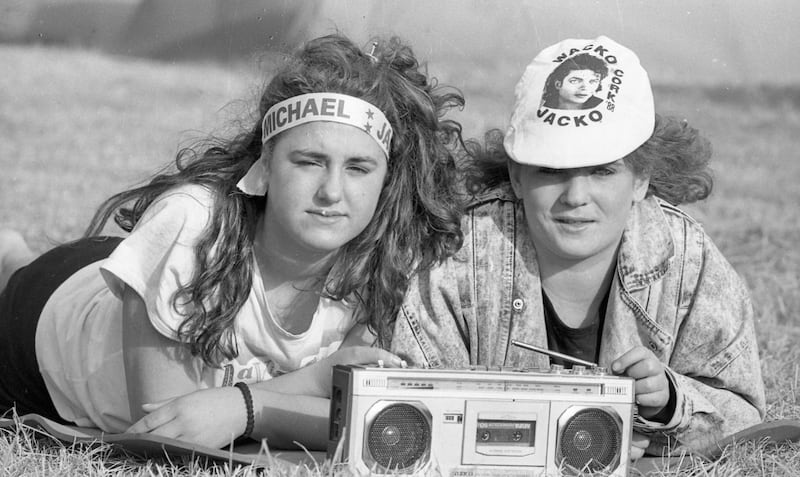 Páirc Uí Chaoimh: Michael Jackson fans in Cork in July 1988. Photograph: INM/NLI/Getty
Cork in 1988 was a city still recovering from more than a decade of economic devastation. To have someone such as Jackson walk among us seemed more than miraculous: it was like a mirage. Years later I would learn that he was human after all, and was deeply scarred from a lifetime of fame. He may even have been a predator.
There was no darkness on that bright summer evening in Cork – at least none we could see. But by that point the demons already had their claws in Jackson and were dragging him under.
Michael is in cinemas from Wednesday, April 22nd