
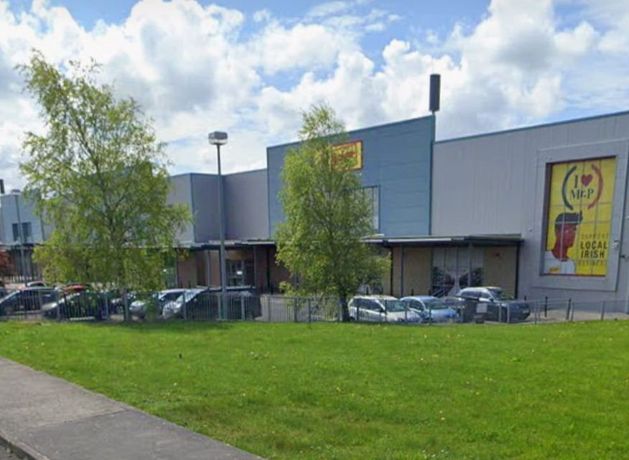
Corajio, trading as Mr Price, has been embroiled in a long-running planning dispute with Tipperary County Council and An Coimisiún Pleanála about their store in the Tipperary Town Retail Park, with the future of more than 20 jobs there at stake.
In their latest bid to regularise their planning position, the company applied for retention planning permission to keep units one and two amalgamated, as well as seeking permission to amalgamate unit three, to create a larger store, allowing the company to sell more bulky goods, such as furniture and DIY materials.
The company was also seeking permission to amalgamate units seven and eight in an attempt to attract another business to the park, which has been mostly empty since its construction nearly 20 years ago.
A retail planning statement, submitted to the council, says that Mr Price would be willing to amend the types of goods they sell in their Tipperary town store to comply with planning regulations.
Mr Price has now received a split decision on its latest planning application, with permission granted for some elements of the development but refused for others.
In their decision letter, the council planner said that the units in the retail park were zoned to sell bulky goods such as carpets, furniture and electrical items, and as such, a convenience store or supermarket was not permitted at the location.
However, despite this, planners said that the planning request to amalgamate units one and two with unit three, and units seven and eight to create two larger warehouse units was acceptable in principle.
“The principle of the amalgamation of the subject units is considered to be acceptable,” planners said.
“The development description is unusual in that it also seeks permission for the use of the units for retail warehousing. This is unnecessary noting that the use of the units is clearly restricted to retail warehousing,” they added.
Planning permission was granted for this element of the development, with conditions placed on the types of goods that can be sold from the premises.
“The use of the amalgamated units shall be restricted to retail warehousing for the sale of bulky household goods including carpets, furniture and electrical goods and bulky DIY items,” planners stipulated on granting permission for retention.
Planners also stipulated that the end user for the unit be agreed, in writing, with the planning authority before being occupied.
However, the planner added that they had “serious concerns” about the type of goods that would be sold at the store.
A retail planning statement, submitted to the council, said that Mr Price would be willing to amend the types of goods they sell in their Tipperary town store to comply with planning regulations.
“No traditional convenience retailing will occur on-site i.e. the store will contain no confectionery, no food, no non-durable cleaning products etc.,” the statement said.
This retail statement, however, did not allay the fears of planners, who said that despite the assertion of Mr Price, concerns remained about the types of goods that would be sold at the outlet.
“I consider that there is a lack of clarity with respect to the nature of the proposed use by the applicant and the information contained in the retail planning statement,” planners said.
“I am not satisfied, noting the items to be sold in the unit as listed by the applicant, that the intended use falls within the definition of bulky goods.
“Owing to the lack of clarity in the intended use by the applicant and the manner in which the products to be sold diverge from those referred to under the retail planning guidelines, I consider that permission for the use of the units as referred to by the applicant should be refused,” they added.
Planners added that if permission was granted for use as Mr Price applied for, it would “not be in accordance with the proper planning” guidelines, and would “set an undesirable precedent” for similar development.
Funded by the Local Democracy Reporting Scheme