
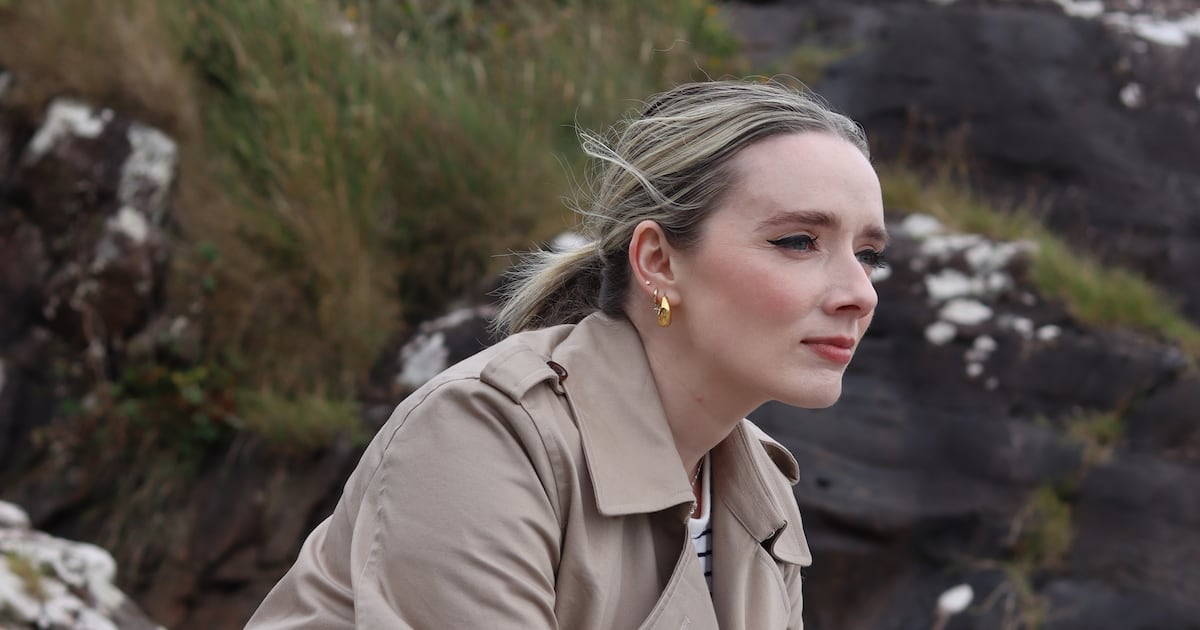
As I prepare to leave Australia – the country I never thought I wanted to live in and can think of countless reasons never to leave, I feel grateful to have been made in Ireland, but partially remade here. This place will do that to you. Australia taught me that sunlight really does make it easier to be optimistic.
I learned a healthier, less embarrassed relationship with my body here, and lost my fear of gyms and the people who linger in them. I learned to sit down – something Irish people are terrible at and Irish women especially, despite telling each other to do it constantly.
To feel easy during unproductive times – to absorb all the good that can do you because leisure itself has value – makes life more pleasant. I hope I can carry it away with me, but it’s certainly easier when people around you reinforce the value of these things. When people sit down.
It’s a job that has me leaving to return to London, where the quality of life and the weather are bad, and unproductive time is ostensibly illegal. Whether moving around so much for jobs is a symptom of the modern working life or a particular sort of privilege is hard to say. It may be both.
Emigration once meant making one move that left your home behind, to build another life in another place over decades. Increasingly, it may mean living in different places, pursuing different lives. Permanence is hard to come by now – in work, and in other key elements of life.
Australia is not a place you leave if you can help it. For more than two years now, I have written about this beautiful country, my appreciation tinged with guilt. So many Irish people idolise Australian life and culture. There are significant cultural similarities, but that doesn’t entirely explain the grip Australia has on the Irish imagination.
The country has long been a symbol for us – it once represented exile and the frightening unknown, and then opportunity. Now it represents escape for many people. Escape into another version of yourself. I didn’t plan to move here, and I didn’t plan to leave either. Yet many Irish emigrants will recognise the dilemma once you’ve got settled – do you stay (if you can), or do you go?
It’s difficult even to visit Australia without absorbing its leisurely spirit. People here are not in a rush, and they’re not sorry about it. They’re not aggressive about it either. The pace of life here is deliberative and relaxed. This is a very easy place in which to live, and that is a deeply attractive prospect when life at home can feel anything but. Yet, the people you’ve left at home change too. The children get longer. The older people get frailer. Friends feel less close. The clock ticks on the question.
As an outsider, I can simply appreciate Australia without absorbing its issues in a way that isn’t possible with your own culture and country
I was never one of the Irish people making “get to Australia” five-year plans and dreaming of Bondi. Australia always struck me as the sort of place that other people moved to. People whose hair lightens by itself under summer sun. People who aren’t deathly afraid of the ocean and the fanged monsters that dwell in it. People who don’t wear SPF50 in Dublin in January, lamenting as a downpour sends their sun protection streaming in rivulets into the gutter.
I seized an Australian life when my husband was offered a job here. It was a true adventure – a road suddenly forked ahead, and life doesn’t offer you many of those. They’re for seizing upon if you can. I stayed connected to home by writing about it, sharing the discoveries and the differences I found as someone who really had no business being in Australia, but happened to be here anyway. I’ve since met Irish people here whose mammies send them this column (especially the ones about how many people are attacked here by swooping magpies).
At home, emigration sensitivity abounds. I’ve received emails from some readers who feel I’m too soft on Australia and too hard on Ireland, but then, Australia has been soft on me. While Australians are as worried about a cost-of-living crisis as people in Europe are, this country’s distance from the rest of the western world may be its weakness.
Australians do not understand how good quality of life is in Australia compared to other countries. They might reasonably be accused of some complacency about their culture and way of life. Australian society is high trust – not everywhere and not all the time, but in general. The first time I went to my local gym, I could not comprehend that nobody ever puts a lock on their locker. You just put your wallet and keys and whatever else in a public space near the front door and come back an hour later to find them still there. This is a precious, rare thing. I’m not sure Australians recognise how precious.
It’s been a joy to write about Australia from the perspective of someone who arrived here, baffled and ignorant, and just had to do her best to figure it out. As an outsider, I can simply appreciate Australia without absorbing its issues in a way that isn’t possible with your own culture and country. In Australia, I am a guest – I observe the rules and the politics with interest, but I don’t participate in conversations about what this country should look like. That is for Australians to decide.
Ireland is different. It is my home, my culture. Emigrant or not, we are invested in places we belong to. The people we leave behind. So for now, I go. But Australia changes you. I suspect anyone who leaves does so with “I hope I come back” written inside them somewhere. I do.