
 4 min read
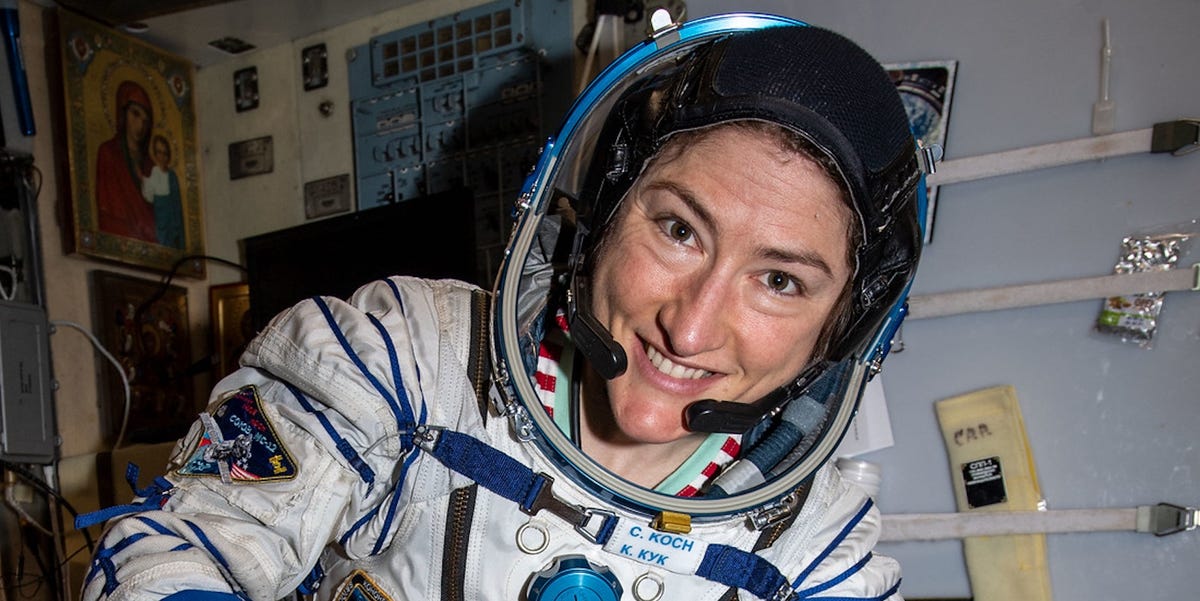
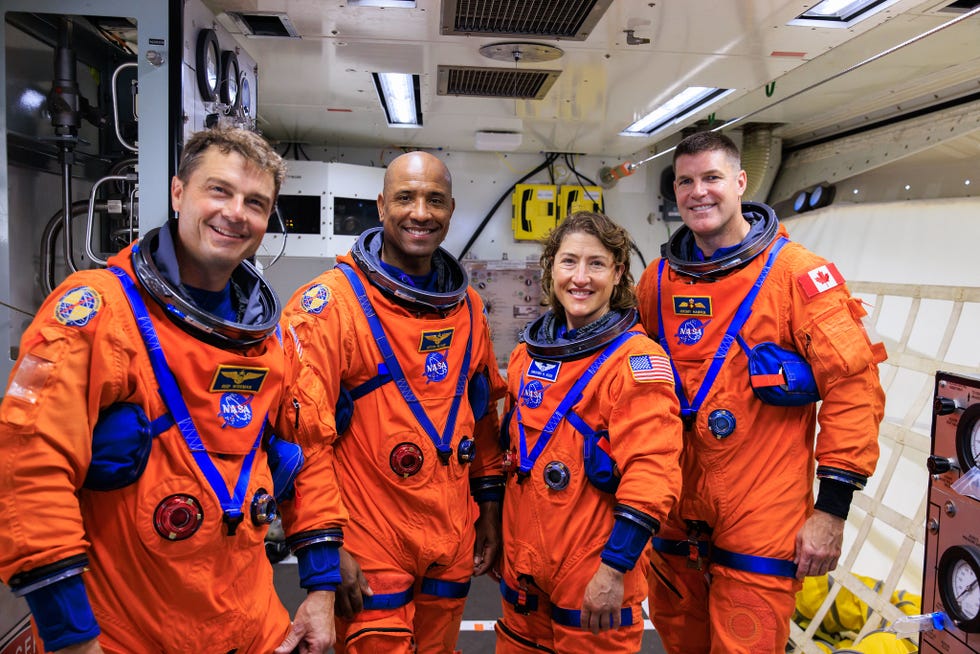
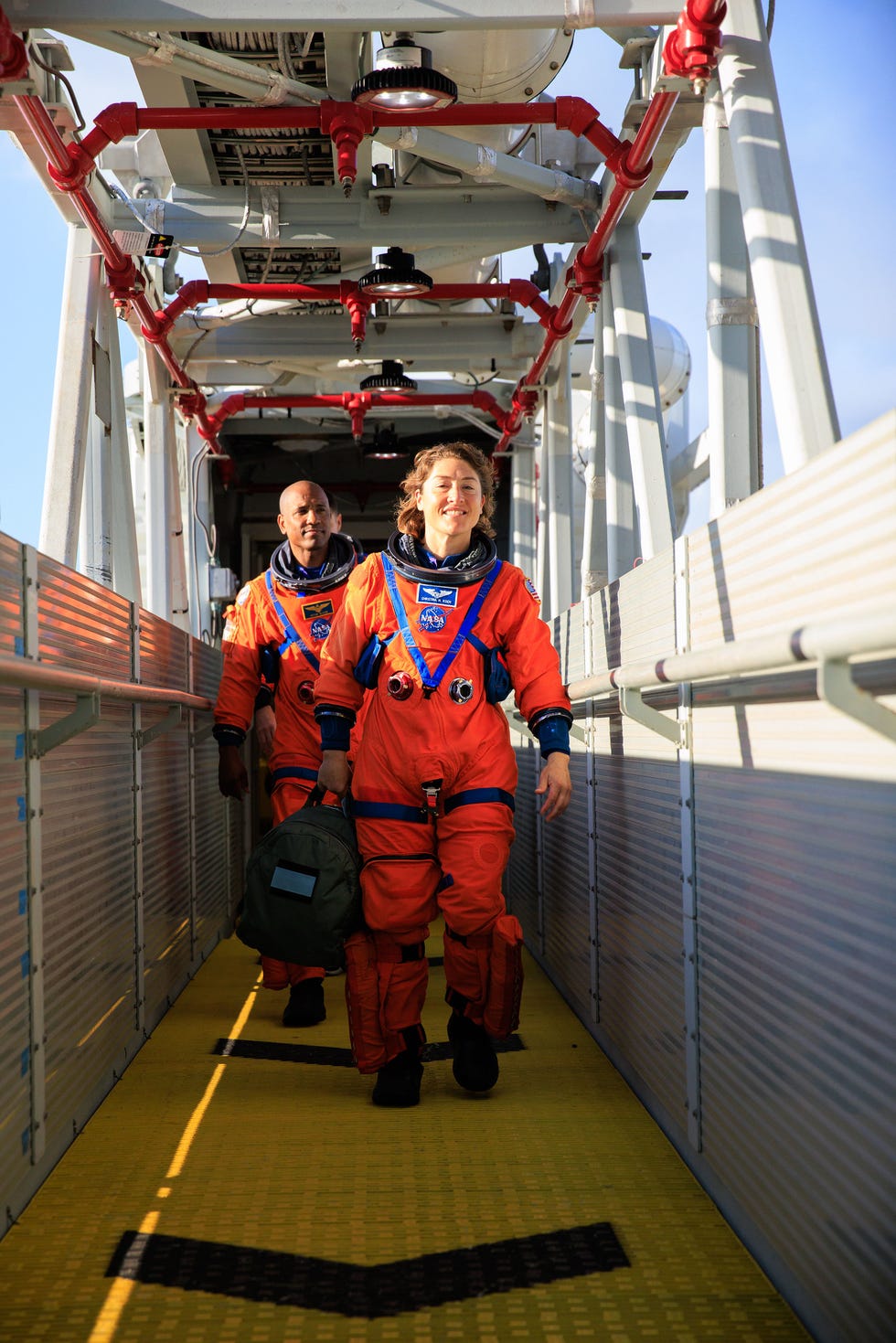
On the evening of April 10, four NASA astronauts splashed down in the Pacific Ocean off the coast of San Diego, California, sending ripples of hope through the world, having just accomplished the unimaginable. Christina Hammock Koch, Reid Wiseman, Victor Glover, and Jeremy Hansen had successfully completed their Artemis II mission, becoming the first crewed flight to the Moon since 1972, and the first humans to ever see the backside of it, furthest from Earth. Their journey took 10 days—but they had been training for it for years.
A couple of days after landing, Koch was still fully living with the zero-gravity wobbles as she became accustomed to touching the ground again—and yet, she found some time to sit down for a chat with Harper’s Bazaar.
Courtesy of NASA
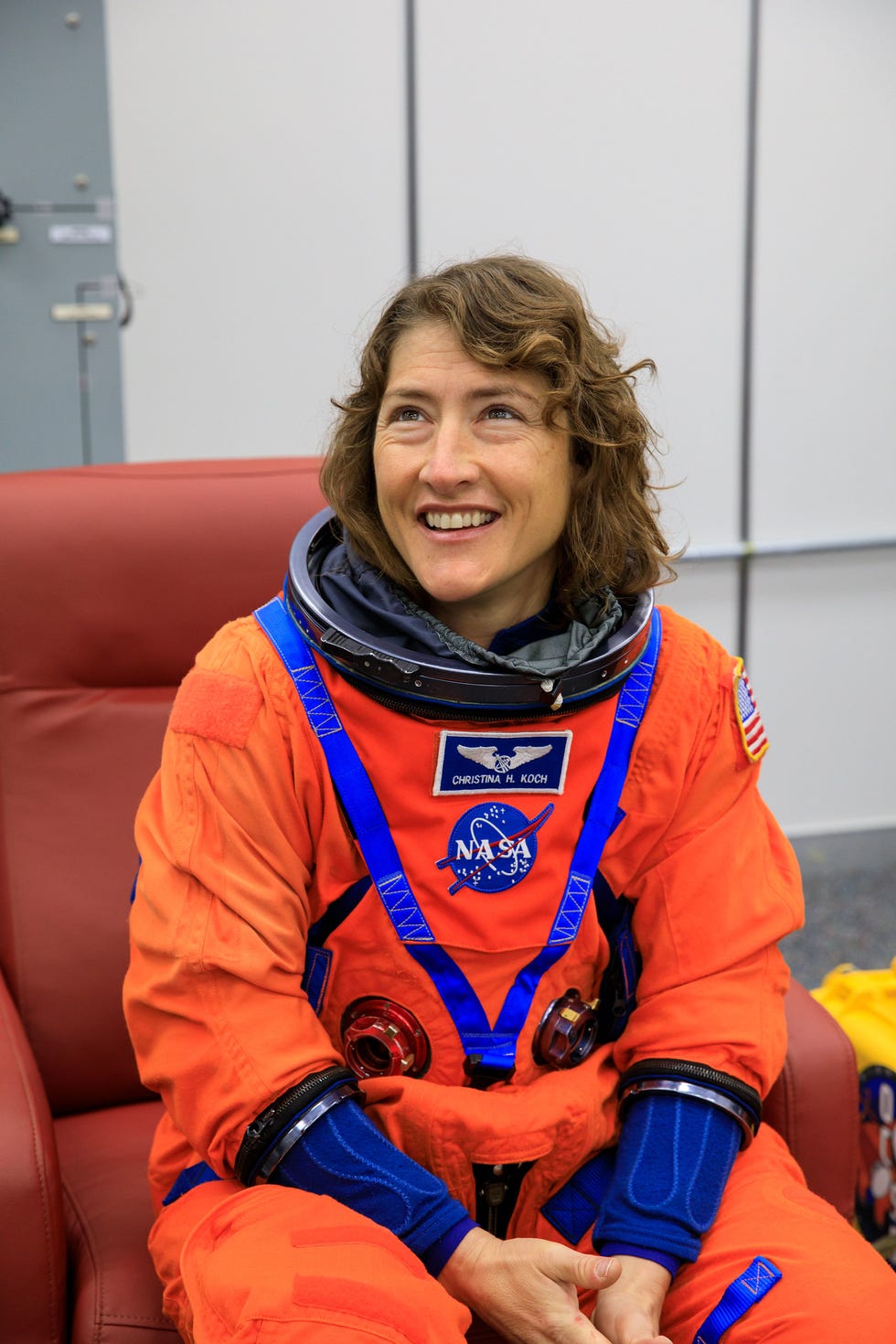
Koch herself broke records with the trip, becoming the first woman to travel to the Moon and see the full sphere of Earth from deep space. It wasn’t exactly a breeze, but she was quite prepared, having previously been part of the first all-female spacewalk, and having completed the longest single spaceflight by a woman ever (she spent 328 consecutive days in space during her first mission from 2019 to 2020). For the Artemis II mission, she may have been the only female astronaut to join the voyage, but there were dozens more women in the NASA control room and behind the scenes. As an outsider, and a woman, it was a sight to see, and for Koch, well, “it is awesome,” she candidly said.
Courtesy of NASA
“When I was on the space station, I had some people who I would work with to sort of process and put words to what it was like to do things like the first all-female spacewalk, and one of the things we came up with is: Isn’t it incredible to do things as the first women in this industry? And how much more incredible is it to have teams of women doing these things?” she told Bazaar. “But we’ve been seeing it for a long time here. Anywhere where accomplishing the mission is the foremost importance, you see women accepting that challenge and meeting it.”
During our tightly timed seven-minute talk, Koch and I talked, yes, about her life-altering journey, but also about her space skincare routine and the truth behind zero-gravity sleep. All questions evidently equally important.
Courtesy of NASA
“It’s funny, because when we got up there, we found out that the humidity was very, very low, and so we all thought that our skin would really dry out, but it didn’t seem to, as much as I would’ve expected,” she noted. Still, she did moisturize: “We had some lotion up there.” (Federal employees are not allowed to promote specific brands, so sadly, we may never know the exact cream that kept our astronauts dewy amongst the stars.)
But the absolute best product in her space bag? A packet of cleansing wipes. “I would say the one thing that was killer that I had—that the guys didn’t have, so I ended up sharing until my last one—was these pure aloe wipes to start the day out and refresh your face.” (Wiseman, Glover, and Hansen may be some of the sharpest, bravest, most experienced astronauts in the world, but it seems they’re still men who forgot to pack toiletries.)
“And it became basically a sign of a new morning that I would hand out these wipes to the guys, and we all loved them,” Koch added. She’s just a girl!
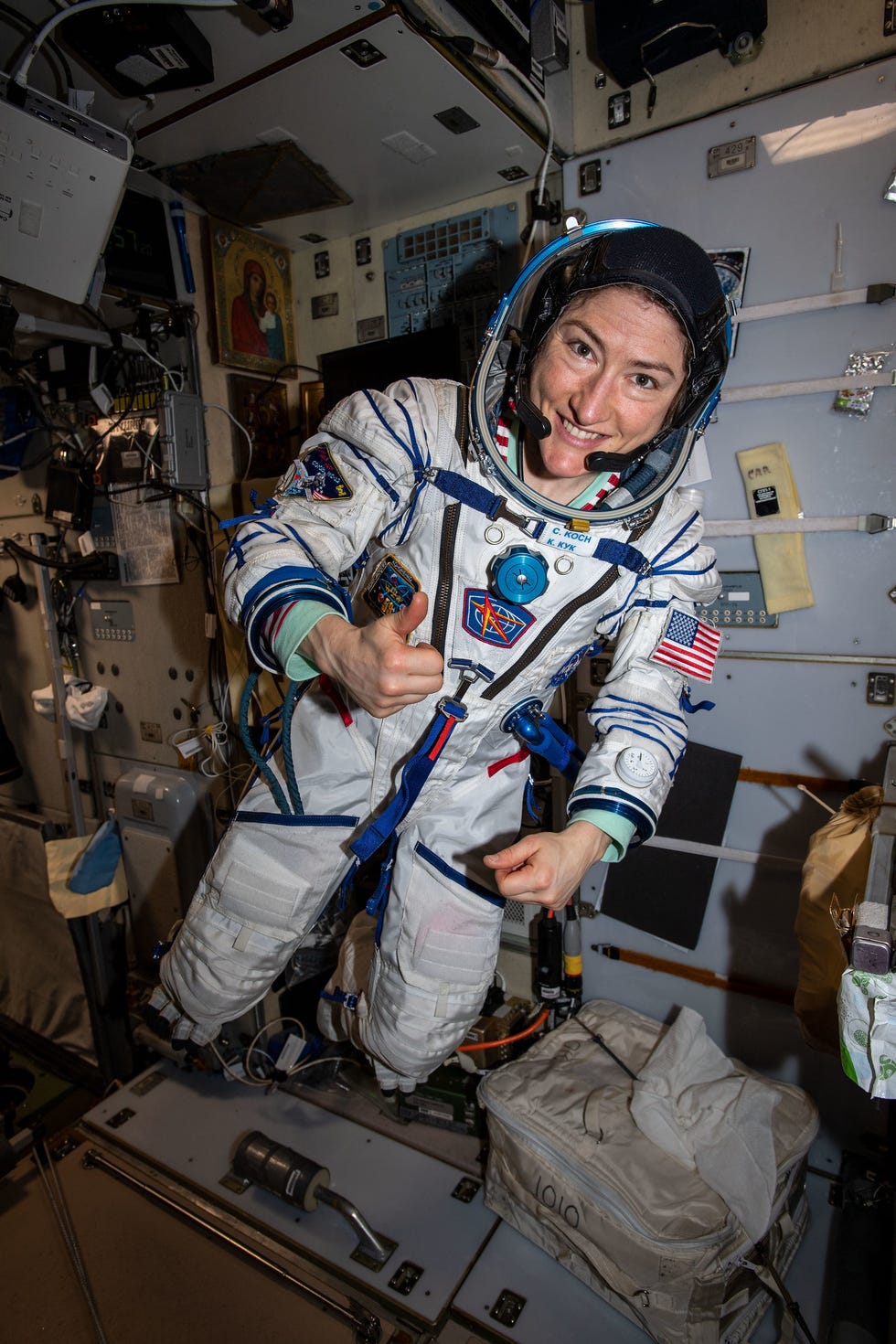
courtesy of NASA
Koch explained that because of the whole no-gravity thing, astronauts can’t splash water on their faces to welcome the morning like they’re used to, so they have to get creative with their routines. The same goes for their use of sun protection—after all, they’re right there. As space’s atmosphere doesn’t filter out any UVA or UVB when astronauts are exposed to the sun, “it is extremely bright and extremely high in UV,” Koch said. She added that up in space, “You don’t actually have sun on your skin very often,” but during long-duration missions, it is essential that they carry plenty of sunscreen—and some cool sunglasses to shield their corneas.
In truth, Koch noted, the everyday space routine is “not glamorous,” rather often inconvenient and “mundane.” But it is “so special” and absolutely worth it. “We could do this all cleanly and with only robotics and technology, but we choose to take the challenge of keeping four humans alive, happy and having—like we discussed—their hygiene routine, not because it’s the easier way, but because it’s important to have human eyes, ears, and hearts in space.”
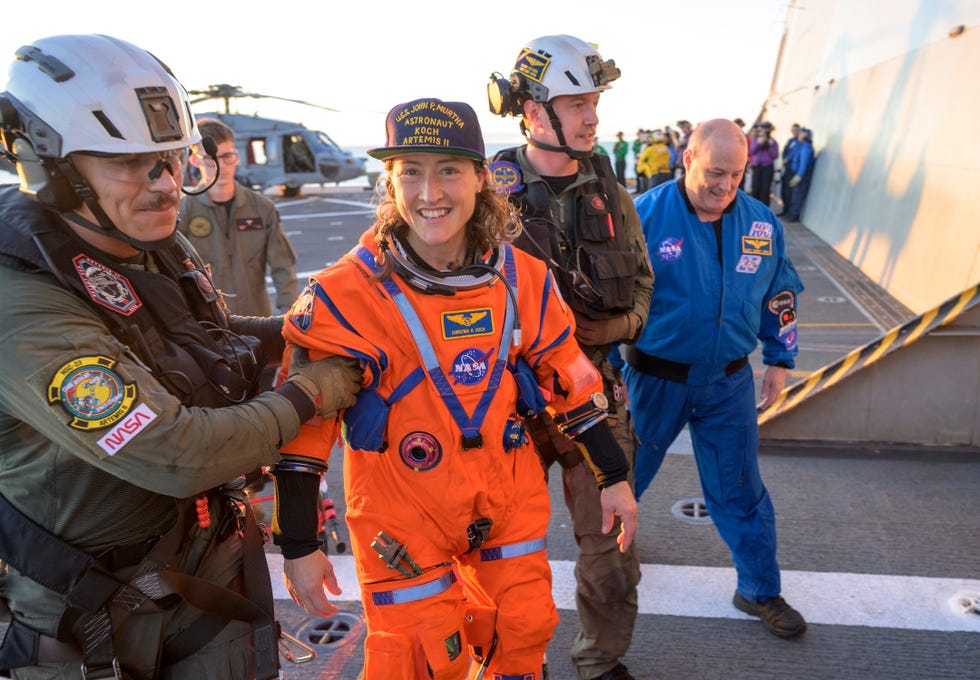
NASA/Bill Ingalls
The one part of her routine that is far better in space than on Earth? Sleep. “If you can imagine sleeping and never needing to roll over, never being stiff, never getting too warm in one area, never having to flip your pillow over to the cool side, it’s like that,” Koch said, dreamy-eyed. “I just feel like the whole time, by definition, your body goes into the exact position it wants to be in without any effort whatsoever, and it is just so peaceful and so wonderful. I would take it a million times over.”
Who needs melatonin when you have deep space?