
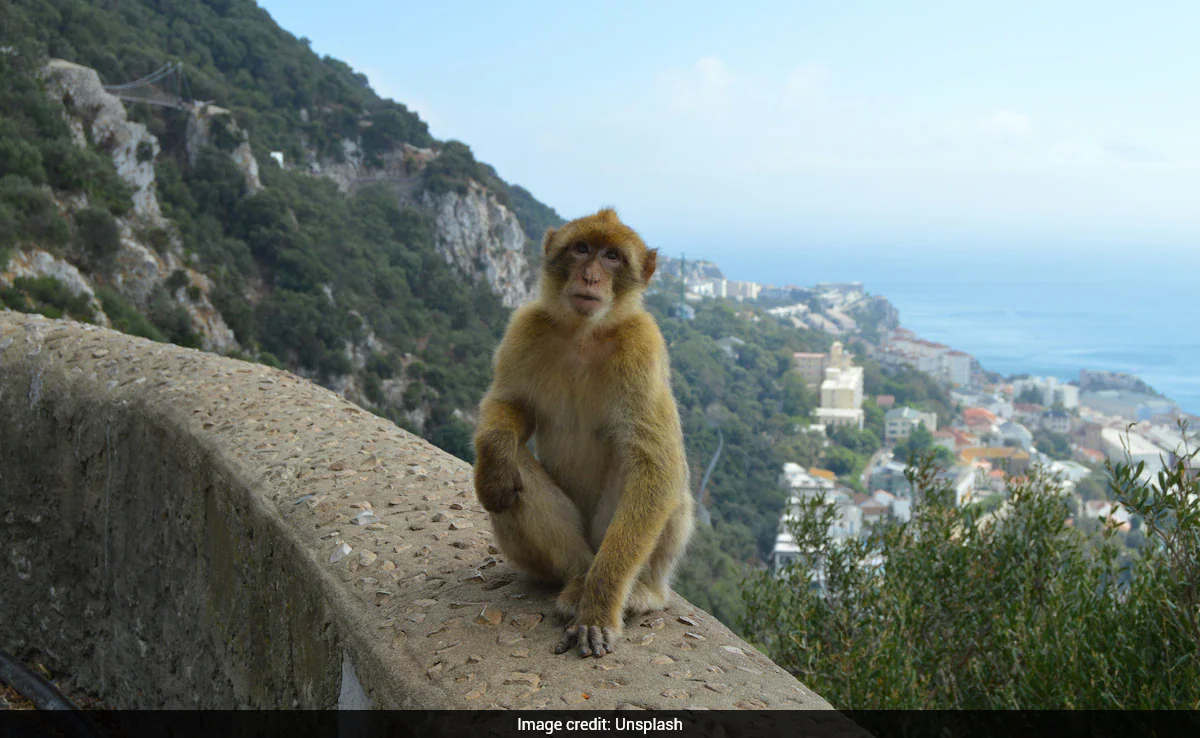
The Barbary macaques of Gibraltar have developed an unusual habit to deal with the junk food that tourists feed them. To settle their stomach, they eat dirt. Scientists say that these wild monkeys of Europe are self-medicating with soil and clay to calm upset stomachs caused by ultra-processed food, including M&Ms, Cornettos and Haribo sweets.
A new study published in Scientific Reports, led by University of Cambridge biological anthropologist Sylvain Lemoine, is based on observations between summer 2022 and spring 2024. It found that junk food now makes up nearly a fifth of the Gibraltar macaques’ diet, despite daily provisioning of fruit and vegetables by the government.
Also read | Chinese Woman Goes Viral After Winning 7-Day Paid “Rain Leave”, Internet Reacts
The expert said that the foods brought by tourists and eaten by Gibraltar’s macaques are extremely rich in calories, sugar, salt and dairy, which is entirely different from the food these species eat, such as herbs, leaves and seeds.
“We postulate that junk food may be hard to digest and cause microbiome disruptions, which can be buffered with the soil, but this remains to be tested,” Lemoine said as quoted by IFLScience.
“We have not conducted chemical and mineralogical analyses of soil, so we don’t know yet what could be the properties and thus what effects on the digestive tract.”
“However, the main type of soil consumed – red soil, terra rossa – is known to be high in clay and iron. Clay is known to buffer stomach pH and to bind to toxins, so it may have a similar effect.”
Also read | Foreigner Travelling Solo In India “Genuinely Shocked” By 5 Things
The monkeys are skilled at snatching them, and also, the tourists crowding for selfies at the Ape’s Den often lose snacks to quick hands. Several reports state that some guides still hand-feed despite a fine for deliberately feeding the macaques.
Across more than 612 hours of observation at nine sites, Lemoine’s team documented 46 separate instances of geophagy, which means ingesting soil deliberately among at least 44 individual monkeys out of around 230 macaques.
While geophagy occurs in many primates, the Gibraltar troop’s rate of soil-eating appears higher than that of other populations and is directly linked to their anthropogenic diet.
“Gibraltar’s macaques are deeply entwined with human history, offering a striking example of a human-primate interface,” added Lemoine as per the press release. “The range of human interaction across Gibraltar’s macaque groups create a natural experiment for understanding how anthropogenic landscapes affect primate behaviour and culture.”