
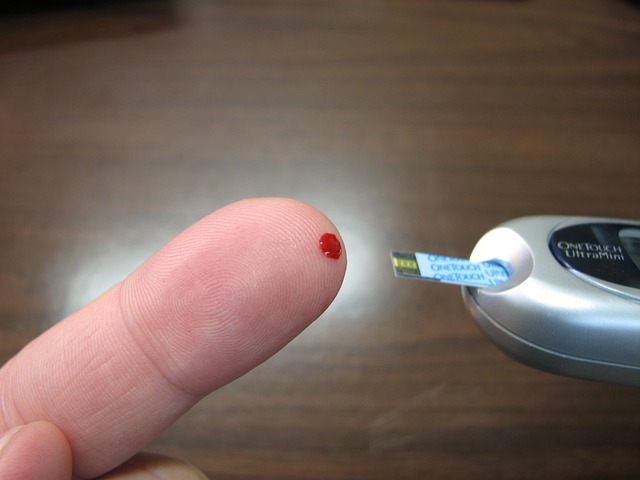
Blood is now being taken in pharmacy aisles. This is not a grey area — it is an enforcement failure.
The Federation of Private Medical Practitioners’ Associations Malaysia (FPMPAM) is alarmed by ongoing reports, and now clear video evidence, of blood being drawn within retail pharmacy premises.
That this has continued despite public concerns reflects a clear breakdown of clinical governance.
The Pathology Laboratory Act 2007 (Act 674) was enacted to regulate laboratory services, but was never operationalised.
FPMPAM has long warned that failure to implement proper regulation would eventually lead to uncontrolled expansion of diagnostic practices beyond safe boundaries. We are now seeing exactly that.
We have seen the consequences before. During the Covid-19 pandemic, gaps in regulation led to questionable practices such as PCR pooling, commercialisation of testing beyond appropriate medical oversight, and involvement of non-medical entities in clinical decision pathways.
Those lessons were clear. When regulation is weak, standards fall, and commercial interests fill the vacuum.
Now it has crossed into retail spaces. What is being observed today is even more concerning: blood being drawn within retail pharmacy premises, including in narrow aisles and procedures conducted in environments never designed or licensed for clinical care.
There’s no visible framework for medical oversight, accountability, or complication management within these settings. This is not a grey area anymore. The issue is not only who performs the procedure, but where and under what governance it is performed.
We need to be clear on the law. The absence of operational regulations under Act 674 does not create a legal vacuum for clinical procedures. The Private Healthcare Facilities and Services Act 1998 remains in force.
Place Of Practice Is Not Optional
Under the Private Healthcare Facilities and Services Act 1998, medical services — including blood taking (phlebotomy) — are regulated not only by who performs them, but where they are performed.
Such procedures must be conducted within a duly licensed or registered health care facility, such as a clinic, hospital, or approved medical laboratory.
A medical practitioner cannot simply perform procedures at any location based on convenience or commercial arrangement.
The setting of care is part of the standard of care.
Even in permitted circumstances such as home visits, these are conducted under the authority of a licensed facility, properly documented and clinically justified, and considered an extension of regulated care, not independent practice.
Retail pharmacy premises are not licensed health care facilities for the purpose of performing invasive medical procedures.
Therefore, the conduct of routine blood withdrawal in such settings raises serious concerns regarding regulatory compliance, patient safety, and quality assurance, and warrants review by the relevant authorities.
Any invasive procedure is a health care service, and must be conducted within properly registered or licensed premises. Anything less is a compromise of patient safety.
Professional Boundaries And Clinical Governance
Pharmacists are vital to patient care, and medical practitioners play a central role in diagnosis and management.
However, embedding clinical procedures within retail environments, without clear facility registration, licensing, governance, and accountability, risks blurring critical professional and regulatory boundaries.
If this continues unchecked, we risk misdiagnosis and inappropriate follow-up, patient harm without clear accountability, and a fragmented system where no one is ultimately responsible.
A Caution For Medical Practitioners
FPMPAM also wishes to caution medical practitioners who may be engaged to provide such services within retail premises.
Participation in clinical procedures outside properly registered or licensed health care facilities may expose practitioners to significant medico-legal and regulatory risk.
Medical practitioners remain accountable for the setting in which care is delivered, patient safety and complication management, and compliance with applicable laws and professional standards.
Convenience or commercial arrangement does not absolve a practitioner of professional and legal responsibility.
Doctors are urged to exercise due diligence and ensure that any clinical service they provide is conducted within appropriately registered, licensed, regulated, and clinically governed environments.
The Real Question: Where Is The Enforcement?
Health care facilities are subjected to licensing under strict conditions, inspections and compliance requirements, and legal accountability for every clinical act.
Yet we now see similar procedures occurring in retail environments without visible enforcement. This is not just a safety issue, but a failure of regulatory consistency.
FPMPAM’s Position
FPMPAM will not accept the normalisation of unsafe practices under the guise of accessibility or convenience.
We call on the Ministry of Health (MOH) to act immediately to stop unregulated invasive procedures in retail premises, clarify, and enforce the legal boundaries of clinical practice, address the long-standing regulatory vacuum in diagnostic services, and ensure that standards apply equally across all sectors, without exception.
Malaysia is at a crossroads. We can either uphold clinical standards, or allow them to be eroded, one “service” at a time. Health care cannot be allowed to drift into a retail free-for-all.
The longer this is allowed to continue, the clearer it becomes that the issue is no longer ambiguity, but enforcement.
This statement was issued by FPMPAM president Dr Shanmuganathan Ganeson.
This is the personal opinion of the writer or publication and does not necessarily represent the views of CodeBlue.