
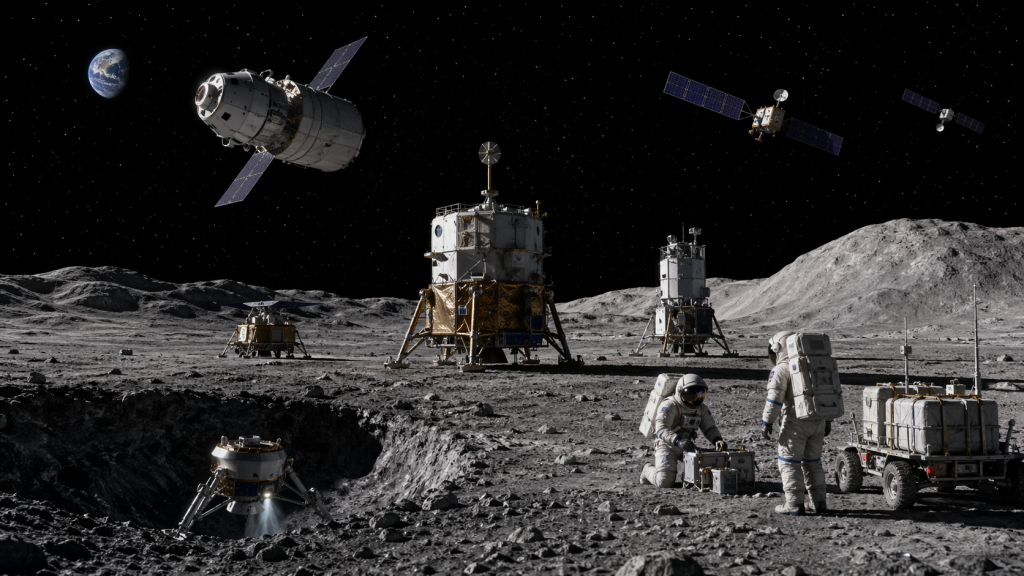
NASA’s Artemis II flyby has brought us back into the lunar environment for the first time in more than half a century. But in many ways, it is only the opening chapter of a much larger story. The real “Moon rush” is still ahead. Over the next few years, new crewed missions are set to turn the Moon into a working outpost with infrastructure, supplies, and eventually a lasting human presence. In this article, we discover seven exciting missions that will shape this next phase of lunar exploration.
From Artemis II to a Lunar Decade
So, Artemis II showed that NASA’s Orion spacecraft, the Space Launch System (SLS), and ground systems can safely send astronauts around the Moon. It also proved they can bring the crew home safely. But the missions that follow are fundamentally different in ambition. Instead of just proving that we can go there and come back, the next phase is staying, building, and using the Moon.
That shift is already visible in the global landscape. NASA, China, and commercial companies are all converging on the same regions of interest: the lunar south pole and the far side. Why such a choice? The matter is south pole may contain water ice trapped in permanently shadowed craters. And the far side offers a radio-quiet environment ideal for studying the early Universe. These regions could become the most valuable and scientifically important parts of the Moon. Who will make the most of these opportunities first? Only time will tell.
Chang’e 7: Chasing Ice in Eternal Shadow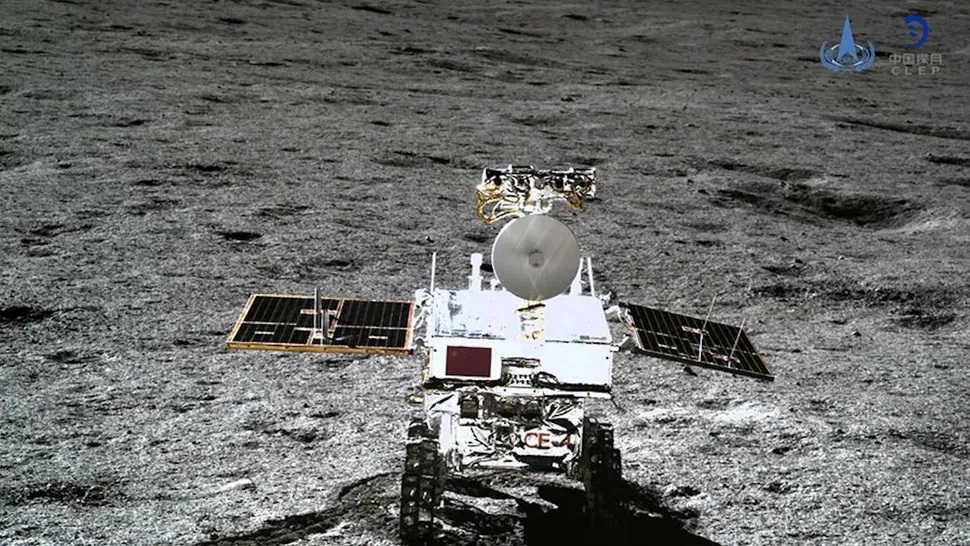 Credit: CNSA
One of the most ambitious upcoming robotic missions is China’s Chang’e 7. It is scheduled for launch in the second half of 2026. Unlike earlier lunar missions that focused on general mapping or surface sampling, Chang’e 7 is sharply targeted. It is going straight for the South Pole, specifically the Shackleton Crater region.
The mission includes an orbiter, a lander, a rover, and a small flying probe. The key innovation is a mini “hopper,” designed to make short flights into permanently shadowed craters where sunlight never reaches.
But why go into darkness? Because that is where water ice may be preserved. The hopper will essentially “sniff” the environment inside these craters, analysing gases and particles to detect volatile compounds. If Chang’e 7 confirms accessible ice deposits, it would be a major milestone. It would turn long-standing orbital hints into ground truth, and help define where future astronauts might extract water for drinking, oxygen production, and even rocket fuel.
Blue Moon Mark 1: Testing the Cargo Pipeline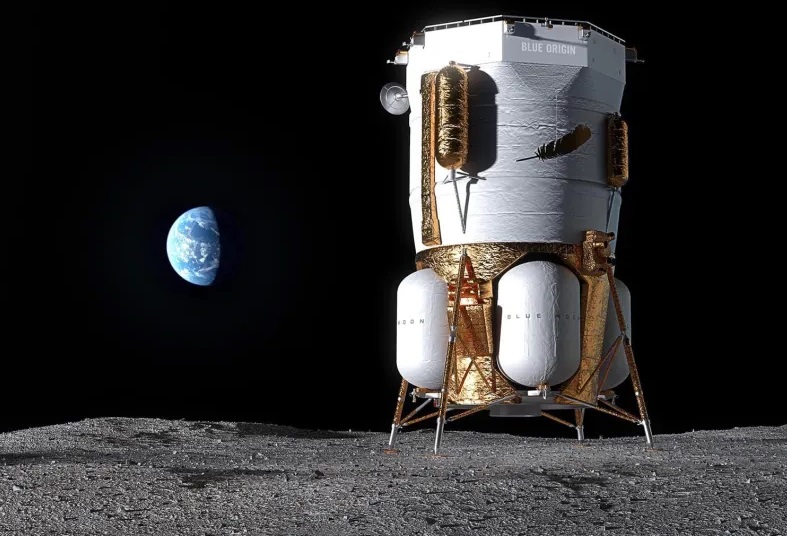 Credit: NASA
While China targets the polar ice, the United States and its commercial partners are building the logistics chain to reach it. One key step is Blue Origin’s Blue Origin Mark 1, a robotic cargo lander designed as a pathfinder for future human missions.
Before astronauts ever step onto a Blue Origin lander, hardware and supplies must arrive first. Mark 1 is intended to prove exactly that: precision landing near the lunar south pole, stable surface operations, and reliable delivery of payloads in one of the most challenging lighting environments in the Solar System. Notably, polar missions must deal with extreme contrasts – areas of near-permanent shadow next to regions of near-constant sunlight. That creates thermal stress, communication challenges, and navigation difficulties.
If successful, this mission would strengthen Blue Origin’s case for a Human Landing System role in future Artemis missions. It would also add redundancy and competition alongside SpaceX’s Starship-based architecture. And in simple terms, it helps ensure there is more than one way to land humans on the Moon.
Blue Ghost Mission 2 & Lunar Pathfinder: Unlocking the Far Side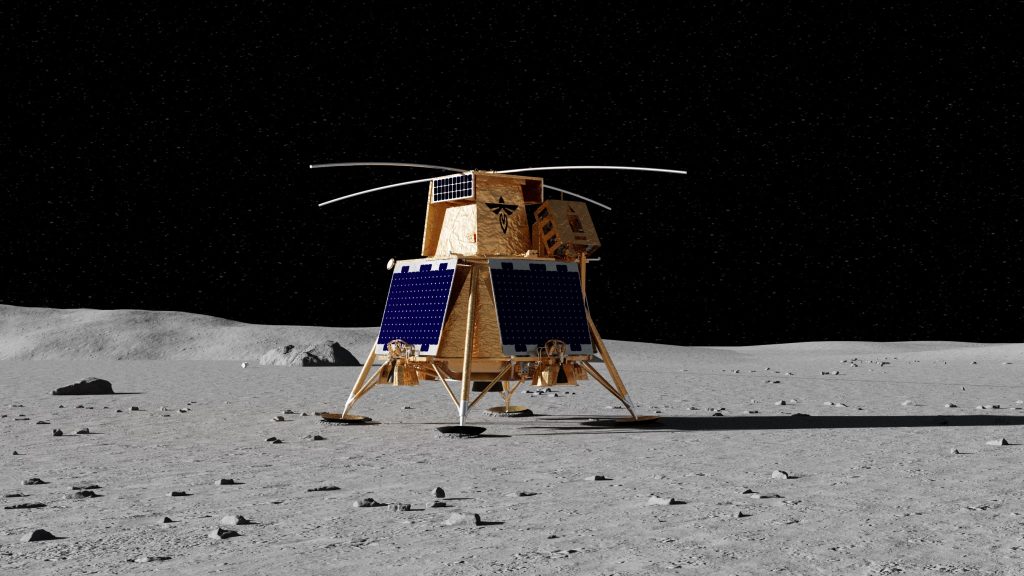 Credit: Firefly Aerospace
Obviously, not all upcoming missions are focused on the South Pole. Some are heading in the opposite direction. For example, Firefly Aerospace’s Blue Ghost Mission 2 is part of NASA’s Commercial Lunar Payload Services (CLPS) programme. The mission is expected to target the Moon’s far side in late 2026. That region is permanently hidden from Earth, which makes communication difficult but also scientifically unique.
Onboard the lander is LuSEE-Night. It is a radio astronomy experiment designed to listen for extremely low-frequency signals from the early Universe. The far side of the Moon is one of the quietest radio environments we know of, shielded from Earth-based interference. That makes it an ideal natural observatory.
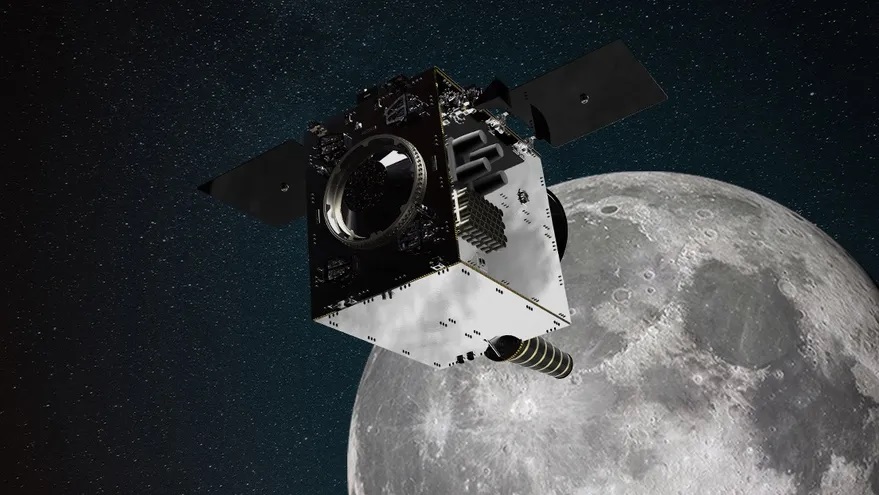 Credit: SSTL
Alongside it, ESA and Surrey Satellite Technology Ltd are sending Lunar Pathfinder, a small relay spacecraft designed to support communications between the far side and Earth. Once in lunar orbit, it will serve as a bridge, enabling future missions to transmit data from previously inaccessible locations.
Artemis III: Connecting Orbit and Surface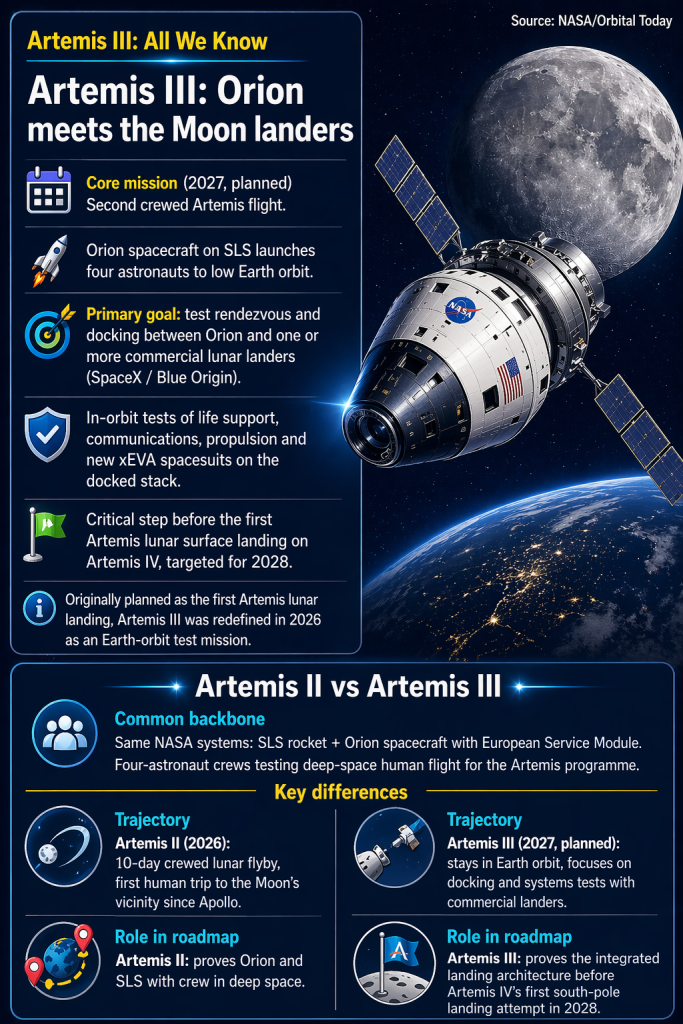 Credit: Orbital Today via AI
Artemis II was a flyby rehearsal, but Artemis III is where NASA begins stitching together the full architecture of lunar exploration. This mission will carry astronauts back toward the Moon aboard Orion and involve integration with a commercial Human Landing System. Exact mission details are still evolving; however, the core objective is clear: demonstrate that spacecraft in lunar orbit can meet, dock, and support crew transfers to a lander. Orion becomes the transport hub, while the lander becomes the vehicle that actually reaches the surface. Artemis III is the first real test of that division of roles.
More broadly, Artemis III marks the transition from “we can reach the Moon” to “we can operate around it as a system.”
Artemis IV: the First South Pole Landing of the New Era
Artemis IV is scheduled for around 2028. This mission is widely expected to deliver a major symbolic and operational milestone: the first crewed landing at the lunar south pole in the modern era of exploration.
Unlike Apollo-era missions, which focused on equatorial regions, Artemis IV will send astronauts into a radically different environment. The Sun will sit low on the horizon, casting long shadows and creating extreme temperature contrasts. Some areas may receive near-continuous sunlight, while nearby craters remain in permanent darkness. The mission is expected to last roughly a week on the surface. During that time, astronauts will test habitats, power systems, and mobility tools such as rovers designed for rugged terrain.
Artemis V: From Visits to Footholds
Artemis V begins to ask an ambitious question: how do we stay on the Moon? Also planned for the late 2020s, Artemis V is expected to expand surface operations, introduce upgraded infrastructure, and begin laying the groundwork for longer-duration presence near the south pole.
That could include more capable power systems, early resource utilisation experiments, and improved mobility across the lunar surface. The emphasis shifts from short stays to repeatable missions – the beginning of a logistical cycle rather than isolated expeditions.
One Moon, Many Agendas
These missions form a tightly packed roadmap rather than a collection of isolated events. Within just a few years, the Moon will host robotic hoppers diving into shadowed craters, cargo landers delivering infrastructure, orbiting relays enabling far-side science, and astronauts returning to the surface for increasingly complex missions.
All of them are converging on the same outcome: turning the Moon from a distant landmark into a functioning extension of human activity.