
Rare earth elements (REEs) underpin most modern inventions and high-performance electronics. These 17 metallic elements, colloquially known as “industrial vitamins”, run through the bloodstream of many green technologies, including wind turbines and electric vehicle motors. However, the extraction and processing of REEs make these innovations far less green than they appear.
Mining and refining a single tonne of REEs generate up to 2000 tonnes of toxic waste, which usually contain radioactive elements such as thorium and uranium. Unsurprisingly, the resulting environmental consequences from contamination are extremely harmful. Wastewater from mines and processing plants poisons rivers and acidifies soil, inhibiting seed germination, disrupting fish larval development, and reducing the lifespan and survival rates of fish and rats.
High concentrations of REE in the environment are dangerous for humans also, as these metals can potentially induce male fertility issues and impair children’s learning abilities. These adverse effects are further compounded by health risks posed by radioactive elements found in REE ores, which include, but are not limited to, cancers and kidney damage.

On top of that, the supply of REEs is surrounded by geopolitical tensions. China dominates global extraction and production, which leaves the EU vulnerable in terms of resource security. This underscores the importance of developing alternative, preferably local means of REE extraction; ones that would diversify supply chains while being less harmful for the environment and public health. Given that global demand is expected to grow rapidly in the coming decades (particularly as states scale up renewable energy infrastructure and electrify transport to support the green transition), discovering such methods is both urgent and essential.
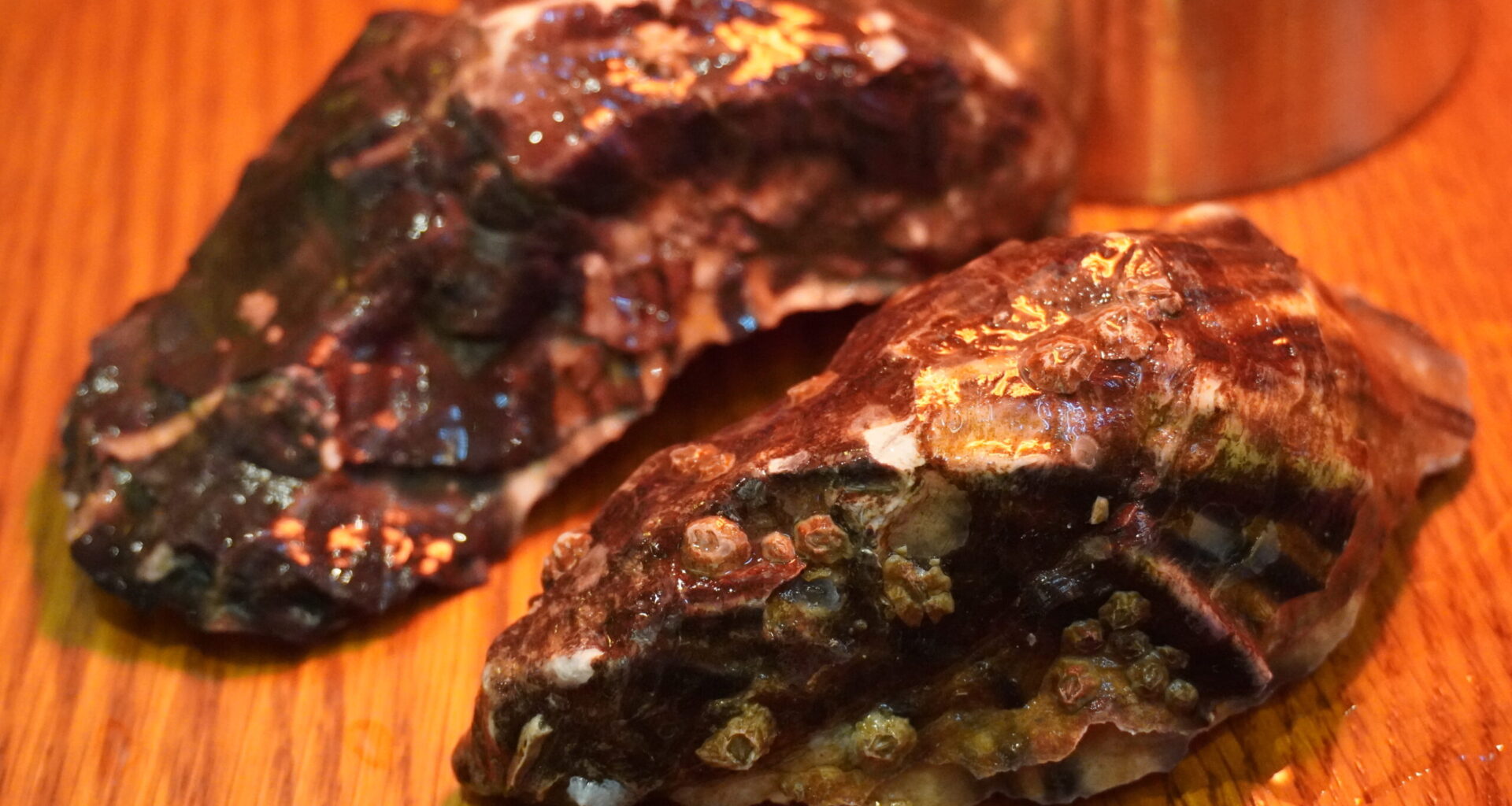
Here is where Trinity scientists have made a groundbreaking contribution. New research by Dr Rémi Rateau and his colleagues has revealed that seashells can extract rare earth elements from contaminated waters naturally, by triggering a mineral transformation that locks these metals into solid crystals. Oyster shells were remarkably effective: in laboratory experiments, their original calcium carbonate structure was completely replaced by rare earth elements.
Other studies had tested eggshells for absorbing REE from water, but seashells have not been previously investigated for such purpose. Hence, this Trinity research is the first to examine seashells specifically for rare earth elements absorption and to demonstrate their exceptional performance in this particular role.
“What makes this discovery particularly promising is that the process is entirely mineral-driven,” said Dr Juan Diego Rodriguez-Blanco, Principal Investigator of the project. “The shells naturally transform dissolved rare earth elements into new solid minerals, so this is not a process that requires much financial outlay or technical equipment.”
The scientists tested three of the world’s most produced mollusks: oysters, mussels and cockles. For each group, they selected species that are among the most abundant and geographically widespread. The shells were collected from beaches in Dublin and then cleaned with soap and water, air dried, crushed in a ceramic mortar and sieved. After this treatment, organic matter was removed from the shells using caustic soda – a step done to ensure that the experiments recorded purely mineral reactions and created reproducible reaction conditions. The resulting shell fragments were placed in solutions containing high concentrations of three key rare earth elements: lanthanum, neodymium and dysprosium, where they were left at temperatures ranging from 25 to 205 °C for periods of up to three months.
Under these conditions, the shells underwent a remarkable chemical transformation. When placed in rare-earth-rich solutions, the calcium carbonate minerals that form their structure began to dissolve and new rare earth carbonate minerals crystallised in their place. In essence, rare earth metals replaced the original minerals in the shell, creating a stable compound known as kozoite – a rare-earth carbonate mineral. However, the extent of cockle and mussel shell transformation was limited. Their newly formed mineral crust quickly became impermeable, which blocked further contact between the solution and the remaining shell. As a result, this barrier stopped the reaction, leaving more than half of the original shell intact.
This is where oyster shells stand out: their unique architecture allows the transformation to continue until the entire shell grain is replaced. Oyster shells are made up of stacked thin sheets of calcite, which seem to dissolve before the crust becomes thick enough to block further reaction. At the same time, the porous microstructure of oyster shells allows the developing crust to remain permeable, enabling the reaction to continue inward. Furthermore, the unique texture favors a rapid formation of large crystals rather than many tiny ones, so the new crust is likely to retain high porosity and permeability. Taken together, these features make oyster shells the most efficient sorbent out of the three tested shell types. At 165°C, complete transformation occurred in as little as one week. Furthermore, oyster shells showed an extraordinary uptake of up to 1.5 grams of rare earth metals per gram of shell, which means that they can capture more than their own weight in REEs.
In contrast, cockle shells performed worst in this experiment, taking up the least amount of REEs. In addition, the authors noted that cockle shells were harder to crush, so they would require more energy for pretreatment. However, they might be more efficient compared to mussel and oyster shells in removing other contaminants like cadmium.
The study also revealed that different REEs tend to be incorporated into the crystals at distinct stages of crust formation. During this research, scientists noticed that neodymium was preferentially captured early in the process, while lanthanum and dysprosium were primarily absorbed during the later stages. This finding means that the use of seashells could be tailored to selectively capture different elements and, as Dr Rodriguez-Blanco suggested, “such processes could potentially be used for environmentally friendly rare earth separation technologies in the future”.
The potential for real-world application is huge, particularly because the shell makes up more than half of the total weight of bivalves like mussels, oysters and cockles. Given that aquaculture produces around 18.9 million tonnes of mollusks every year, this translates into over 6.6 million tonnes of annual discarded shell waste. Currently, much of this material is buried in landfill at a high financial cost or is dumped on land, where it becomes an environmental and health hazard. Repurposing discarded shells to absorb toxic metals could provide a win-win, low-cost and highly scalable method for cleaning contaminated waters and securing rare earth material supply – one that at the same time reduces landfill waste.
The researchers note that the process could be more practical outside the laboratory. The intensive pretreatment used in experiments may be reduced or even omitted, and coarser or partially weathered shells could potentially be used as well, which would lower both costs and energy requirements.
Although further studies are needed to assess large-scale performance of seashells in real-world conditions, this discovery highlights the potential of simple natural materials to solve complex technological problems. Sometimes, we do not need to rack our brains with extremely sophisticated and expensive solutions, we just need to look closer at the seashells scattered along the shore.