
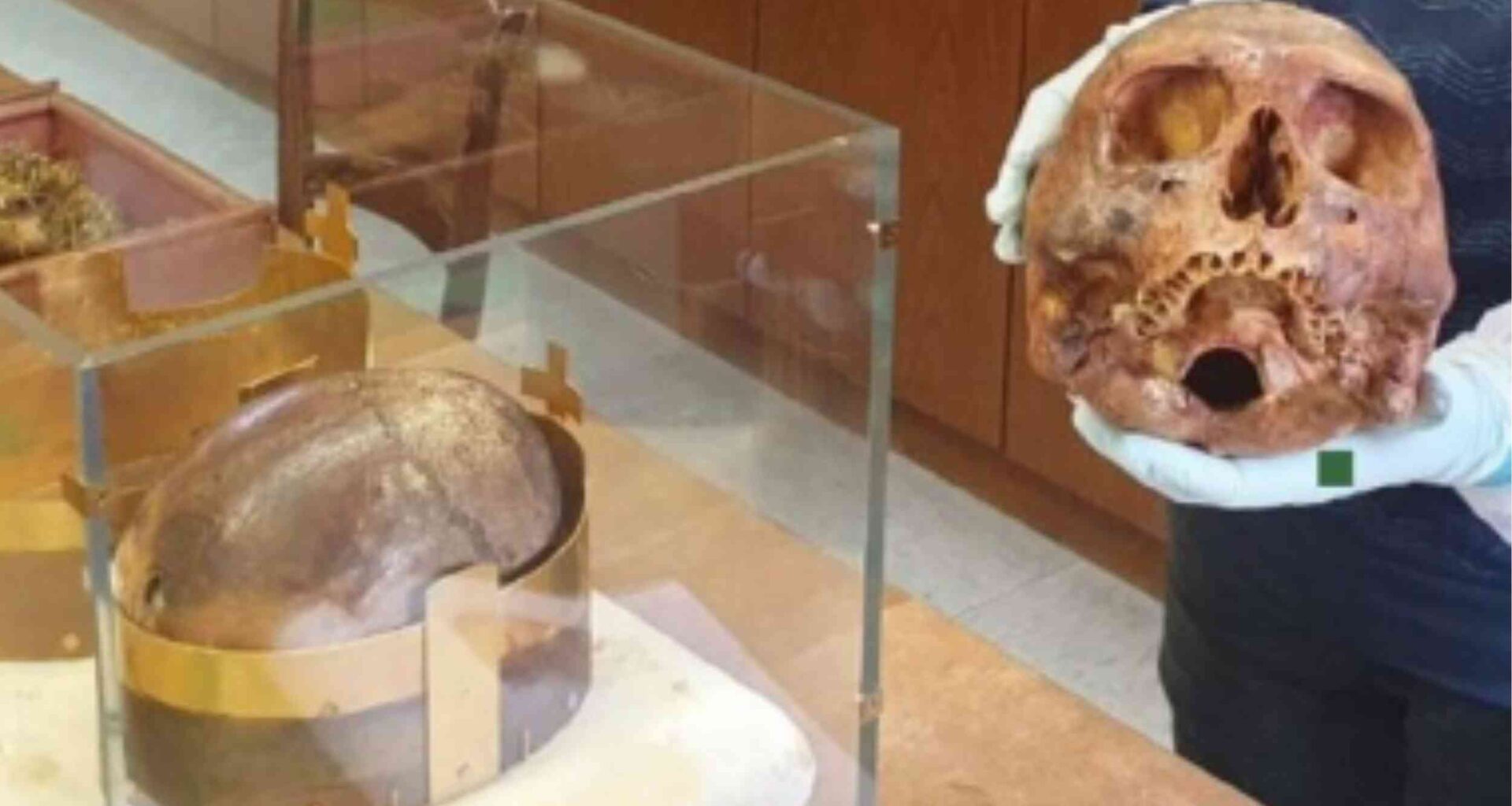
Bones preserved in German cathedrals have been identified as those of the medieval emperors Otto I, the first ruler of the Holy Roman Empire, and Henry II, the last of the same dynasty.
Researchers confirmed the match by linking their DNA through a known family relationship.

That result turns long-venerated remains into verified historical evidence and sharply reduces the chance that the identities were ever mistaken.
DNA analysis of Otto I and Henry II
Inside two cathedral burial sites in Germany, skeletal fragments attributed to Otto I and Henry II preserved a record of their shared ancestry.
Harald Ringbauer at the Max Planck Institute (MPI EVA) demonstrated that the two individuals match the expected great-uncle and great-nephew relationship described in historical records.
That genetic link aligns with the dynasty’s documented lineage, confirming both identity and degree of kinship without introducing conflicting evidence.
With that relationship established, the remains can now be treated as securely identified individuals, setting the stage for deeper analysis of their lineage and historical context.
Ottonian dynasty bookends
The pair were important because they stood at opposite ends of the Ottonian dynasty, a ruling family that shaped Europe.
Otto I became its first emperor, while Henry II ended the line when he died without heirs in 1024.
Written genealogy placed them not as father and son but as great-uncle and great-nephew, linked through Otto’s full brother.
That distance made the DNA test clear, because close kin should share ancestry while carrying traces from other branches.
Rebuilding family ties from fragments
To prove this, the team rebuilt Otto 1 and Henry II’s genomes from damaged DNA and searched for long stretches inherited from one ancestor.
These shared blocks stay intact in close relatives, then break apart over generations as chromosomes swap pieces.
Even with limited DNA data, the shared genetic patterns still revealed that the two men were related at the level expected for a great-uncle and great-nephew.
Because unrelated people rarely mimic that pattern, the genetic evidence matched the historical record.
Tracing ancestry through fathers
Paternal ancestry tightened the case when both emperors carried the same Y-chromosome, a section of DNA that usually passes from father to son.
That match was unusually specific, pointing to a rare genetic line that is found in only a small number of people today.
Henry II should have shared Otto’s male line, since Henry’s father descended from Otto’s full brother. Finding the same paternal branch in both men made the coincidence hard to defend.
Maternal ancestry breaks the pattern
Maternal DNA told a different story and provided more clarity to the family picture.
Mitochondrial DNA, genetic material passed through mothers, gave Otto I one lineage and Henry II another, which connects relatives tied through men rather than a direct maternal chain.
Otto and Henry each carried different maternal genetic lines, both of which are relatively uncommon in modern European populations.
Instead of weakening the identification process, those separate maternal signatures ruled out a simpler, closer relationship that history never claimed.
Crucial bone preserves the past
Part of Otto’s DNA came from the incus, a tiny bone in the middle ear often favored by researchers.
The dense structure of that bone can trap more original genetic material and keep contamination lower.
An analysis of human auditory ossicles, the tiny bones in the middle ear, found that these bones often preserved original DNA as well as the petrous bone, the usual ancient DNA favorite.
That technical advantage helps when famous remains cannot be sampled aggressively and every drilled fragment matters.
Certainty reshapes historical study
Ancient burials tied to rulers often carry centuries of ritual, repair, and reburial, and identities are often mistaken.
Clergy, curators, and scientists can now treat these two sets of bones as authenticated individuals.
That status matters for preservation, because future tests on diet, disease, travel, or injury can carry more weight. It also sets a higher bar for other royal graves that still depend solely on labels.
Anchoring the medieval timeline
Known lifespans made the authenticated remains useful far beyond dynasty history, since Otto died in 973 and Henry in 1024.
Carbon dating works by measuring radioactive carbon, but heavy diets rich in freshwater fish can make bones appear older than they really are.
“They can serve as a ‘ground-truth’ for methods such as radiocarbon dating and age-at-death estimates,” wrote Ringbauer.
With secure names and dates attached, these bones could help tune medieval calibration curves.
New clues for unknown burials
Ottonian family ties extend far beyond these two men, crossing into marriage networks among Europe’s medieval elites.
Because of that spread, the new genomes could help identify high-status burials that now sit in crypts or museums under weaker labels.
Any future match would still need context from archaeology and documents, since shared ancestry alone cannot name a sole person.
The value of this work lies in narrowing the field with unusual precision, not in pretending DNA can replace history.
Next steps for medieval DNA
A few surviving DNA fragments turned two revered skeletons into tested anchors, new data alongside written genealogy, burial tradition, and genetics.
Further comparisons may identify more medieval nobles, although this 2026 report is still a preprint and awaits peer review.
The study is published in bioRxiv.
—–
Like what you read? Subscribe to our newsletter for engaging articles, exclusive content, and the latest updates.
Check us out on EarthSnap, a free app brought to you by Eric Ralls and Earth.com.
—–