
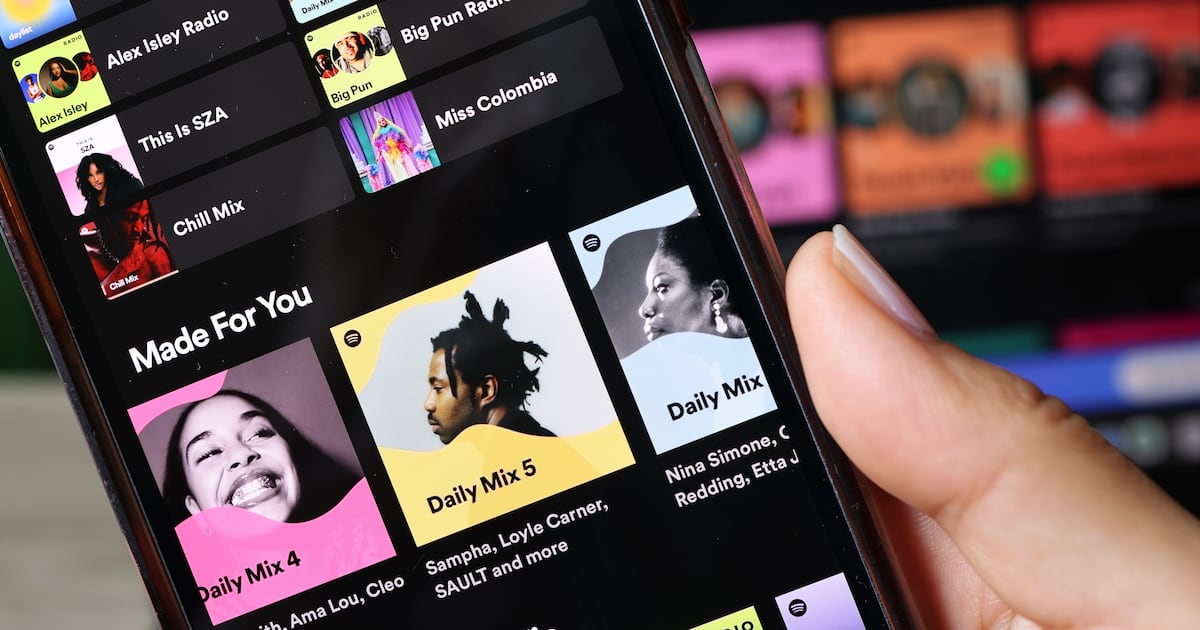
The cost of Spotify is to go up by as much as 15 per cent for some users in the weeks ahead with the streaming platform saying the increase was necessary to allow it to enhance its services.
Individual users of its premium service will see the monthly cost climb from €11.99 to €12.99, a hike of 8.5 per cent while users of its family premium service will see the subscription cost climb from €19.99 to €22.99, a 15 per cent increase.
“This change means we can invest more in premium,” Spotify said in an email sent to impacted customers. “We are always working to improve premium and deliver the best possible experience for you,” it added.
The price hike comes as Spotify announced a jump in the number of subscribers, with the platform reporting a 12 per cent rise in monthly active users to 761 million in the first three months of the year, and a 9 per cent rise in paying subscribers to 293 million.
Ireland is not the only country where Spotify has been rolling out price increases, with users in the UK and the US also seeing hikes of similar amounts.
The most recent financial update from the platform showed revenue climbed by 14 per cent to €4.5 billion in the first quarter while operating income reached a record €715 million compared with €509 million over the same period last year.
Last summer, the Irish Music Rights Organisation (IMRO) published a report, indicating the average Irish adult spends €172 on music streaming each year.
More than half of respondents to IMRO’s survey said they pay for music streaming, valuing the market at between €370 million and €384 million.
The spend prompted Ireland’s independent music industry to call on the Government to introduce a content levy on streaming services, including Spotify to raise funds to seed the next generation of internationally successful artists.
However, the Coalition is understood to be reticent to introduce new levies on international media organisations, against a backdrop of heightened trade tensions between the EU and US.