

In his final years in the commentary box, Sir Terry Wogan had settled on a clear diagnosis: the Eurovision Song Contest was a geopolitical stitch-up. After the 2008 final where Britain finished last he complained that bloc voting and regional loyalties had turned it into a competition the nation could no longer win.
For bruised British egos it was an appealing theory. It was also, if research is to be believed, mostly wrong.
A study of the contest’s 70-year history suggests that Britain’s declining Eurovision fortunes have had little to do with continental factionalism. The real problem, it suggests, is far more irritating: everyone else learnt to copy our winning formula.
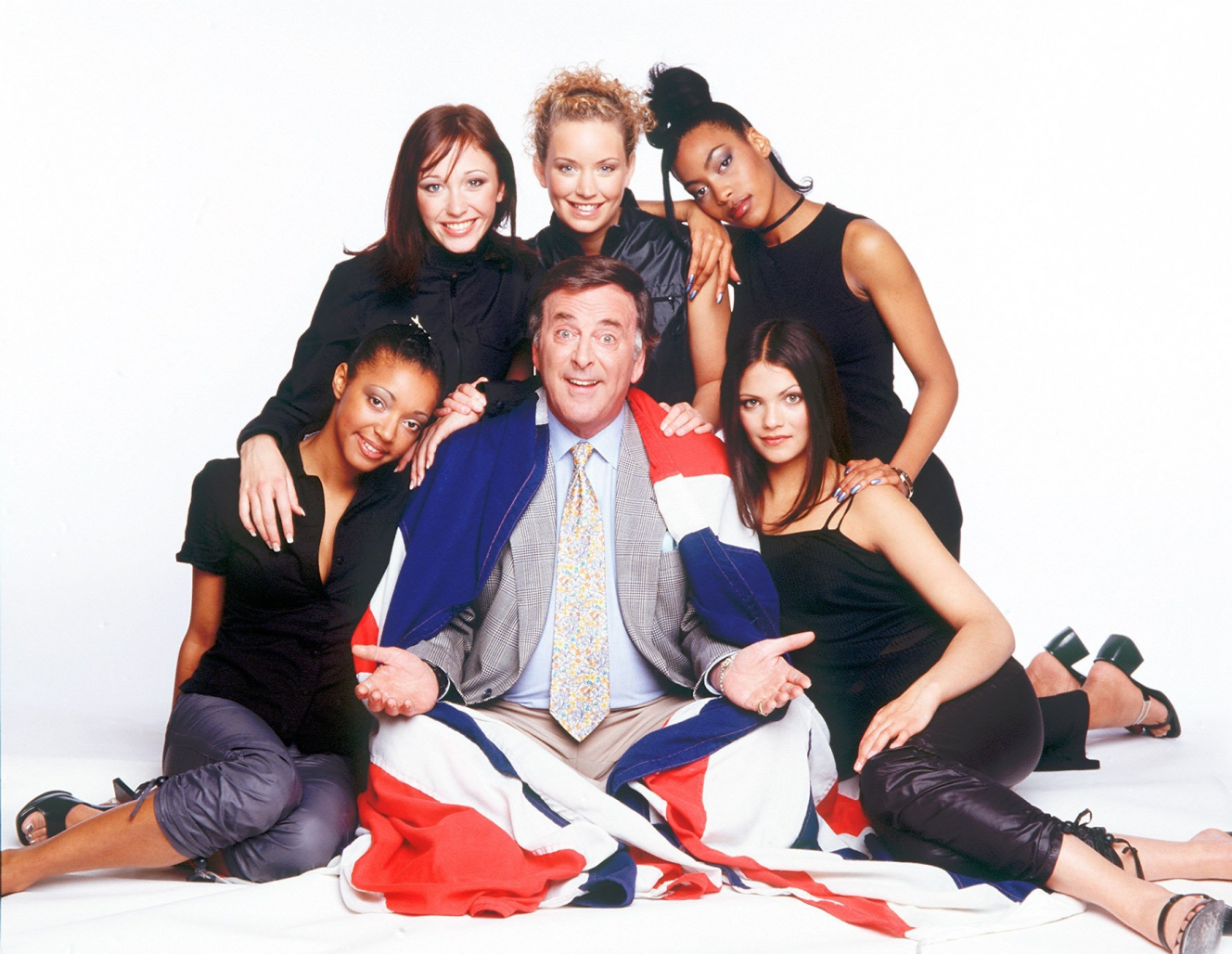 Terry Wogan with the girl band Precious, who came twelfth in 1999BBC
During the early years of the contest, Britain belonged to an elite cartel. Between 1957 and 1975 just four countries — the UK, France, the Netherlands and Luxembourg — accounted for the majority of top-three finishes.
The UK finished second a remarkable nine times in seventeen appearances. After Sandie Shaw’s victory in 1967, British entries went on to win four more times: Lulu in 1969, Brotherhood of Man in 1976, Bucks Fizz in 1981 and Katrina and the Waves in 1997. Songs such as Lulu’s gleefully absurd Boom Bang-a-Bang helped to define what a Eurovision contender should sound like — polished upbeat pop.
But then the formula stopped working. As Eurovision expanded to include more countries and the rules changed, success was shared far more widely. Today, with more than 30 nations competing, nobody consistently comes out on top. Ten times in the past 20 contests the UK has finished in the bottom five.
The reason, the study suggests, is that most of the competing countries learnt the same lesson.
An upbeat, danceable song in English was in a sense the old British recipe for victory — but by the end of the 1990s almost everybody was doing it.
Daily Briefing newsletter
Get our top stories and exclusive analysis sent straight to your inbox every morning.
Sign up with one click
Not every country followed the herd. France, Italy, Portugal and Spain have stubbornly stuck to their own languages for the majority, apparently prioritising national pride over the lure of a higher finishing position.
But more than 70 per cent of entries now feature English lyrics — because, the researchers argue, contestants have learnt that singing in English increases their chances of victory. By the 1970s roughly half the winning songs were in the language; by the early 1990s it was 80 per cent.
The music has followed a similar trajectory. The study’s analysis of Eurovision songs suggests that they became more heavily produced and that pop emerged as the dominant genre.
Published in the journal Royal Society Open Science, the research argues that something known as the “Red Queen effect” came into play. Borrowed from evolutionary theory, it describes a situation where everyone adopts the same winning strategy and so it ceases to confer an advantage.
For Eurovision, it meant that the old British tactic was no longer enough.
Instead, in a crowded field of near-identical entries, you had to stand out. Lordi, the Finnish rock band who won in 2006 in monster costumes, are an obvious example. They arrived on stage looking like they had wandered in from a horror film, sang a heavy metal song in English, and walked out with the trophy.
 The Finnish rock band Lordi triumphed in 2006Sean Gallup/Getty Images
None of this will dislodge the suspicion, so eloquently voiced by Wogan, that politics and regional solidarity still plays a part. How else to explain the victory, after the full-scale Russian invasion, of Ukraine in 2022?
But it does point to a less conspiratorial explanation for the UK’s poor recent performances: it has failed to adjust to a new Eurovision era.
It remains to be seen whether this year’s entry can fare better. Look Mum No Computer will perform Eins, Zwei, Drei — the only British song in 70 years to include lyrics in a foreign language. What Wogan would have said about having a chorus in German, we’ll never know.