

Holographic Transfer Film Market Forecast and Outlook (2025-2035)
The holographic transfer film market reaches USD 1,878.9 million in 2025 and is expected to grow to USD 2,917.9 million by 2035, with a CAGR of 4.5%. From 2021 to 2022, the market increases from USD 1,507.8 million to USD 1,575.6 million, reflecting a steady YoY growth driven by rising demand in packaging, security, and decorative applications. Between 2022 and 2024, the market continues to progress from USD 1,646.5 million to USD 1,798.0 million, fueled by the increased use of holographic films in anti-counterfeit measures and brand protection across industries like cosmetics, pharmaceuticals, and consumer goods.
Quick Stats for Holographic Transfer Film Market
Holographic Transfer Film Market Value (2025): USD 1,878.9 million
Holographic Transfer Film Market Forecast Value (2035): USD 2,917.9 million
Holographic Transfer Film Market Forecast CAGR: 4.5%
Leading Product in Holographic Transfer Film Market: PET
Key Growth Regions in Holographic Transfer Film Market: Asia Pacific, North America, and Europe
Key Players in Holographic Transfer Film Market: KURZ, Offset Group, Cosmo Films, Holostik, Uflex, Everest Holovisions Limited
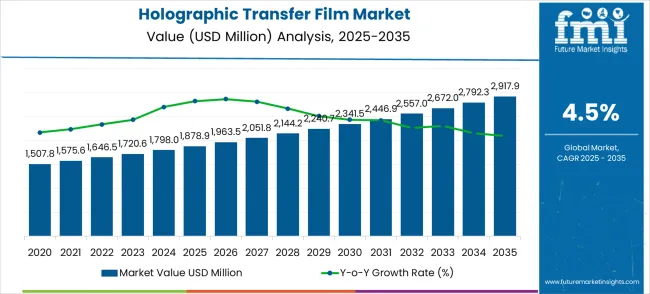
Between 2026 and 2030, the market experiences stronger growth, advancing from USD 1,878.9 million to USD 2,640.0 million, passing through USD 1,963.5 million in 2026, USD 2,051.8 million in 2027, and USD 2,144.2 million in 2028. This period is marked by the expanding use of holographic films in digital displays, advertising, and product labeling. The automotive, retail, and electronics sectors contribute significantly to the growth, driven by advancements in printing and coating technologies. By 2035, the market will reach USD 2,917.9 million, reflecting consistent growth across industries, with continued adoption of holographic films in high-end packaging and security applications.
Holographic Transfer Film Market Key Takeaways
Metric
Value
Estimated Value in (2025E)
USD 1,878.9 million
Forecast Value in (2035F)
USD 2,917.9 million
Forecast CAGR (2025 to 2035)
4.5%
The packaging industry dominates the market with a share of 40-45%, as brands in the food & beverage, cosmetics, and luxury goods sectors increasingly adopt holographic films for premium, visually engaging packaging solutions that enhance product appeal. The security and anti-counterfeiting segment follows closely, accounting for 20-25% of the market, as holographic films are widely used for protecting government documents, ID cards, and branded products against counterfeiting. Their unique optical properties make them difficult to replicate, offering reliable solutions for product authentication. The consumer electronics sector holds approximately 15-18%, as holographic transfer films are applied to mobile phones, laptops, and other devices for aesthetic purposes and added scratch resistance. The automotive and aerospace industries contribute around 8-10%, utilizing these films for decorative elements, such as interior trims and dashboard accents, to elevate the visual appeal of vehicles and aircraft. The textile and fashion market accounts for 7-10%, with holographic films being used to create eye-catching designs on fabrics, particularly for high-end fashion lines and accessories.
Why is the Holographic Transfer Film Market Growing?
Market expansion is being supported by the increasing threat of counterfeiting and the corresponding need for sophisticated security solutions that can provide visual authentication, prevent product forgery, and maintain brand integrity across various high-value products and sensitive applications. Modern manufacturers and brand owners are increasingly focused on implementing security solutions that can deter counterfeiting, enable product authentication, and provide reliable verification methods in complex supply chains. Holographic transfer films’ proven ability to deliver visual security features, support anti-counterfeiting objectives, and enhance product authenticity makes them essential components for contemporary brand protection and product security strategies.
The growing emphasis on consumer safety and brand protection is driving demand for holographic transfer films that can support product authentication, prevent unauthorized reproduction, and enable comprehensive security verification. Manufacturers’ preference for security solutions that combine visual appeal with anti-counterfeiting effectiveness and cost-efficient application is creating opportunities for innovative holographic transfer film implementations. The rising influence of e-commerce and trade is also contributing to increased adoption of holographic transfer films that can provide reliable security features without compromising product aesthetics or manufacturing efficiency.
Segmental Analysis
The market is segmented by product, application, and region. By product, the market is divided into PET, PVC, BOPP(OPP), and others. Based on application, the market is categorized into cigarettes and alcohol, daily sales, packaging and printing, documents, and others. Regionally, the market is divided into Asia Pacific, North America, Europe, Latin America, and the Middle East & Africa.
By Product, the PET Segment Leads the Market with 40% Share
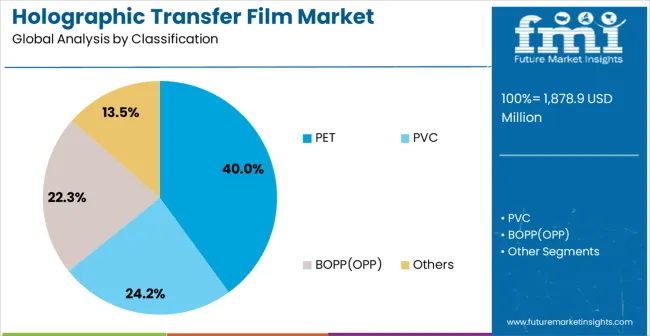
The PET segment is projected to maintain its leading position in the holographic transfer film market in 2025, capturing 40% of the market share. PET-based holographic transfer films are increasingly favored by manufacturers and security printing specialists due to their superior optical properties, excellent dimensional stability, and versatility across various product categories and security applications. PET technology’s proven performance characteristics ensure reliable holographic reproduction and the consistent application of security features in diverse packaging and authentication applications. As the cornerstone of modern holographic security systems, PET substrate films offer the greatest technical versatility and established performance, strengthening their adoption among security professionals and packaging converters. PET-based films are crucial to maintaining optical quality and processing reliability in holographic applications, making them a central element of comprehensive security strategies.
Superior optical properties and dimensional stability enhance security feature performance.
Proven performance across diverse packaging and authentication applications.
Central to modern holographic security systems, driving adoption in various industries.
By Application, the Cigarettes and Alcohol Segment Dominates Market Demand with 35% Share
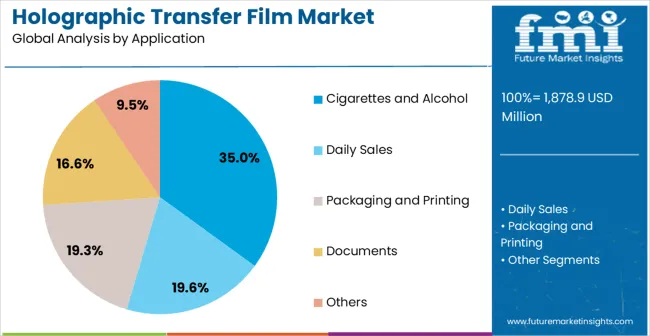
The cigarettes and alcohol application segment is projected to represent the largest share of holographic transfer film demand in 2025, accounting for 35% of the market. Holographic films are essential in the tobacco and alcoholic beverage industries for product authentication, counterfeiting prevention, and excise tax compliance. Manufacturers in these sectors prefer holographic transfer films for their ability to meet high-value product protection requirements, regulatory compliance needs, and to provide visually appealing security features that bolster brand differentiation and consumer confidence. Continuous innovations in security technologies and the availability of specialized holographic features further enhance their anti-counterfeiting effectiveness. As counterfeiting threats and regulatory requirements grow, tobacco and alcohol manufacturers are investing in comprehensive security programs, ensuring that holographic transfer films will remain essential components in protecting brands and complying with regulatory standards.
Enhances product authentication and provides counterfeiting protection in the tobacco and alcohol industries.
Meets regulatory compliance requirements, aiding in excise tax management and anti-counterfeiting.
Essential for brand differentiation and maintaining consumer confidence in regulated product sectors.
What are the Drivers, Restraints, and Key Trends of the Holographic Transfer Film Market?
The holographic transfer film market is advancing steadily due to increasing counterfeiting threats and growing adoption of visual security technologies that provide enhanced brand protection and product authentication across diverse high-value product categories. The market faces challenges, including high production costs and equipment requirements, technical complexity in holographic design and manufacturing, and competition from alternative anti-counterfeiting technologies. Innovation in digital holography and smart security features continues to influence product development and market expansion patterns.
Expansion of Advanced Holographic Technologies and Digital Integration
The growing adoption of advanced holographic imaging technologies and digital security integration is enabling manufacturers to achieve superior security effectiveness, enhanced visual appeal, and comprehensive authentication capabilities for improved brand protection. Advanced holographic systems provide improved anti-counterfeiting performance while allowing more sophisticated security features and consistent optical quality across various product applications and manufacturing processes. Manufacturers are increasingly recognizing the competitive advantages of advanced holographic capabilities for security differentiation and brand enhancement.
Integration of Smart Authentication and Track-and-Trace Technologies
Modern holographic transfer film manufacturers are incorporating smart authentication technologies and track-and-trace systems to enhance security verification, enable supply chain transparency, and provide comprehensive product authentication through digital connectivity and data integration. These technologies improve security effectiveness while enabling new applications, including mobile authentication and blockchain verification. Advanced digital integration also allows manufacturers to support comprehensive security management and product tracking beyond traditional visual authentication approaches.
Analysis of the Holographic Transfer Film Market by Key Countries
Country
CAGR (2025-2035)
China
6.1%
India
5.6%
Germany
5.2%
Brazil
4.7%
USA
4.3%
UK
3.8%
Japan
3.4%
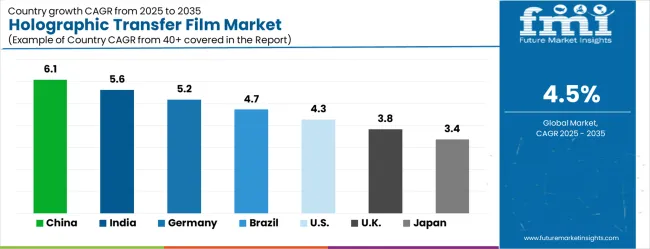
The holographic transfer film market is experiencing solid growth globally, with China leading at a 6.1% CAGR through 2035, driven by the expanding manufacturing sector, growing anti-counterfeiting awareness, and significant investment in security printing technologies and holographic film production capabilities. India follows at 5.6%, supported by rapid industrial development, increasing brand protection requirements, and growing adoption of security technologies in consumer goods and pharmaceutical industries. Germany shows growth at 5.2%, emphasizing precision manufacturing and advanced security printing technologies. Brazil records 4.7%, focusing on consumer goods protection and anti-counterfeiting initiatives in the tobacco and alcohol sectors. The USA demonstrates 4.3% growth, supported by an established brand protection infrastructure and an emphasis on product authentication. The UK exhibits 3.8% growth, emphasizing security printing excellence and anti-counterfeiting technologies. Japan shows 3.4% growth, supported by advanced manufacturing technologies and precision holographic systems.
The report covers an in-depth analysis of 40+ countries, with top-performing countries highlighted below.
In-depth Analysis of Holographic Transfer Film Market in China
The holographic transfer film market in China is projected to grow at a CAGR of 6.1% from 2025 to 2035. The country remains a dominant player in the production of holographic films, driven by the booming packaging and labeling industries. As the demand for premium packaging continues to rise, especially for consumer electronics, luxury goods, and cosmetics, the application of holographic films has expanded. These films are used for creating visually dynamic, counterfeit-resistant labels, enhancing brand visibility and consumer engagement. China’s strong manufacturing base allows for the mass production of holographic films at competitive prices, further expanding the market reach. The rapid growth in e-commerce has also increased the need for differentiated packaging, which boosts demand for holographic films in retail and online sales. Advances in printing technology, such as digital printing and advanced laser techniques, are also driving innovation and adoption in various industries.
Rapid adoption of holographic films in e-commerce packaging
Technological advancements in printing techniques, enhancing film quality
Strong demand in premium packaging for luxury and consumer goods
Sales Analysis of Holographic Transfer Film Market in India
Demand for holographic transfer film in India is expected to expand at a CAGR of 5.6% from 2025 to 2035. As the packaging industry expands, especially in sectors like FMCG, cosmetics, and pharmaceuticals, the demand for visually appealing, tamper-evident, and counterfeit-resistant packaging has grown significantly. Holographic films are increasingly being used in labels, bottle wraps, and gift packaging due to their enhanced visual appeal and anti-counterfeit features. The growing middle class, increasing disposable income, and rising consumer spending on branded products further drive the market. The Indian government’s push for anti-counterfeit measures in industries like pharmaceuticals supports the adoption of holographic films. Manufacturers are also shifting towards eco-friendly packaging, which is beginning to influence the types of materials used in holographic film production, although the focus remains on high-quality visuals and performance.
Rising demand for anti-counterfeit packaging in FMCG and pharmaceuticals
Growing consumer spending and demand for branded packaging solutions
Shift towards eco-friendly packaging materials alongside visual enhancements
Growth Prospects of Holographic Transfer Film Market in Germany
Sales of holographic transfer film in Germany are anticipated to grow at a CAGR of 5.2% over the forecast period. Known for its advanced manufacturing technologies, Germany is seeing increased adoption of holographic films in sectors such as automotive, electronics, and luxury goods. In these industries, the holographic films are used not only for security purposes but also to enhance product appeal, particularly in high-end packaging for automotive parts, consumer electronics, and cosmetics. The growing trend towards high-quality branding and product differentiation is driving the need for holographic films, as manufacturers seek innovative packaging solutions. German packaging standards are often stricter, thus influencing the demand for high-performance films that meet international certifications for quality.
Increased use of holographic films in automotive and luxury goods packaging
Rising demand for high-performance films meeting strict German packaging standards
Growing market for innovative packaging solutions focused on product differentiation
Opportunity Analysis of Holographic Transfer Film Market in Brazil
The holographic transfer film market in Brazil is expected to grow at a CAGR of 4.7% from 2025 to 2035. The country’s expanding consumer goods and food packaging sectors are driving the demand for holographic films. As the Brazilian economy recovers and consumer spending increases, premium packaging solutions are becoming more widely adopted. Holographic films are commonly used in food and beverage packaging, pharmaceuticals, and personal care products, where product authenticity and branding are critical. The rise of organized retail and e-commerce in Brazil is also accelerating the demand for visually appealing packaging that can stand out on shelves. With increasing concerns over product counterfeiting, Brazil is focusing on enhancing security features in packaging, making holographic films an essential solution.
Increased adoption of holographic films in food and beverage packaging
Growth in organized retail and e-commerce driving packaging demand
Rising focus on anti-counterfeit and security features in packaging
Sales Performance of Holographic Transfer Film Market in the United States
The USA market for holographic transfer films is expected to expand at a CAGR of 4.3% from 2025 to 2035. As a key player in the packaging market, the USA is witnessing steady demand for holographic films in premium product packaging, including electronics, cosmetics, and luxury goods. The need for secure, visually engaging packaging is pushing innovation in holographic film applications. The rise of e-commerce, particularly in consumer electronics, drives the need for unique packaging solutions that stand out and ensure brand protection. With the ongoing trend of consumer preference for high-quality, differentiated products, holographic films are increasingly seen as a tool for brand enhancement. Companies are also adopting holographic films to meet the growing demand for tamper-evident packaging, especially in pharmaceuticals and cosmetics.
Increased demand for holographic films in premium electronics and cosmetics packaging
Adoption of holographic films for tamper-evident and anti-counterfeit packaging
Rising demand for differentiated packaging solutions driven by e-commerce
Market Insights of Holographic Transfer Film Market in the United Kingdom
The UK market is forecasted to grow at a CAGR of 3.8% over the next decade. In the UK, the demand for holographic transfer films is primarily driven by the fashion and luxury goods industries, where packaging plays a significant role in product appeal. With a strong market for high-end consumer products, the need for high-quality, eye-catching packaging solutions is increasing. Holographic films are also gaining traction in the food and beverage industry, as brands look for ways to differentiate their products on shelves. The UK is seeing a rising trend in the adoption of digital and automated production processes for holographic films, which is making production faster and more cost-effective. With the ongoing shift towards premium packaging and increased anti-counterfeit measures, holographic films are being increasingly integrated into packaging solutions.
Rising demand in the fashion and luxury goods packaging sector
Growing focus on differentiation in food and beverage packaging
Adoption of digital production techniques for cost-effective holographic films
Demand Outlook for Holographic Transfer Film Market in Japan
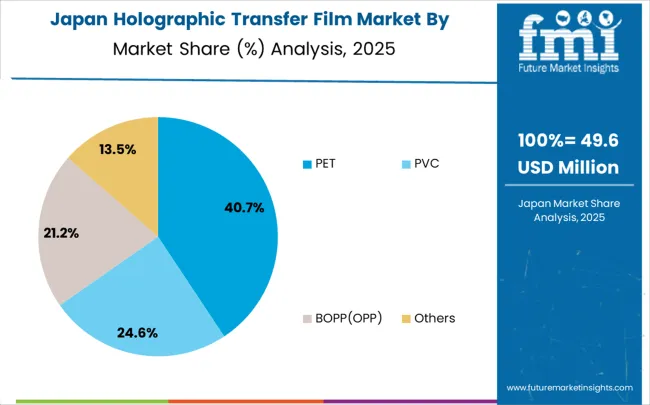
The holographic transfer film market in Japan is expected to grow at a CAGR of 3.4%, supported by steady demand in the packaging of consumer electronics, luxury items, and pharmaceuticals. Japan is a leader in technological innovation, and this extends to the packaging industry, where holographic films are increasingly used for product branding, especially in premium electronics. The trend toward e-commerce is also increasing the need for visually distinctive and secure packaging. The Japanese government’s growing focus on anti-counterfeit measures has resulted in an increased adoption of holographic films in labeling and packaging. Japanese manufacturers are also investing in research and development to enhance the durability and performance of holographic films, focusing on heat-resistant properties and longer-lasting visuals.
Increased adoption of holographic films in premium electronics packaging
Growing demand for secure packaging solutions in the pharmaceutical sector
Technological innovations in holographic film durability and heat resistance
Europe Market Split by Countries
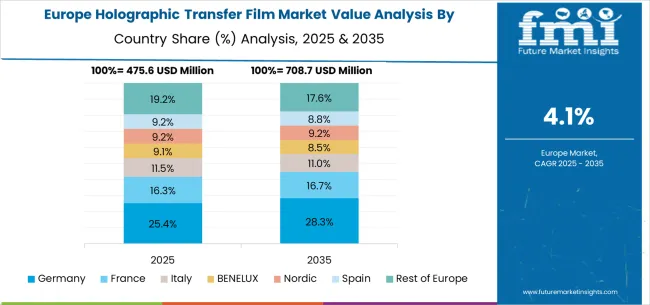
The holographic transfer film market in Europe is projected to grow from USD 713.6 million in 2025 to USD 1,047.8 million by 2035, registering a CAGR of 3.9% over the forecast period. Germany is expected to maintain its leadership position with a 27.0% market share in 2025, moderating slightly to 26.8% by 2035, supported by its strong security printing industry, advanced manufacturing sector, and comprehensive anti-counterfeiting infrastructure serving major European markets.
The United Kingdom follows with 20.0% in 2025, projected to reach 19.8% by 2035, driven by established security printing excellence, a comprehensive intellectual property protection framework, and advanced anti-counterfeiting technology programs. France holds 18.5% in 2025, rising to 18.7% by 2035, supported by luxury goods protection requirements and growing adoption of premium security technologies. Italy commands 14.0% in 2025, projected to reach 14.1% by 2035, while Spain accounts for 9.0% in 2025, expected to reach 9.1% by 2035. The Netherlands maintains a 4.0% share in 2025, growing to 4.1% by 2035. The Rest of Europe region, including Nordic countries, Eastern Europe, and other markets, is anticipated to maintain its position, holding its collective share at 7.5% by 2035, attributed to increasing manufacturing modernization and growing security technology adoption across emerging industrial markets implementing advanced brand protection standards.
Competitive Landscape of the Holographic Transfer Film Market
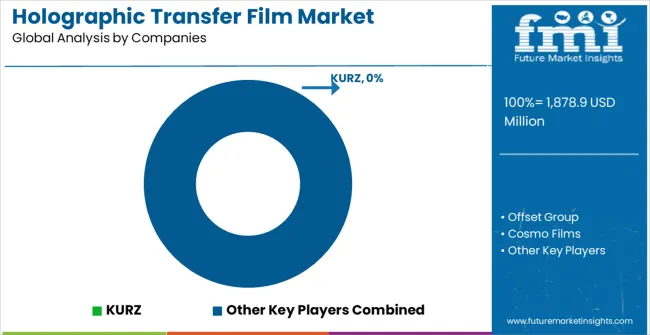
The holographic transfer film market is characterized by competition among established security printing companies, specialized holographic technology manufacturers, and integrated packaging solution providers. Companies are investing in advanced holographic technology research, manufacturing innovation, quality excellence, and comprehensive product portfolios to deliver effective, reliable, and visually appealing holographic transfer film solutions. Innovation in digital holography, smart security features, and integrated authentication systems is central to strengthening market position and competitive advantage.
KURZ leads the market with comprehensive security printing solutions, offering advanced holographic transfer films with a focus on anti-counterfeiting effectiveness and premium visual appeal across diverse security applications. Offset Group provides specialized printing and packaging solutions with an emphasis on quality manufacturing and security printing capabilities. Cosmo Films delivers innovative packaging and lamination solutions with a focus on holographic applications and advanced film technologies. Holostik specializes in anti-counterfeiting technologies and holographic security solutions for brand protection applications. Uflex focuses on flexible packaging and security films with emphasis on innovation and comprehensive packaging solutions. Everest Holovisions Limited offers specialized holographic technologies with a focus on security applications and visual authentication.
Holographic Transfer Film Market – Stakeholder Contribution Framework
Holographic transfer films represent a critical anti-counterfeiting segment within brand protection and security printing, projected to grow from USD 1,878.9 million in 2025 to USD 2,917.9 million by 2035 at a 4.5% CAGR. These specialized security films—primarily PET-based substrates with advanced holographic features—provide visual authentication and brand protection across cigarettes, alcohol, packaging, and document security applications. Market expansion is driven by escalating counterfeiting threats, increasing regulatory compliance requirements, growing brand protection investments, and rising adoption of smart authentication technologies that combine visual security with digital verification capabilities.
How Government Authorities Could Strengthen Anti-Counterfeiting and Intellectual Property Protection?
Enhanced IP Enforcement Programs: Implement comprehensive intellectual property protection initiatives, including coordinated raids on counterfeit operations, strict penalties for trademark infringement, and specialized law enforcement training to identify and prosecute holographic security violations.
Regulatory Security Standards: Establish mandatory holographic authentication requirements for high-risk products, including tobacco, alcohol, pharmaceuticals, and luxury goods, with standardized security feature specifications and verification protocols that prevent counterfeiting.
International Cooperation Frameworks: Develop multilateral agreements for cross-border anti-counterfeiting enforcement, shared intelligence systems for identifying counterfeit operations, and coordinated customs inspection programs that leverage holographic authentication technologies.
Digital Authentication Infrastructure: Create national digital verification systems linking holographic security features to blockchain databases, enabling real-time product authentication through mobile applications and supply chain transparency platforms.
Public Awareness Campaigns: Fund consumer education programs teaching recognition of authentic holographic security features, counterfeiting risks, and verification methods that support market demand for legitimate products with holographic protection.
How Industry Associations Could Advance Security Standards and Best Practices?
Anti-Counterfeiting Technology Standards: Develop comprehensive technical specifications for holographic security features, including optical requirements, authentication protocols, and integration guidelines that ensure consistent security effectiveness across different applications and manufacturers.
Brand Protection Certification: Establish industry certification programs for holographic transfer films, security printing processes, and authentication systems that validate security effectiveness and build market confidence in holographic protection solutions.
Supply Chain Security Protocols: Create comprehensive guidelines for secure holographic film distribution, application oversight, and quality control procedures that prevent security compromise and ensure authentic product protection throughout manufacturing processes.
Technology Innovation Platforms: Facilitate collaborative research initiatives between brand owners, security technology providers, and manufacturing companies to advance holographic security capabilities and stay ahead of counterfeiting techniques.
Market Intelligence Systems: Develop industry-wide databases tracking counterfeiting trends, security breach incidents, and emerging threats that inform holographic security development and help brands adapt protection strategies.
How Holographic Technology Manufacturers Could Drive Innovation and Security Excellence?
Advanced Security Feature Development: Invest in next-generation holographic technologies, including multi-layer security features, variable data integration, and tamper-evident capabilities that provide superior protection against sophisticated counterfeiting attempts.
Smart Authentication Integration: Develop holographic films with embedded digital elements, including QR codes, NFC chips, and blockchain identifiers, that enable mobile authentication and create unbreakable links between physical and digital security.
Manufacturing Security Enhancement: Implement ultra-secure production facilities with restricted access, comprehensive quality control, and supply chain monitoring that prevent security feature compromise and unauthorized reproduction of holographic designs.
Custom Security Solutions: Create specialized holographic designs tailored to specific brand requirements, application conditions, and threat profiles that provide unique authentication features while maintaining cost-effectiveness and manufacturing efficiency.
Global Service Networks: Establish comprehensive technical support, installation training, and security consulting services that help brands implement holographic protection effectively while maintaining security integrity throughout application processes.
How Brand Owners Could Optimize Product Protection and Authentication Systems?
Integrated Security Strategies: Implement comprehensive anti-counterfeiting programs combining holographic transfer films with other security technologies, supply chain monitoring, and market surveillance that create multiple protection layers and authentication touchpoints.
Consumer Authentication Tools: Develop mobile applications and digital platforms that enable consumers to verify holographic security features, report suspected counterfeits, and access product authenticity information through simple scanning procedures.
Supply Chain Monitoring: Establish end-to-end traceability systems linking holographic security applications to production records, distribution tracking, and retail verification that ensure authentic products reach consumers through legitimate channels.
Security Feature Optimization: Conduct regular security audits, threat assessments, and holographic feature evaluations that identify vulnerabilities and opportunities for protection enhancement while balancing security effectiveness with cost considerations.
Market Surveillance Programs: Implement systematic monitoring of online marketplaces, retail channels, and distribution networks to identify counterfeit products and assess holographic security effectiveness in real-world counterfeiting scenarios.
How Security Printing and Packaging Companies Could Enhance Application Quality?
Specialized Application Expertise: Develop dedicated holographic transfer film application capabilities, including precision registration systems, quality control protocols, and security handling procedures that ensure optimal security feature performance and visual appeal.
Quality Assurance Systems: Implement comprehensive testing procedures, statistical process control, and defect prevention protocols specific to holographic film application that maintain security integrity while achieving consistent visual quality and manufacturing efficiency.
Security Compliance Management: Establish rigorous security protocols for holographic film handling, storage, and application, including access control, audit trails, and disposal procedures that prevent security compromise throughout the production process.
Technology Integration Capabilities: Invest in advanced printing and converting equipment capable of handling sophisticated holographic films while integrating digital security elements and maintaining precise registration across complex packaging formats.
Technical Support Services: Provide comprehensive customer support, including application troubleshooting, security feature optimization, and performance verification that ensures holographic transfer films deliver intended security benefits throughout product lifecycles.
How Investors and Financial Enablers Could Support Market Development and Innovation?
Security Technology Innovation: Finance development of breakthrough holographic technologies, advanced authentication systems, and digital security integration platforms that address evolving counterfeiting threats while maintaining cost-effectiveness and manufacturing scalability.
Manufacturing Infrastructure Investment: Support the establishment of secure production facilities, advanced holographic imaging equipment, and quality control systems that expand global capacity for high-security holographic transfer film production and application.
Brand Protection Market Expansion: Provide capital for holographic security companies expanding into emerging markets, developing region-specific solutions, and establishing local service networks that improve global access to effective anti-counterfeiting protection.
Technology Integration Platforms: Fund development of comprehensive security ecosystems combining holographic films with digital authentication, supply chain monitoring, and consumer verification systems that create integrated brand protection solutions.
Research and Development Partnerships: Support collaborative initiatives between technology providers, academic institutions, and brand protection specialists focused on advancing holographic security science and staying ahead of counterfeiting technology evolution.
Key Players in the Holographic Transfer Film Market
KURZ
Offset Group
Cosmo Films
Holostik
Uflex
Everest Holovisions Limited
ITW Security Division
Light Logics Holography and Optics
Polinas
Spectratek
Unifoil
ShenZhen Holoart High Technology Company
HGTECH
K Laser
Jinghua Laser
SVG Tech Group
AFC Technology
Suzhou Impression Laser Technology
Emeteq Technology
Hubei Lhtc Anti-counterfeit Technology
Shanghai Zijiang Enterprise Group
Scope of the Report
Items
Values
Quantitative Units (2025)
USD 1,878.9 million
Product
PET, PVC, BOPP(OPP), Others
Application
Cigarettes and Alcohol, Daily Sales, Packaging and Printing, Documents, Others
Regions Covered
Asia Pacific, North America, Europe, Latin America, Middle East & Africa
Countries Covered
China, India, Germany, Brazil, the United States, the United Kingdom, Japan, and 40+ countries
Key Companies Profiled
KURZ, Offset Group, Cosmo Films, Holostik, Uflex, and Everest Holovisions Limited
Additional Attributes
Dollar sales by product and application category, regional demand trends, competitive landscape, technological advancements in holographic systems, digital security development, authentication innovation, and brand protection optimization
Holographic Transfer Film Market by Segments Product:
Application:
Cigarettes and Alcohol
Daily Sales
Packaging and Printing
Documents
Others
Region:
Asia Pacific
China
India
Japan
South Korea
ASEAN
Australia & New Zealand
Rest of Asia Pacific
North America
United States
Canada
Mexico
Europe
Germany
United Kingdom
France
Italy
Spain
Nordic
BENELUX
Rest of Europe
Latin America
Brazil
Chile
Argentina
Rest of Latin America
Middle East & Africa
Kingdom of Saudi Arabia
Other GCC Countries
Turkey
South Africa
Other African Union
Rest of Middle East & Africa