
A new study has found that part of Earth’s shallow ocean held oxygen for millions of years about 1.44 billion years ago.
The discovery complicates the old picture of Earth’s middle age, when life supposedly languished in seas that were too starved of oxygen to allow much evolution to occur.
Shallow ocean oxygen

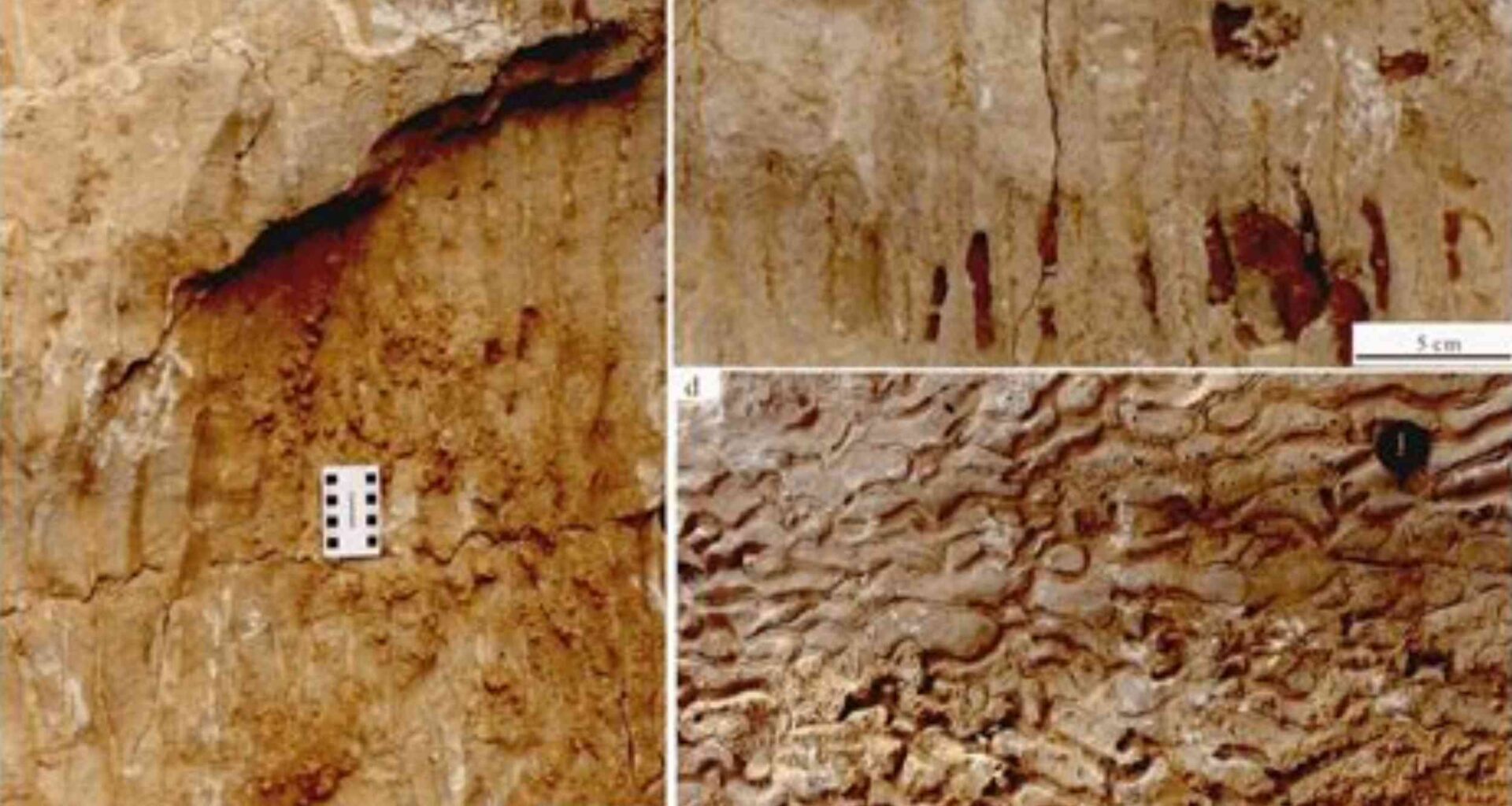
Near Jixian, a district of Tianjin in northern China, layered carbonate rocks kept a chemical record of vanished seas.
By reading that record, Kun Zhang, a geochemist at University College London (UCL), linked the rocks to seawater that carried oxygen.
The signal ran through lower and upper layers of the Tieling Formation, a 1,080-foot rock stack from Earth’s deep past.
That pattern points to a steadier shallow sea, but the next question is how such oxygen fits into Earth’s supposedly quiet middle.
Earth’s quiet middle
Earth’s middle years sit inside the Mesoproterozoic, a geologic era from about 1.6 billion to one billion years ago.
Many textbooks long treated that stretch as a quiet pause between Earth’s first oxygen rise and later seas that supported animals.
New chemical records now show that the pause was patchy, with some shallow waters holding more oxygen than others.
For readers, the point is simple: ancient oceans did not change everywhere at the same pace.
Chemical clues aligned
To test that uneven picture, Zhang’s team analyzed 122 carbonate samples collected from two sections near Jixian.
Their carbon signals mostly stayed within a narrow range, showing only small shifts over time.
Steady up-and-down patterns suggested the rocks preserved real seawater signals, not random noise from later alteration.
That mattered because the team needed the chemistry to reflect the ancient sea, not later rock damage.
Manganese changed meaning
In the lower layers, the striking clue was abundant manganese oxides, mineral particles that usually form when manganese meets oxygen.
Later, as buried organic matter decayed, those particles lost oxygen and helped form manganese-rich carbonate minerals.
Samples from this lower layer contained consistently high levels of manganese. The chemistry therefore points to oxygen in the water before burial, not just chemical change after burial.
Iodine needed caution
Iodine added another clue because one oxygen-rich form, iodate, can become trapped as carbonate minerals grow.
More than half of the lower-layer samples showed higher iodine levels than the usual baseline for these kinds of rocks.
Even so, iodine can fade during early rock changes, so low values do not automatically mean oxygen-free water.
That warning became central when the upper layers showed low iodine values beside other signs of oxygen.
Shallow ocean oxygen and sea level
Sea level then complicated the story by moving the oxygen boundary up and down through shallow water.
The team tracked this boundary with a cerium anomaly, a chemical pattern that often forms in oxygenated seawater.
Values in the upper layers mostly stayed within a narrow range that points to oxygen being present.
When sea level changed, iodine and cerium could move together for depth reasons, not fresh oxygenation alone.
Life gained space
For early life, shallow oxygen mattered because sunlight-fed microbes lived close to the sea surface and changed local chemistry.
Simple cells could use oxygen to release more energy from food, which helped support larger and more complex bodies.
The finding does not place animals in these seas, since animals appeared much later in Earth’s history.
Instead, it widens the kind of habitable space available to earlier organisms living through Earth’s middle years.
Wider clues remain
Beyond Jixian, similar clues may connect this shallow sea to a larger oxygen pattern across ancient basins.
The North China Craton, an old block of crust under northern China, contains manganese-rich rocks from the same broad interval.
Farther away, Australia’s Ullawarra Formation, a 1.45-billion-year-old rock unit, also holds major manganese deposits.
Those links are suggestive, but firm global claims need tighter dates from more well-matched rock layers.
Signals need pairing
Old rocks rarely give clean answers when one chemical marker stands alone in a complicated ancient shoreline.
Each marker is a redox proxy, a chemical sign that tracks oxygen conditions, but neither works perfectly alone.
“Future studies combining the two redox proxies together can better constrain the shallow seawater redox conditions,” wrote Zhang and coauthors.
That approach makes the result stronger because the oxygen signal survived a skeptical reading of the rocks.
Ancient oxygen, clearer stakes
Ancient rock chemistry now turns a supposedly sluggish ocean interval into a more uneven and active chapter.
Future work can test whether these oxygenated shallows stayed regional or reached across far-flung ancient seas.
The study is published in the Journal of the Geological Society.
—–
Like what you read? Subscribe to our newsletter for engaging articles, exclusive content, and the latest updates.
Check us out on EarthSnap, a free app brought to you by Eric Ralls and Earth.com.
—–