

Facility is a welcome addition to efforts aimed at reviving the once-thriving then forgotten Liberties
Local resident Thomas Brunkard, who has been a community representative and board member of the Guinness Enterprise Centre (GEC) for 25 years, said: “I’m in my 80s now, and I remember more than people think I do.
“If you look at Dublin 8 historically, it was the main harbour. Barley would come from down the country into a number of distilleries and breweries – it was the main industrial part of the city.
“Then it fell into disuse, but I’m old enough to remember the barges on the canal and the drawbridge that used to be here. Now with these developments, I think Dublin 8 is going back to its roots.”
Supported by Dublin City Council (DCC), Guinness owner Diageo and Enterprise Ireland, GEC has more than 700 employees working out of the former warehouse, now converted into Dublin’s biggest start-up campus.
The centre has been converted into a modern building sprawling across 100,000 square feet and providing funding, incubation and support for start-ups.
GEC chairman David Varian said: “Back when I joined Diageo in 1998, there was no storehouse here. This building was in ruins and there was no footfall at all.

GEC chairman David Varian. Photo: Gareth Chaney
“We moved from a shell of a building in a dark and dismal part of Dublin to what you see now, with 700 people from all over the world coming in every day and living here. It creates a very different buzz around a place where we had tumbleweed rolling down the roads.”
The developments in the area need to match up with education and social support, said Mr Brunkard, who is a founding member of Fountain Resource Group, a child and youth service organisation working with young people in Dublin’s south-west inner city.
“Before Fountain Group was set up, we held a survey in the area and found only 10pc of the people in some of the flats complexes were employed,” he said.
“Education is the only way to improve people’s lot in life. Over the years, we have set up schools and creches, but we still have a long way to go with the drug problem, right-wingers and people trying to terrorise the area.
The idea is to build a quarter with hotels, office, retail and event spaces. The GEC fits right into that
“Now, with these developments, quite a lot of people have moved in to the area and homes are going up in price in places like Kilmainham. That doesn’t necessarily help people indigenous to the area.”
The GEC forms a major part of Dublin 8’s Guinness Quarter, where DCC has granted permission for 336 residential buildings that will include retail spaces, restaurants and a market hall.
The plans will result in Guinness “opening the gates” to the public, Mr Varian said.
“The brewery was divided into two halves, with James’s Street down the middle,” he said. “Over the years, the main production site has moved and freed up 12 acres of land that used to be impenetrable to anyone but those who were working here.
“It used to be cut off from the public, but now the plan is to open the gates with this. The idea is to build a quarter with hotels, office, retail and event spaces. The GEC fits right into that.”
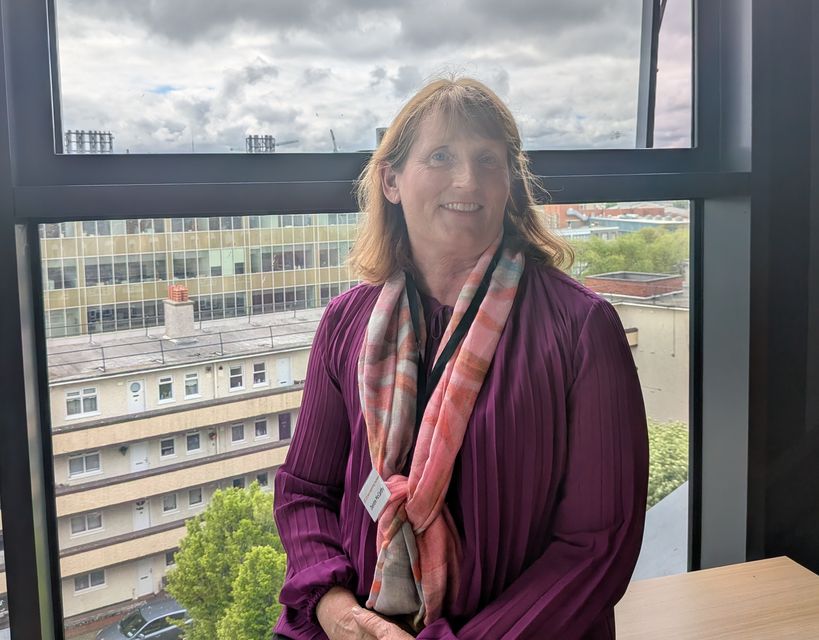
Deirdre McCarthy established a start-up to help women with their finances
For Deirdre McCarthy, founder of an enterprise incubated at GEC, working in Dublin 8 has been an opportunity to support people in the area.
Her company, Flit, offers personal finance information to women living in the area and in Wicklow and Carlow.
“GEC is rooted in the community, and as a founder it has helped me connect with people outside the start-up bubble,” she said.
“Working in Dublin 8 has been important because it’s populous and we have women and families here who will benefit from understanding their rights and how finance works.
“Often, people who are on lower incomes are squeezed more for money because they think they have no levers of control on their lives.”
Flit organises peer groups and workshops for local women who might struggle to make ends meet.
“We’re running a crowdfunding event for a series of workshops in Dublin 8 about women and their past money stories,” Ms McCarthy said.
“Having a peer group works out for women because they can be open. It’s women who might have made a misstep with money, often through a relationship, and they end up blaming themselves.
“We’re trying to reframe that and trying to get women here from judging themselves too harshly.”
Funded by the Local Democracy Reporting Scheme