
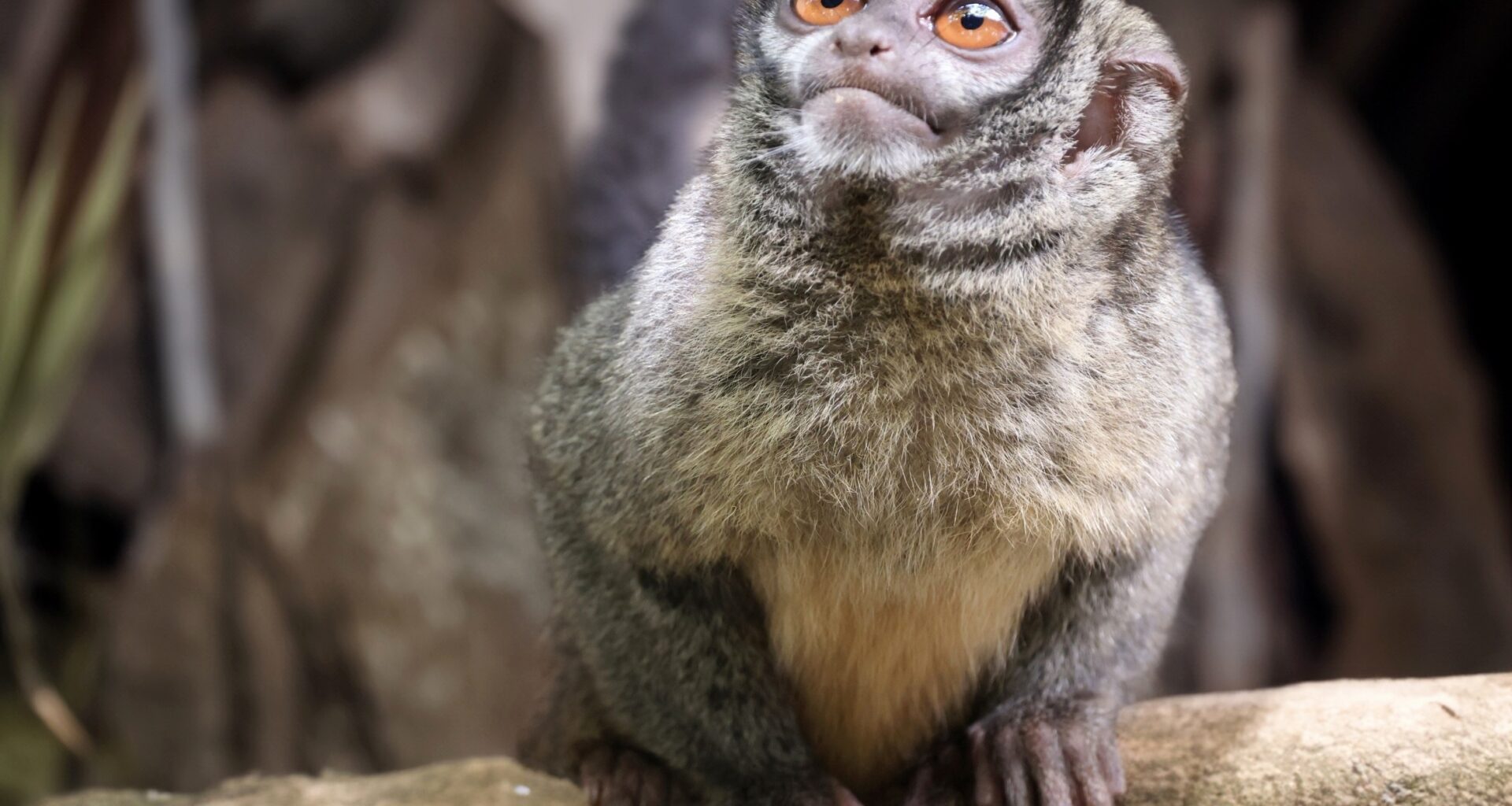
Colombia’s Magdalena River has been shown to separate two nearly identical night monkey species, blurring a mountain boundary that scientists once used.
The discovery could redraw conservation maps in new ways. The data reveals that animals who have been historically grouped by appearance may belong to different evolutionary histories.
Genetic clues by the river

Along Colombia’s middle Magdalena Valley, the divide runs through forests where night monkeys on opposite banks can look nearly indistinguishable.
By tracing DNA from droppings collected across 93 sites, Sebastián O. Montilla, at the University of the Andes (Uniandes) in Bogotá, saw a connection between these hidden histories to the river.
His team found four major genetic groups, wherein the clearest split was shown by water, not types of fur.
Conservationists now face the problem of protecting the right animals and understanding which side of the river they reside on.
A river redraws ranges
Stretching about 957 miles, the Magdalena River carries water from the Andes mountains to Colombia’s Caribbean coast.
Colombia’s main inland waterway matters because a wide, fast river can block small primates that travel through trees, not across open water.
Over generations, blocked crossings limited breeding between banks, and over time, separated populations began to carry different DNA patterns.
For these monkeys, the waterway prohibited neighboring forest populations from breeding with one another for a very long time.
Lookalikes in the dark
Scientists group these animals under Aotus, a genus of related species, which ranges from Panama toward northern Argentina.
Many species qualify as cryptic species because separate family lines can look nearly the same when fur and face patterns reveal so little.
“I’m very surprised that night monkeys have gone unnoticed for so long, both in the scientific community and in public opinion,” said Montilla.
Genetic boundaries therefore change more often than names, because they indicate which populations count as being rare or exposed.
Night vision advantage
After dark, night monkeys rely on their enlarged eyes that can capture scarce light, faster than the brain can process shapes.
Their retina is the light-sensing tissue inside the eye, and it can be 50% larger than expected for a similar daytime monkey.
Extra rods, cells that detect dim light, help explain why these primates move, feed, and judge branches at night.
Those eye changes make the animals increasingly hard to study, and difficult to observe in the dark.
Hidden family patterns
Beyond their eyes, night monkeys are also unusual because pairs often stay together while raising young in small family groups.
A field study found both mountain and lowland groups spent about 48% of the night resting and fed mainly on fruit.
Human lives can overlap with these animals for years, but little evidence has been gleaned from their midnight activity.
“It’s astonishing, because at midnight they pass right by our houses and we don’t even realize it,” said Montilla.
Mountains misled maps
Before the new evidence was revealed, altitude offered small ways to differentiate between Colombian night monkeys.
Earlier maps separated Aotus griseimembra and Aotus lemurinus mostly by a 3,280-foot line in the Andes.
Hair grew longer in colder highlands on both sides of the river, so appearance primarily tracked climate, rather than ancestry.
That pattern weakened the old boundary and made the river’s physical barrier harder to dismiss in observing the monkeys.
Genetic gaps emerge
Droppings gave the team a low-disturbance way to read ancestry without trapping animals in the forest.
Lab work read mitochondrial DNA, genetic material passed mostly through mothers, which preserves family history across generations.
Across the samples, family histories were clustered by geography rather than by the animals’ highland or lowland coats.
A narrow lower-river overlap may exist, but the upper and middle sections carried the strongest signal.
Conservation depends on boundaries
For conservation, a misplaced boundary can leave one species protected on paper but ignored where it actually lives.
Recent conservation work warned that most of the eleven recognized night monkey species have declining populations or lack enough data.
Cattle ranching, oil palm plantations, mining, pets, and bushmeat hunting can cut forests or cause the removal of animals.
When maps improve, agencies can focus patrols, habitat plans, and rescue decisions at the right riverbank.
Gaps in the evidence
Montilla now wants evidence that reaches beyond the genetic trail found in droppings.
Counts of chromosomes, DNA packages inside cells, could test whether species carry different genetic patterns.
Listening to vocal calls could reveal whether separated monkeys recognize their mates across distance.
Body measurements may also show whether fur, size, or skull traits change with place instead of species.
These other details matter because one river pattern, however strong, still needs testing against other Colombian waterways.
A measured conclusion
The evidence recasts the river as an evolutionary boundary, separating animals that human eyes had once overlooked.
Better sampling can sharpen protection plans, but the study also shows how much nocturnal wildlife remains understudied.
The study is published in the International Journal of Primatology.
—–
Like what you read? Subscribe to our newsletter for engaging articles, exclusive content, and the latest updates.
Check us out on EarthSnap , a free app brought to you by Eric Ralls and Earth.com.
—–