
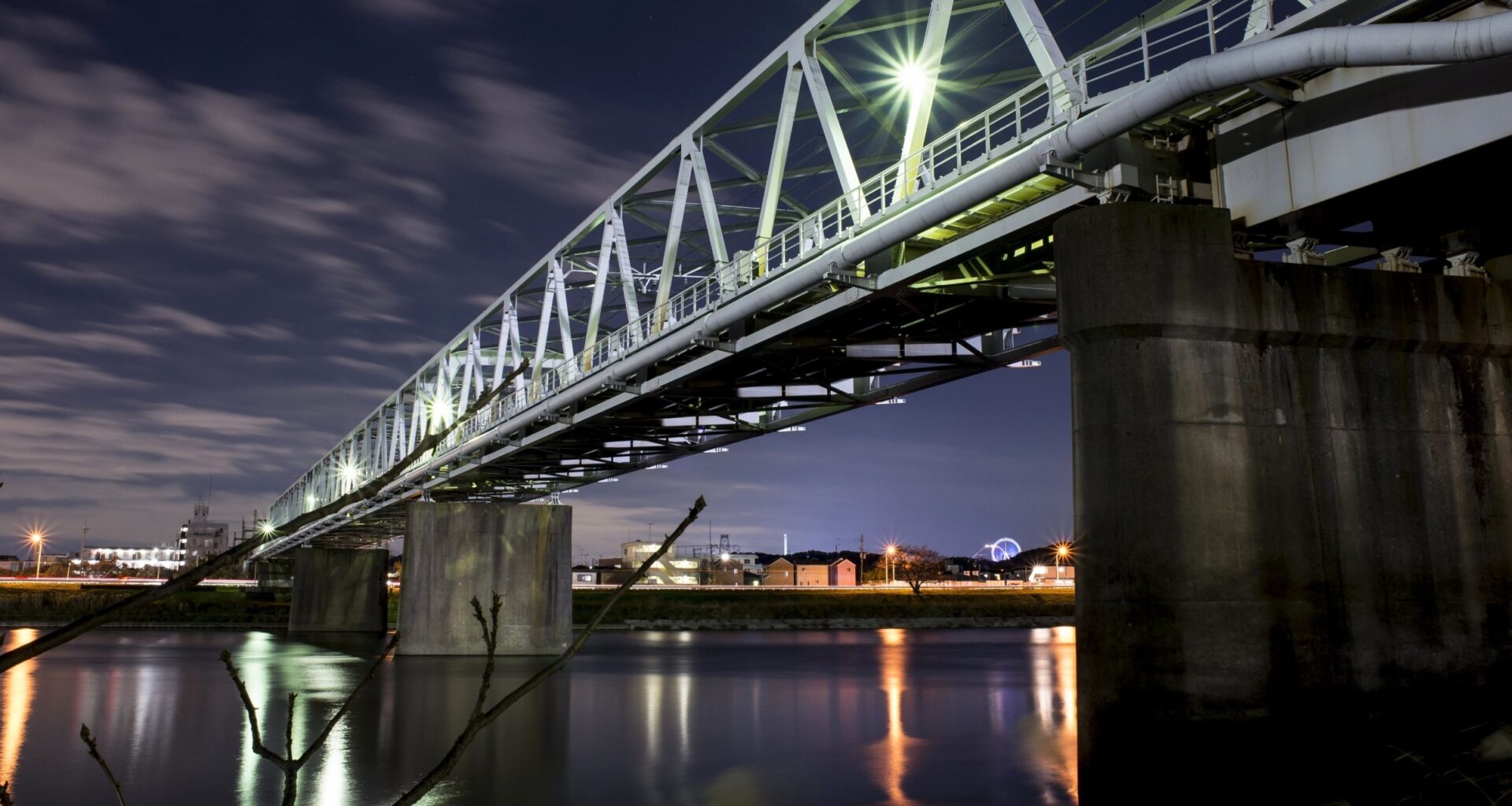
Artificial lighting along streambanks makes riverside spiders eat a wider mix of prey, according to a new study.
This discovery shows that a simple streetlight can redirect the flow of food and nutrients between rivers and the land beside them.

At a research facility in Landau, Germany, 16 artificial streams flowed past banks covered in vegetation.
A team led by Collins Ogbeide, an environmental scientist at RPTU University Kaiserslautern-Landau, tracked prey throughout the artificial streams.
The researchers found that the lights expanded the spiders’ diet without fully cutting off aquatic insects, so they still relied on prey from the stream.
That link feeds spiders, birds, bats, and scavengers, making the finding too broad to explain through one lit bank alone.
Light expands spider diet
Under artificial light at night, spiders ate a broader variety of prey than spiders in darkness.
In dark control channels, the food range stayed much narrower, showing that lighting expanded what the spiders ate.
“Our results show that human interventions in aquatic ecosystems can have far-reaching effects on adjacent terrestrial ecosystems,” said Ogbeide.
Crayfish complicate dinner
Researchers added the signal crayfish as a North American invader to test whether it would drain aquatic prey.
When crayfish hunted Chironomidae – small midge insects whose young live in water – fewer adults emerged for spiders.
Under artificial lighting, crayfish diets shifted so that most of what they ate came from midges and small freshwater crustaceans.
That pressure reduced some insect supply, yet spiders still leaned heavily on meals that began in water.
River food web shifts with light
Around the world, more than half of people live within 1.9 miles of a surface freshwater body such as a river or lake.
Riverbanks trade material constantly as insects leave the water, predators catch them, and nutrients return through waste or dead bodies.
Ecologists call this exchange a food web, a network of who eats whom and where energy moves.
Streetlights placed near water can therefore change more than visibility because they interfere with a living exchange route.
Measuring meals chemically
To follow meals without watching every bite, the team measured stable isotope ratios, chemical fingerprints left by food.
Carbon and nitrogen atoms marked whether prey came from water or land, because bodies carry the chemistry of what they eat.
A statistical model then converted those fingerprints into estimated diet shares for spiders and crayfish.
That approach showed aquatic prey still dominated spider diets, but lighting widened the menu beyond the usual insects.
Two stressors that don’t overlap
Across all treatments, spiders still got most of their food from the water, keeping the river as their main source.
Crayfish alone increased that reliance, even though they reduced how many midge adults emerged.
Lighting alone kept that reliance similar, but it broadened the mix of prey the spiders used.
Combined lighting and crayfish produced only a small diet change, showing the two stressors did not simply add together.
Light strongly shapes river behavior
The global glow that washes out faint stars has been steadily intensifying in recent years.
Near streams, lamps also pull insects toward lit edges, where predators can catch them sooner or in different places.
Earlier research l found lit traps caught 85 times more aquatic insects than unlit traps 10 feet from water.
Local light can beat bigger-looking stressors because it changes behavior nightly, exactly when many river insects move.
Darker planning choices
For conservation teams, the message is practical: darkness belongs in river planning alongside water quality and invasive species control.
Shielded fixtures, lower brightness, warmer bulbs, and curfews can reduce spillover while still supporting human safety.
“This study provides valuable insights for nature conservation and water management,” said Ogbeide.
Because riverbanks carry food into nearby land, better lighting rules could protect habitats without banning every lamp.
River ecosystems change under light
Controlled channels simplify real rivers, where floods, vegetation, traffic, pesticides, and seasons add extra pressures.
Crayfish mortality was high in the experiment, but it did not differ between lit and unlit treatments.
The Queich River, the nearby German river supplying water and crayfish, already passes through human-influenced landscapes.
Future field work should test whether darker banks restore prey movement in busier, messier rivers.
Streetlights, crayfish, insects, and spiders tell one connected story: a small change at night can ripple across water and land.
Smarter planning can treat darkness as habitat while still allowing lighting where people truly need it.
The study is published in the journal Functional Ecology.
—–
Like what you read? Subscribe to our newsletter for engaging articles, exclusive content, and the latest updates.
Check us out on EarthSnap, a free app brought to you by Eric Ralls and Earth.com.
—–