
Robin Weiss started a lecture at the London School of Hygiene and Tropical Medicine in March 2001 by asking those in the audience with an organ donor card to raise their hands. Having carried one for much of his adult life, he quickly admonished those who did not. Sir Robert May, president of the Royal Society, who introduced him, recalled: “He followed this by putting on a containment [or hazmat] suit and lecturing in it.”
Weiss was good at holding his audience’s attention. As one of the most influential scientists in modern virology he was best known for his work on HIV/Aids, telling a Channel 4 documentary in 1985 that the best way to prevent the spread of the virus would be to stop people having sex. “But because humans are sexually active, you can’t expect everyone to become celibate,” he said, adding that the human race would die out if they did.
Another method would be total monogamy, which was equally impractical. “But it could well prove that the epidemic and the mass of deaths that will follow … will change our social attitudes, but perhaps change them too late,” he added bleakly and prophetically.
Weiss originally made his name in cancer research, telling how his “eureka moment” came while still a research student when he stumbled upon endogenous retrovirus genomes embedded in host DNA. His early research focused on cancer-causing retroviruses in chickens as a model for understanding mechanisms of how cancer develops, but early in 1982 he switched to human retroviruses. Then came HIV/Aids and by 1984 he had, in the words of one colleague, “turned his lab round on a penny farthing”, leading a small team working on the virus. His first article on the subject, “Retroviruses Linked with Aids”, appeared in the journal Nature in May that year.
Weiss, who identified the CD4 antigen as the binding receptor for HIV, described his contribution to the development of a way to measure HIV antibodies in 1984 as the most practical achievement of his career. This paved the way for diagnostic tests and for screening blood donors for HIV, a subject he revisited in 2022 in evidence to the infected blood inquiry.
Among his imaginative commentaries on the subject was “Gulliver’s Travels in HIVland” (Nature, 2001), narrating the emergence of HIV and Aids through the eyes of the fictional traveller. Drawing parallels with reactions to the Justinian plague, the Black Death and the 16th-century syphilis pandemic, he concluded by asking: “So will the band play on, or will the pendulum swing away from our contemporary society, as the religious right press Aids to their cause of just deserts, and ‘ecofascists’ bless HIV for curbing human population growth?”
Another area of interest was the role of viruses in xenotransplantation, especially pig-to-human transplants. While American scientists were keen to press ahead with trials of tissue taken from specially bred pigs to help people with diabetes, brain diseases and blindness, Weiss urged caution, fearing that a retrovirus could jump from pigs to humans and trigger a new pandemic in much the same way as HIV is thought to have started from cross-species infection.
While most zoonotic viruses do not cause large numbers of deaths — such as Nipah virus, which comes from bats and kills only a handful of people in India every year — “very occasionally, as has happened with Covid, one takes off”, he told the Los Angeles Times in 2020. “One of the lessons is to expect the unexpected,” he added. “You don’t know which corner or what angle it’s going to come from.”
Robert Anthony Weiss was born in London in 1940, the youngest of four children of Hans Weiss, who had a small business in metal finishing, and his wife Steffi (née Löwinsohn). They were assimilated Jews who had left Germany in 1933, although it was not until 1947 that they were granted British citizenship. He was always known as Robin, which caused confusion in the United States, where he was once allocated a bed in a female dormitory.
His siblings, Ernie, Marian and Peter, all predeceased him. From his father’s first marriage he also had a half-sister, Hanna, whose three siblings all died within weeks of their birth. “The reason may have been Rhesus incompatibility,” he noted. His mother had spent part of her childhood “running wild” in the woods near the Czech border and from her he inherited an interest in foraging and a knowledge of edible wild mushrooms, always using their German names including Steinpilzen and Pfifferlinge.
He was three months old when his father was interned as an enemy alien on the Kintyre Peninsula in southwest Scotland and put to work dredging the Crinan canal. “He could have been in Rwanda as far as my mother was concerned, with four children to feed. He was released eight months later and went straight into the Home Guard,” he told an interview for Microbiology Society, of which he was president from 2006 to 2009.
When a German doodlebug bomb fell near his nursery in Highgate, north London, Robin and his brother Peter were evacuated to Wiltshire. He was later educated at Byron House prep school in Highgate, taking a keen interest in trees and birds, and Abbotsholme School in Staffordshire, where a kindly but poorly qualified biology teacher allowed him the run of the biology classroom. “I had to teach myself from the A-level biology textbook, which gave me experience of studying independently before going to university,” he said.
Having read Konrad Lorenz’s King Solomon’s Ring he was set to become an ethnologist. However, after a summer spent travelling overland through Yugoslavia and Greece using Herodotus’s 5th-century BC The Histories as his “excellent guide”, he instead read zoology at University College London (UCL), disappointing his headmaster from Abbotsholme by turning down a place at Oxford because it felt “stuffier”. His tutorials were with Alex Comfort, an honorary member of the department who later became famous for The Joy of Sex (1972).
For his final year he worked with Sir Peter Medawar, the head of zoology who in 1960 shared the Nobel prize for his discovery of immunological tolerance. At their first meeting he walked into Medawar’s office sporting a Campaign for Nuclear Disarmament badge. Medawar promptly “reached up for a folder marked ‘Confidential on Her Majesty’s Service: Report on the Biological Effects of Ionising Radiation’ [and] asked me to come back in two weeks with an essay on the report, adding not to leave the folder on the Tube”.
He was considering teaching, but Medawar nudged him towards research. After spending the summer of 1961 studying small mammals at Flatford Mill, Suffolk, he joined a Medical Research Council and Atomic Energy Commission of India project examining rodents in an area of high natural radioactivity along the coast of Kerala, south India. This involved radio biology, population genetics and ecology, and his first refereed paper, published in 1966, involved measuring the wear in the teeth of Indian black rats.
In 1963 he was appointed lecturer in embryology at UCL, where he later completed a PhD in cancer research. The following year he married Margaret D’Costa, who was from Kerala, raised in Singapore and became a secondary school maths teacher. She survives him with their daughters, Helen, a professor of epidemiology at the London School of Hygiene and Tropical Medicine, and Rachel, a counsellor who founded the Menopause Café charity in Scotland.
Over the next decade Weiss had a visiting fellowship in Czechoslovakia during the Prague Spring and postdoctoral appointments in Seattle and southern California. In 1972 he joined the laboratories of Imperial Cancer Research Fund (now Cancer Research UK), winning the 1974 Gustave Stern award in virology. At the end of the decade he was named by The Observer newspaper as one of the “Eighty for the Eighties”, people from all walks of life tipped to make an impact over the following decade.
From 1980 to 1989 he was director of the Institute of Cancer Research (ICR) based at the Royal Marsden Hospital in London, where he managed about 600 staff. There he was known for his kind and thoughtful mentoring, which included accompanying students to some of the early plays about HIV/Aids. Alongside the serious nature of his research he had a delightful sense of humour, publishing an April Fool’s spoof in Nature in 1993 about “Dorian Gray mice” suggesting the existence of a gene that could enable mice to live indefinitely without ageing.
Weiss remained at the ICR in the 1990s as director of research. He was also a member of Wellcome Trust funding committees, where colleagues recalled him “bending over backwards” to find ways to support applicants with interesting research proposals. Freed from administrative duties in retirement, he explored some of the more unusual highways and byways of virology, including canine venereal sarcoma, demonstrating how this form of cancer had its origins in a single cell in one dog between 6,000 and 11,000 years ago.
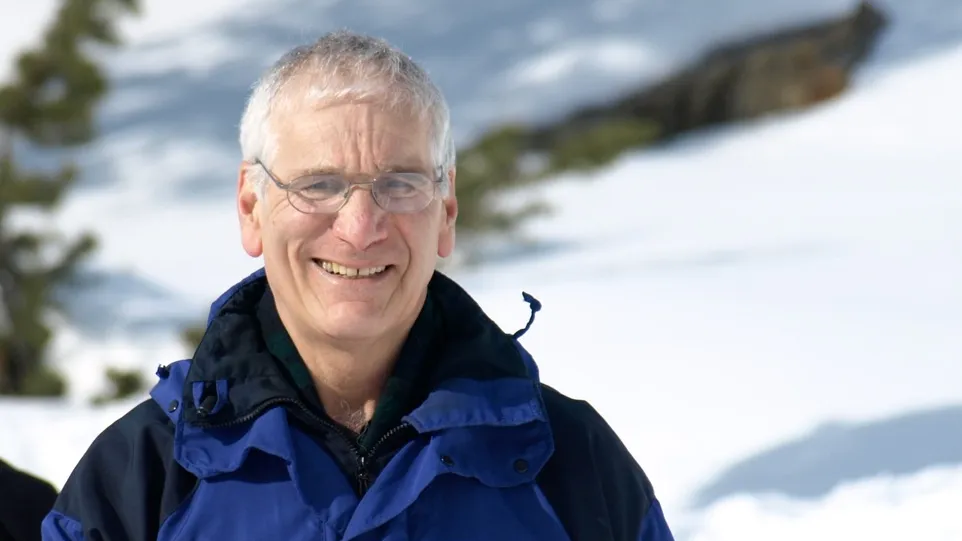
A tall, gangly figure in horn-rimmed glasses with a huge and irrepressible smile and a wealth of funny stories, Weiss was a familiar figure in Church End, Finchley, walking across the village green hand in hand with Margaret, taking part in the annual community clearout of detritus from Dollis Brook and making delicious jam. Speaking in 2002, he described himself as a “one-track scientist” whose only research interests were “retroviruses, retroviruses and retroviruses”. When it was suggested to him that he was like a moving train travelling across the scientific landscape, he embraced the analogy, adding: “Sometimes I was the engine driver, at other times the ticket collector. But never just a passenger.”
Professor Robin Weiss, scientist, was born on February 20, 1940. He died from cancer on February 27, 2026, aged 86