
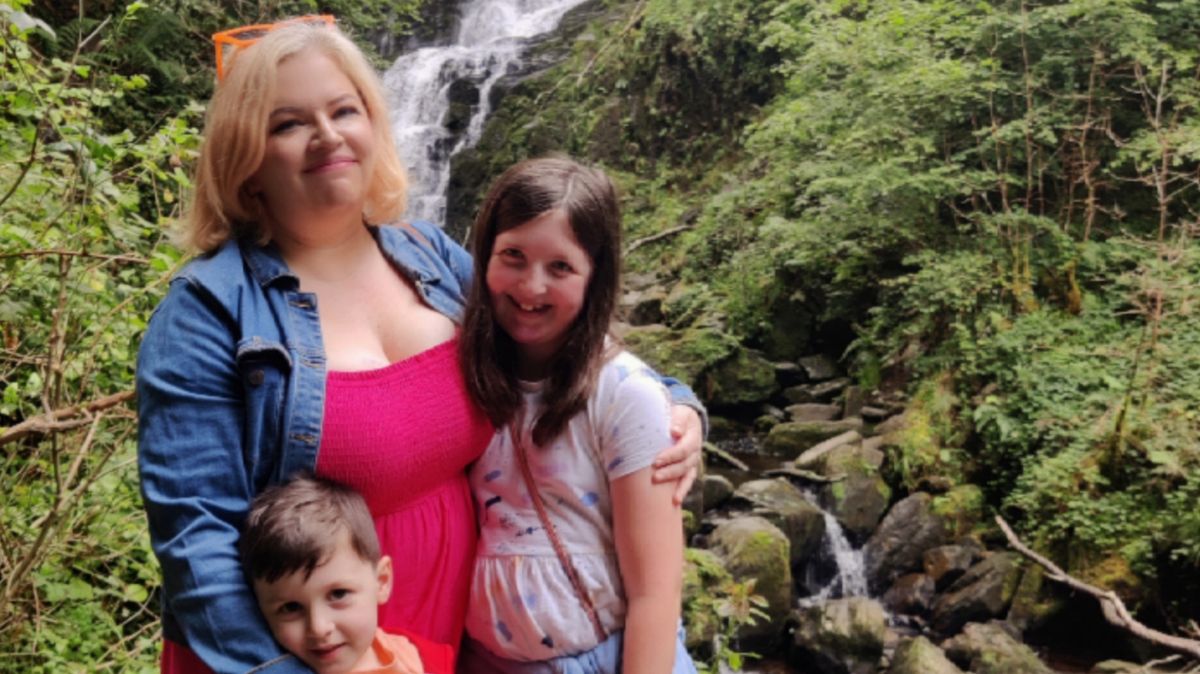
When Debbie Morris was told she had beaten stage 4 blood cancer, she thought the worst of her medical woes were finally behind her. However, a little over five years later, the Cork woman is now battling an entirely different type of cancer, and the Morris family is raising funds for a life-saving treatment abroad that can help Debbie overcome the cruel disease for a second time.
Debbie was diagnosed with stage 4 Hodgkin’s lymphoma in February 2020, and after a months-long battle, she was given the all clear by doctors. The tests showed she was in remission, and for several years, Debbie’s life returned to normal.
However, in March of last year, she came down with a severe case of meningitis, which developed into ventriculitis – a life-threatening condition that had doctors warning her family to expect the worst. Despite the grim prognosis, Debbie soldiered on, and while family members were in the midst of booking flights to potentially say goodbye, her condition began to improve, and she overcame the illness.
Either one of these illnesses could have cost Debbie her life, but as told by her brother David, she soldiered through both with determination and an ever-present sense of humour that brightened up the darkest days.
Once again, Debbie returned to normality, but on St. Stephen’s Day she began to feel unwell, and in the months that followed, her symptoms worsened, eventually leading to a second diagnosis of cancer in March of this year.
Doctors initially believed Debbie was suffering from astrocytoma, a form of brain cancer that has no medical link to the Hodgkin’s lymphoma she had been diagnosed with in 2020. However, a biopsy later revealed that the mass in her brain was in fact glioblastoma, a more advanced and highly aggressive form of malignant tumour, which meant Debbie was now battling stage four cancer for the second time in five years.
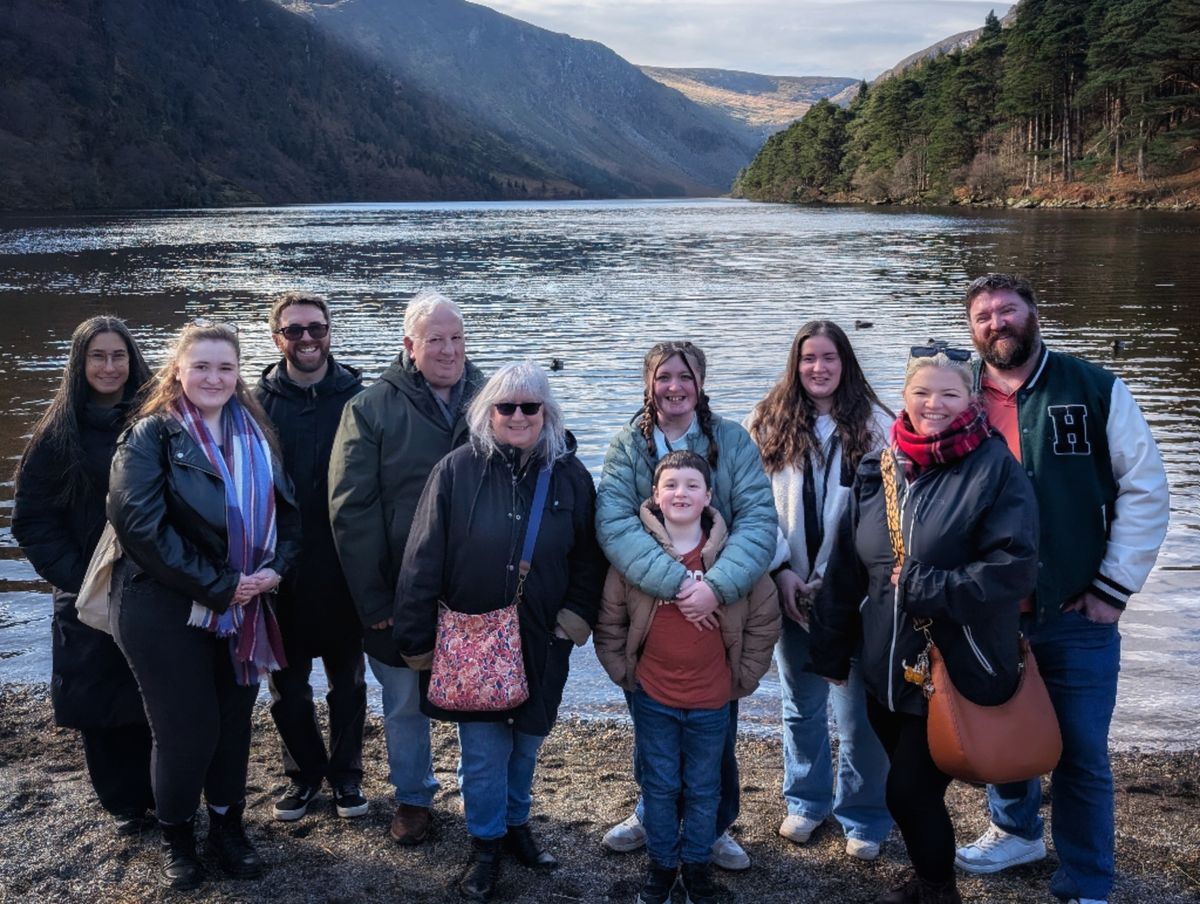
Debbie and the Morris family(Image: GoFundMe)
It’s been a tough few years for Debbie, who works for Logitech here in Cork, but her battles with Hodgkin’s lymphoma and ventriculitis show she’s nothing if not a fighter – and the Cork woman is determined to meet this latest diagnosis head-on.
Her brother David described Debbie as the ‘heart of the family’ and told CorkBeo that she’s almost like a mother to her three nieces and her nephew, all of whom are standing beside her as she takes on this latest battle. The family have rallied behind Debbie, with her brothers poring over research and reaching out to others who have dealt with this rare and somewhat under-researched cancer to help their sister in any way they can.
David told CorkBeo: “My brother and I have delved deep into researching. We want to help as much as we can, but this is a poorly studied type of cancer. We’re pestering doctors as much as possible, and we’ve also had great support via Facebook from others who have been through this.
“The staff at the CUH and other hospitals have been fantastic. Debbie was suffering from up to 130 seizures a day, and staff have been doing everything they can to prevent them, keeping things like lighting and smells consistent to avoid triggering them.
“Debbie is brilliant, she’s the heart of our family, and she was the first of us to go to college. She studied economics and politics in the UK, and when she was younger, she had a few solo painting exhibitions in London.
“She’s very tough. We’ve all had our moments of crying, but we’ve also laughed a lot throughout all of this. Debbie has that typical Irish dark humour, and it really makes long days at the hospitals go a little bit quicker.”

Debbie (right) and her brother David (mid-left)(Image: GoFundMe)
During research into the condition and consultations with doctors, the family came across a personalised immunotherapy treatment called dendritic cell therapy. The treatment allows doctors to create a personalised vaccine from Debbie’s tumour tissue, which is designed to train her immune system to recognise and attack the cancer over the long term.
The treatment has the potential to greatly extend Debbie’s life, and in rare cases, it has allowed patients to enter full remission. However, the treatment is still quite new and not available here in Ireland, so Debbie will have to go to Germany for it.
Unfortunately, the emerging treatment is going through the approvals process for it to be considered a ‘first-line’ cancer treatment. This has caused difficulties with the State’s healthcare reimbursement schemes and Debbie’s insurance provider.
While her insurer hasn’t ruled out paying for the treatment, getting the procedure approved has proven difficult. The company said it will require significant support from Debbie’s oncology team they have required all documents to be provided a full 28 days before her treatment.
This has left the Morris family jumping through administrative hoops and trying to get doctors to sign off on the procedure, all while working to a tight timeframe. Debbie underwent an operation to remove as much of the tumour as possible on April 22, and the cells extracted during that procedure are being kept frozen at Beaumont Hospital in Dublin, ready for transport to Germany
David said, “It feels like there’s been a blocker every step of the way. Debbie can’t be given her latest medical report until 30 days after discharge; we need an oncologist to submit a report, agreement forms and medical evidence 28 days before her treatment.
“Transferring the cells from Dublin to Germany needs to be done two weeks in advance and will cost €7,500 alone because they need to be kept at -80C° the whole way. In total, we have about 60 days of waiting for administrative processes to be completed, and Debbie’s radiation treatment ends in eight weeks.
“The cell therapy needs to be done in the break between her current treatment and her chemotherapy. It feels like we need the planets to align perfectly just for a shot at accessing this treatment.”
While insurance may eventually cover the costs of this treatment, it will be through reimbursement, which means the family will need to pay the upfront costs one way or another. David also expressed his frustration with the entire process, highlighting how some of the drugs used in the treatment are manufactured here in Ireland, but Irish patients have to go abroad to access them.
David estimates that the first round of treatment, including transporting the cells, travel, accommodation in Germany and the procedure itself, will cost around €95,000, and the family are hoping to raise €250,000 to cover the treatment Debbie will need going forward.
In the worst-case scenario, Debbie might need as many as two cell therapy treatments per year, each of which comes out to around €26,000. Follow-ups are less expensive than the initial round, as that covers the manufacturing of the personalised medicine and the tests associated with it.
So far, the fundraiser has raised just shy of €60,000, with David giving special mention to former Logitech CEO Darrell Bracken, who individually donated more than €8,000 via the GoFundMe page. You can find out more about the fundraiser and donate yourself here.