
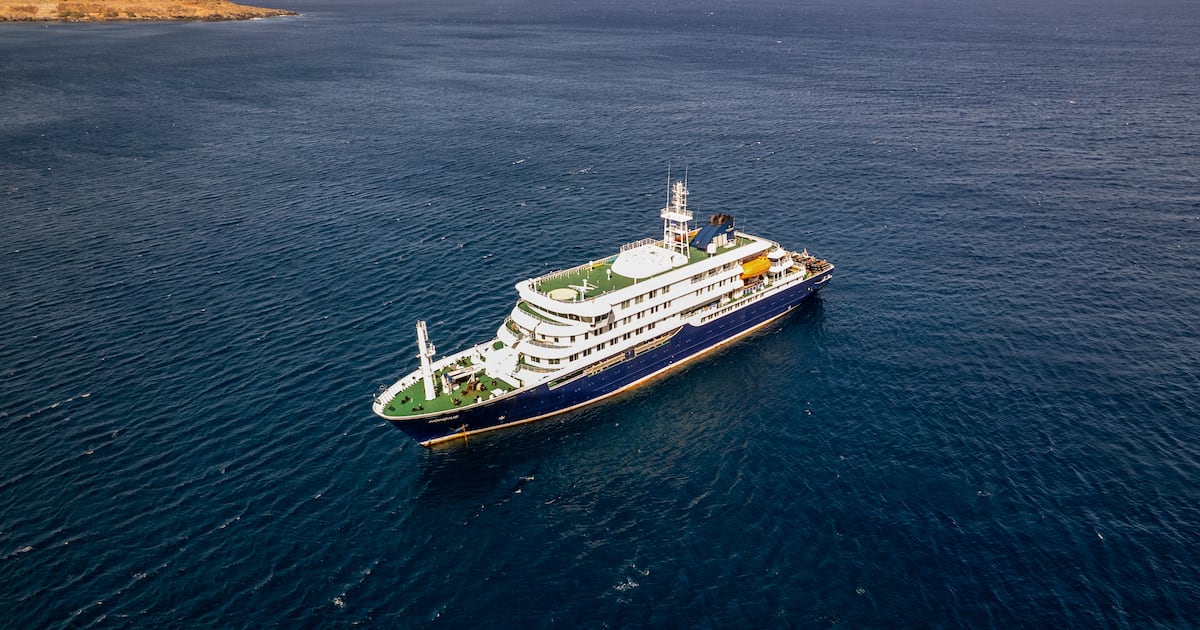
An Irish woman stranded on a vessel off Cape Verde after three passengers died following a hantavirus outbreak has described the distressing ordeal of recent days.
Ann Lane, originally from Cork but a resident of Donnybrook, south Dublin for many years, is one of two Irish people on the polar cruise ship MV Hondius.
She told The Irish Times it was not immediately clear what was happening as the first passengers fell ill on the small cruise vessel. One man died on board. The man’s wife left the vessel, took ill and later died. The couple, aged 70 and 69, were from the Netherlands.
Lane is well known in political circles in Dublin as a former personal assistant to senior politicians, including former president Mary Robinson and Labour Party leader Ivana Bacik.
Lane told The Irish Times hantavirus was only diagnosed when tests were carried out on another passenger who fell ill. That passenger is currently in intensive care in South Africa.
“The real shock was when the first people died because we just didn’t know what this was,” Lane said of the first fatality, which occurred before the ship reached St Helena, where it was scheduled to stop.
“We initially thought this man may have just died in his cabin, perhaps suddenly. Nobody really expected anything [else to happen] after this poor man had died.
“He got sick before St Helena . . . and that man was deceased on the ship for several days before we got to St Helena. His wife left the ship at St Helena – both were supposed to be going to Johannesburg. But then she died.
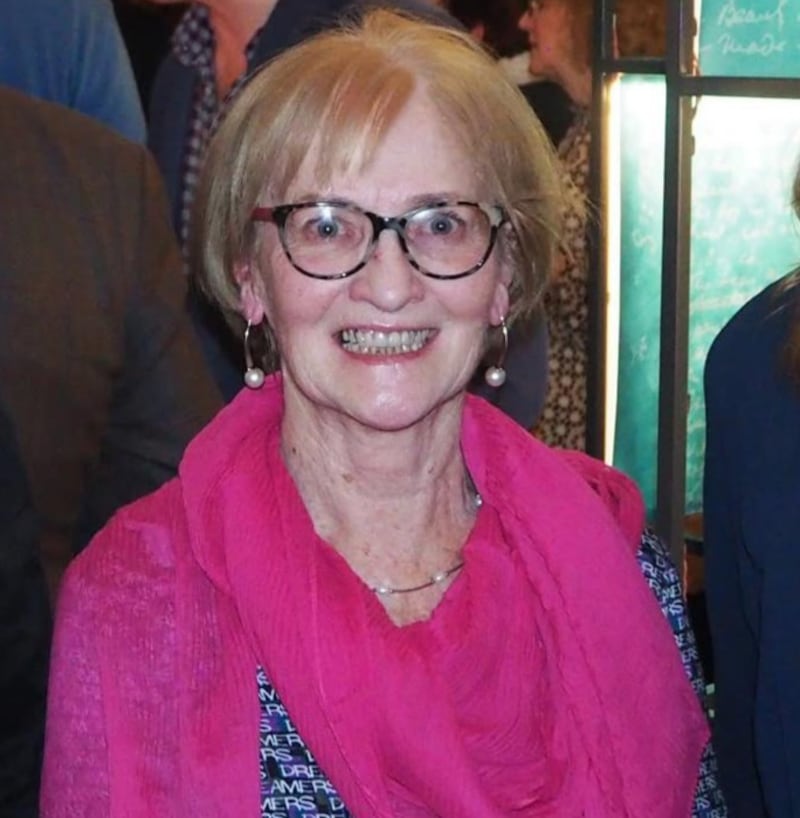 Irish woman Ann Lane is travelling on the MV Hondius with a friend
“We heard she had been taken on to the flight to Johannesburg in a wheelchair, though of course there is an awful lot or rumours. She seemed to be (physically) okay while she was on the ship before she got off at St Helena. So that was an awful shock, to hear both of them had died.
“And then another person died, a woman, and her body is still on the ship. It’s terribly sad, really awfully sad. But we have confidence in [trip organisers] Oceanwide, everyone on the ship, their performance has been impeccable.
“Now the ship’s doctor and a member of the expedition staff are sick on board. The doctor had been treating everybody day and night, really dedicated to what he was doing – [he has been] fabulous. He’s a younger man, British. He has been sick quite a few days, maybe since last Thursday.”
She described her condition and that of her Irish friend as “fine”, adding “we can’t really do anything at the moment so it’s a case of ‘hang in there’ and the company will sort everything out”. The atmosphere on board was calm as the crew were keeping everyone informed of all developments. Passengers had been allowed to move around on the vessel and spend time on deck.
Orthohantaviruses, more commonly known as hantaviruses, are a group of viruses primarily found in rodents but that can infect humans.
Hantaviruses are spread to humans via inhalation of or contact with infected rodent faeces, urine and saliva – or, more rarely, through bites and scratches from contaminated animals.
The World Health Organisation said an investigation into the suspected hantavirus outbreak on MV Hondius was under way.
 Ann Lane (centre) with former Irish president Michael D Higgins and his wife Sabina Higgins
Foster Mohale, a spokesperson for the National Department of Health in South Africa, said the MV Hondius – which was carrying about 150 passengers from various countries – left Ushuaia in Argentina about three weeks ago for the Canary Islands, stopping at a number of points, including Antarctica, the Falkland Islands, South Georgia and Cape Verde.
Lane boarded the vessel with her Irish friend at Ushuaia in southern Argentina for a cruise to Cape Verde, stopping at islands along the way. Many of those on board are bird watchers interested in the wildlife in the region while others are holidaymakers.
Once the tests on the man in intensive care in South Africa confirmed he had hantavirus, that diagnosis was relayed to health authorities and Oceanwide. However, because the virus has been diagnosed on board, the authorities in Cape Verde, the final destination for Lane and her friend, have not allowed it to dock.
Instead, the vessel is just off the coast, waiting for a detailed health response to be put in place in a bid to ensure the virus is contained.
“For whatever reason, they haven’t been able to get the people who are ill into the hospital there [in Cape Verde],” Lane said. “But, I have to say, Oceanwide have been absolutely fantastic, I’m so glad we are with them.
“Medical people from Cape Verde came on yesterday and they took samples. The hantavirus, we are now told . . . has a lot of different strains and some of the strains are more transmittable than others. So everyone is hoping they (Cape Verde medical staff) can determine what strain it is because it’s hard to deal with if you don’t know the strain.”
Once the strain is determined, she said the plan appeared to be that the doctor and expedition staff member who was also ill would be taken off the ship, along with a person sharing a cabin with the staff member, and they would be flown from Cape Verde back to Europe. It is believed the remains of the deceased woman on board would also be repatriated on that flight.
Lane said the provisional plan for the remaining passengers on the vessel appears to be that they would remain on board and sail for three days to the Canary Islands, where they would disembark and fly home.
“Our trip was supposed to end today and we were due to get a flight back from Cape Verde to Lisbon this evening and then Lisbon-Dublin tomorrow [flight] morning. But they are not allowing us in [to Cape Verde]. We’re out beyond the dock.”
Lane said while the capacity of the vessel is about 150, plus crew, there were currently around 90 people on board as a large group had disembarked, at the end of their trip, at St Helena last week.