

Ireland’s first dedicated skin cancer clinic is to open in south Dublin this summer as confirmed cases of the disease reach record levels.
The move comes as the government examines legislation to prohibit commercial sunbed use in Ireland, following the example of countries including Australia and Brazil.
Figures provided to The Sunday Times by the National Cancer Registry Ireland show 13,290 cases of skin cancer were recorded in 2023 — the highest annual figure on record and a 14 per cent increase on 2018. The registry has warned the number of cases could exceed 20,000 annually by 2040.
The dermatologists’ ten-point skin cancer prevention guide
May is skin cancer awareness month, and dermatologists and cancer charities are urging the public to use sunscreen, avoid sunbeds and monitor changes in moles or skin lesions.
Last October Jennifer Murnane O’Connor, a Fianna Fail TD and minister of state at the Department of Health, established a cross-departmental working group on sunbeds which has recommended banning commercial use. Ministers are considering the findings after a public consultation that drew almost 9,500 responses.
There are 351 registered sunbed businesses operating in Ireland, according to the HSE, which warns that using sunbeds before the age of 35 increases melanoma risk by 75 per cent.
Ireland’s dermatology services are also facing severe pressure, with more than 56,000 people on waiting lists and routine appointments in some areas delayed by up to three years.
Caitriona Ryan, a consultant dermatologist at the Institute of Dermatologists and Blackrock Clinic, is among the co-founders of Surgical Institute Dublin (SID), a €4.7 million private clinic in Ballsbridge focused on skin cancer diagnosis and dermatological surgery.
 Surgical Institute Dublin is co-founded by Caitriona Ryan, Conor Murphy and Nicola RalphBryan Meade
The centre, whose other founders are Nicola Ralph and Conor Murphy, is expected to open in July. It will include four procedure theatres and more than 30 specialist consultants, and the service is based on a US model of consolidating dermatology and skin cancer services in one place.
Ryan, an associate clinical professor at University College Dublin who worked in the US for seven years, said the model aimed to reduce delays by allowing patients to undergo consultation and treatment in the same facility.
“Here, you come in with a suspicious lesion, it is assessed and if necessary you can be treated the same day,” she said. “It takes out months of waiting and stress for patients. It’s a model that I worked under in the States for years before I came home.”
About €2.8 million will be invested in the design and construction of the facility itself. The remaining €1.9 million will be allocated across a lease deposit and legal, finance and tax advisory fees, as well as a cash reserve to fund operational costs during the first year of trading as utilisation of the facility builds following opening.
Ryan said she had noticed a “resurgence” in sunbed use among young people. “It’s shocking,” she said.
“There’s also an increase in the number of men using them. I think with men now, everybody is going to the gym six days a week, and then they’re running around with their tops off and doing Hyrox and everything else. Irish men aren’t going to wear a fake tan so they’re getting into sunbeds. There’s definitely been a spike in it again. The only safe tan is a fake tan.”
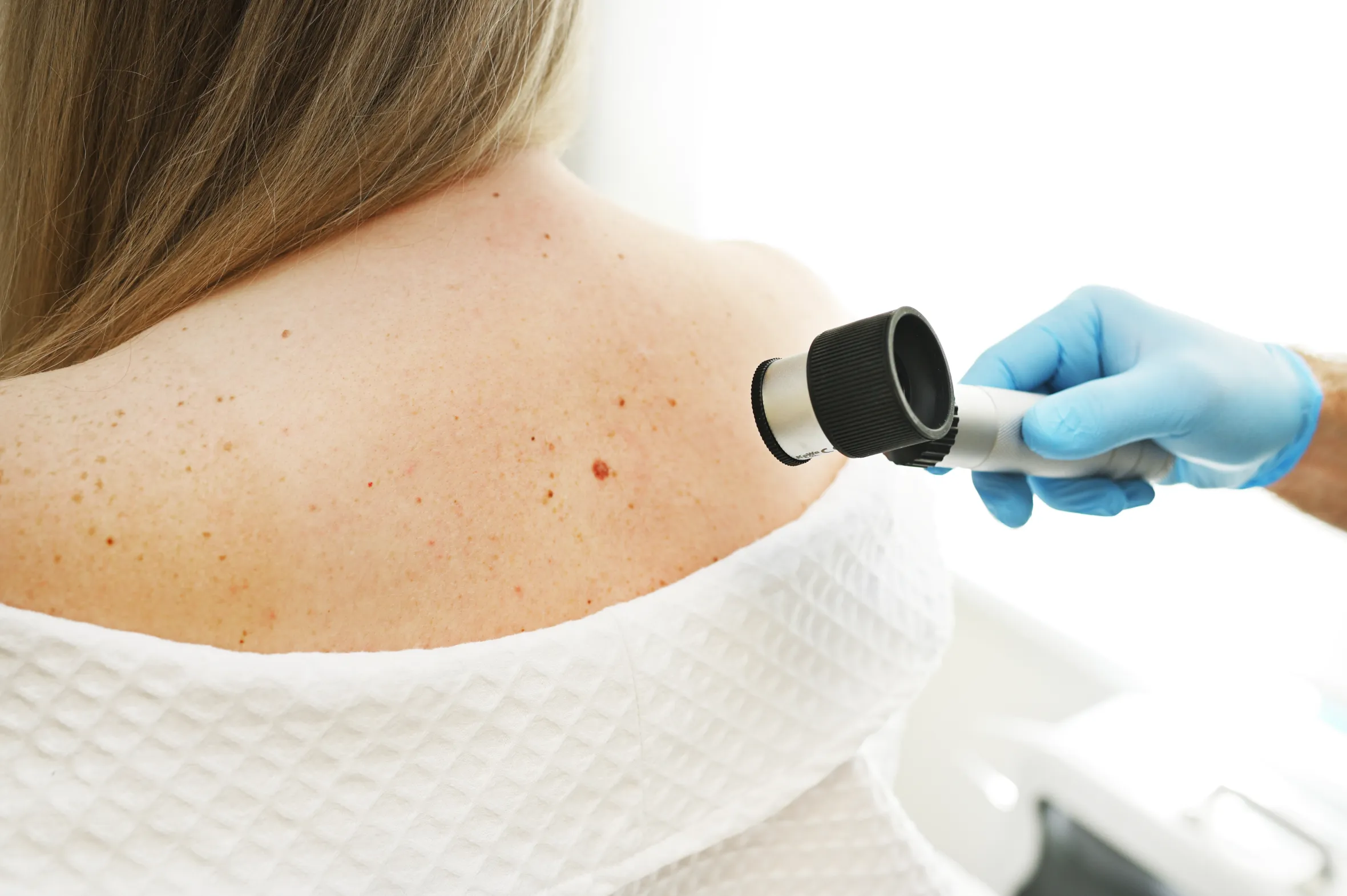 Skin cancer is the most common type of cancer in IrelandGETTY IMAGES
Murnane O’Connor said while no final decision had been made on the sunbed ban, she was due to receive the public consultation report soon.
“We know that sunbed use is linked to an increased risk of skin cancer, so it is important that we take strong, evidence‑based action to protect our population from this preventable harm,” she said.
“Skin cancer is the most common cancer in Ireland, with rates continuing to rise. Exposure to ultraviolet radiation from sunbeds is internationally recognised as carcinogenic, with no safe level of exposure. Children and young people are particularly vulnerable, as early exposure significantly increases lifetime risk of skin cancer.
“I recently published the report of a working group on sunbeds, which examines the public health risks associated with sunbed use in Ireland and explores policy options to reduce harm, including a potential ban on commercial sunbed use,” she added.
“These reports along with further analysis will inform proposals for government consideration and we are committed to taking an evidence‑based, balanced and measured approach.”