
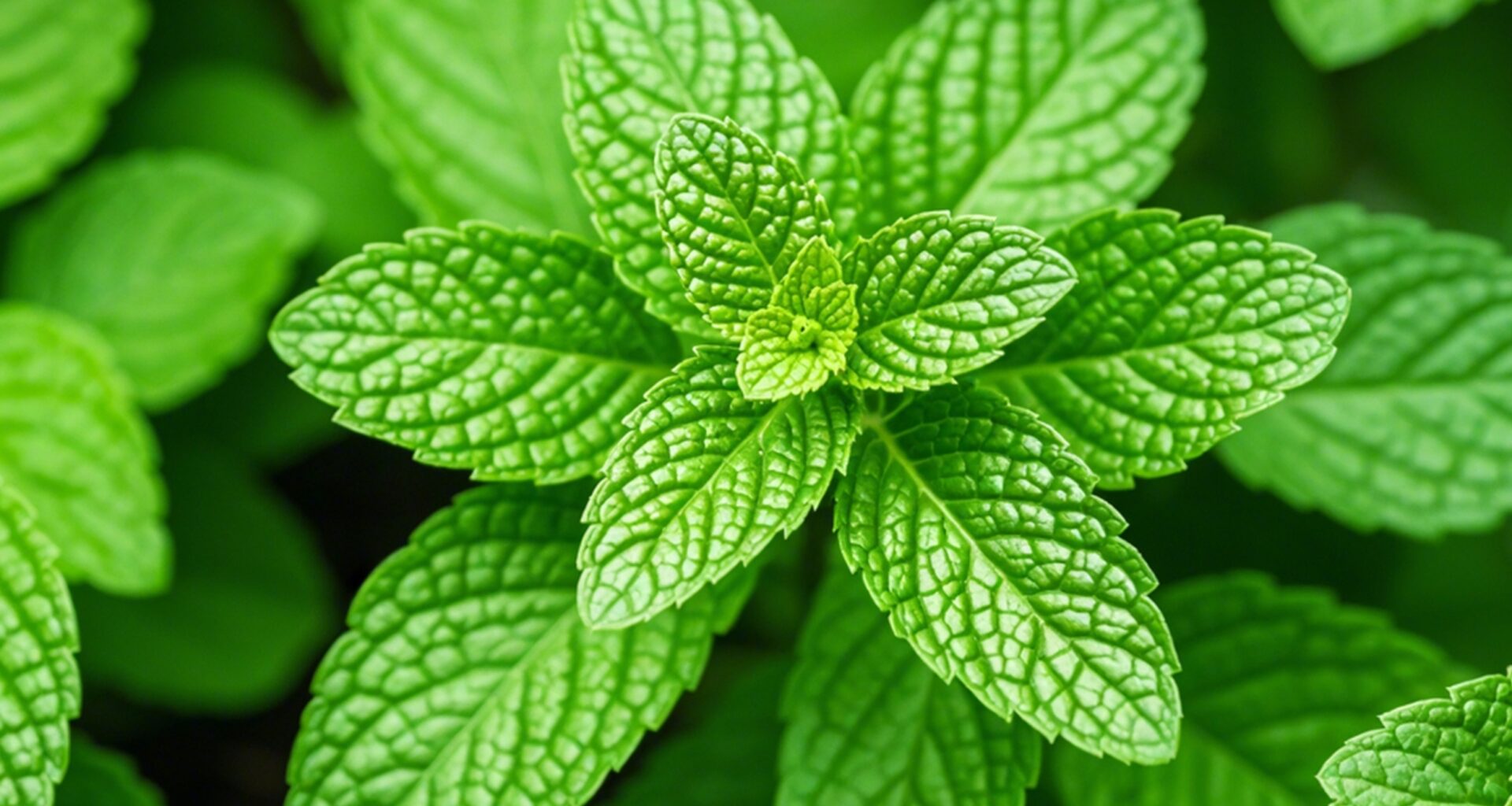
Peppermint is one of the world’s most recognizable flavors. Hidden behind that fresh taste, however, is a surprisingly odd genetic story.
Most of the world’s peppermint comes from a single plant discovered centuries ago.

The plant, called Black Mitcham, cannot produce seeds. Farmers copy it again and again using cuttings.
This raises a simple question. If a plant cannot reproduce sexually, how does it change over time? A recent study provides an answer.
The research shows that mutations in such plants do not spread evenly. They stay hidden in specific layers of tissue.
One plant cloned forever
Black Mitcham peppermint has shaped the global mint industry. Every plant grown today traces back to one original clone.
Over hundreds of years, farmers have relied on this plant for its strong menthol flavor.
But this dependence comes with risk. A disease could wipe out the entire crop. Researchers now want to understand how this plant changes at the genetic level, even without seeds.
“Black Mitcham peppermint oil is used by companies from all over the world for candy, chewing gum and toothpaste,” said Luca Comai, Distinguished Professor at the UC Davis Genome Center.
“This clone is getting jeopardized by disease, so the mint industry needs to make sure that they can continue to grow it, or a similar variety with equivalent or better properties.”
Plants built in layers
Plants may look simple, but their structure is complex. At the growing tip, cells form three layers. Scientists call them L1, L2, and L3.
Each layer has a job. The outer layer, L1, forms the skin and oil-producing structures. The L2 layer creates inner tissues and reproductive cells.
The L3 layer builds deeper tissues like roots and vessels.
These layers stay mostly separate. When a mutation appears in one layer, it does not spread to others.
This creates a chimera, a plant with different genetic identities in different layers.
Creating mutations in mint
Researchers exposed peppermint buds to gamma radiation. This method, which has existed for decades, creates random mutations across the genome.
“This method of mutagenesis is almost 100 years old, but it still provides a powerful tool for probing gene functions and plant development, especially when we combine it with today’s cutting-edge genomics,” Comai said.
The team treated 550 buds. After several rounds of growth and selection, they kept 261 stable mutant plants. Each one carried unique genetic changes.
Building a complex genome
Peppermint is not a simple plant genetically. It carries six copies of each chromosome. This makes genome analysis difficult.
The researchers built a detailed genome map. It included over 100 large segments and covered nearly 1.8 billion DNA bases.
This allowed them to track mutations across different copies of genes.
Mutations appear uneven
The team found more than 1,400 large mutations across the plants. On average, each plant carried about five.
Most were deletions rather than insertions. Higher radiation doses caused more mutations. This confirmed that the method worked as expected.
But something unusual appeared in the data. The mutations did not show full loss across all cells. Instead, they showed partial effects.
Strange coverage patterns
When scientists measure DNA, they expect deleted regions to show no signal. That did not happen here. Instead, the signals dropped only partly.
Some regions showed about 70 percent of normal levels. Others showed about 30 percent.
This matched the structure of plant layers. About 30 percent of leaf cells come from L1. The rest come from L2 and L3. So a mutation in only one layer changes the signal in a predictable way.
Most mutations stayed within a single layer. Only a few spread across all layers.
Roots confirm the idea
The researchers tested their idea using roots. In peppermint, roots come from the L3 layer.
If a mutation exists only in L1, it should not appear in roots. If it exists in L2 and L3, it should appear strongly.
The results matched these predictions. This confirmed that mutations stay locked within layers.
Outer layer changes faster
The outer layer showed more mutations than the inner ones. This pattern appeared in other plants too.
Scientists think this may protect the plant. The inner layer produces reproductive cells, so it may avoid damage. The outer layer interacts with the environment, so it may tolerate more change.
“This supports our hypothesis that L1 cells might accumulate mutations faster in order to provide useful variation with little long-term genetic consequences, whereas L2 stem cells might have evolved to be more resistant to mutations in order to protect the plant’s sex cells,” said Isabelle Henry, senior author of the study.
A mint without menthol
Some mutations had visible effects. Two plants showed a sharp drop in menthol content.
Normal peppermint oil contains about 42 percent menthol. These mutants had less than 5 percent. Instead, they accumulated precursor compounds.
“Mint obviously likes to be variable in its oil composition,” Comai said.
“These oils are not there for us to make chewing gum, they are defense compounds, so having variation in oil properties enables plants to adapt to the arrival of new herbivores and pathogens.”
One gene drives flavor
The researchers traced this change to a single gene. This gene controls the final step in menthol production.
Peppermint has six copies of each gene. Yet only one copy played a major role here. Losing that one copy caused the dramatic drop.
The mutation occurred in the outer layer. That is where oil production happens. So even a small genetic change had a strong effect.
Rethinking plant genetics
This finding challenges old ideas. Scientists once thought multiple gene copies protect plants from mutation. This study shows that one dominant copy can control a trait.
If that copy fails, the plant changes in a major way. This applies to many crops with complex genomes.
A new path for breeding
Many crops cannot reproduce easily. Farmers rely on cloning for bananas, grapes, and mint. This limits genetic diversity.
The study shows a new approach. Scientists can create mutations, track them, and select useful traits.
“Our results provide a powerful resource for studying mint genomics and a low-cost, non-GMO method for inducing genetic variation and improving sterile crops,” said Nestor Kippes, the study’s first author and a former fellow in the UC Davis Department of Plant Biology and Genome Center.
Editing layer by layer
The most exciting idea lies in precision. Scientists may one day target specific layers.
They could change oil production without affecting roots. They could improve disease resistance in one layer while keeping other traits stable.
“This means we could introduce disease-resistance in the roots without affecting the plant’s leaves or architecture,” Kippes said.
“Our method provides a non-transgenic and cost-effective roadmap for doing that.”
A hidden world in leaves
Peppermint looks simple. But inside, it carries a layered genetic system full of variation.
This study shows that even a cloned plant can change in subtle ways. Mutations do not spread evenly. They stay hidden, shaping traits from within.
A plant that began in one garden centuries ago now teaches scientists how life adapts without sex. Beneath every leaf lies a quiet record of change, written layer by layer.
The study is published in the journal Proceedings of the National Academy of Sciences.
—–
Like what you read? Subscribe to our newsletter for engaging articles, exclusive content, and the latest updates.
Check us out on EarthSnap, a free app brought to you by Eric Ralls and Earth.com.
—–