
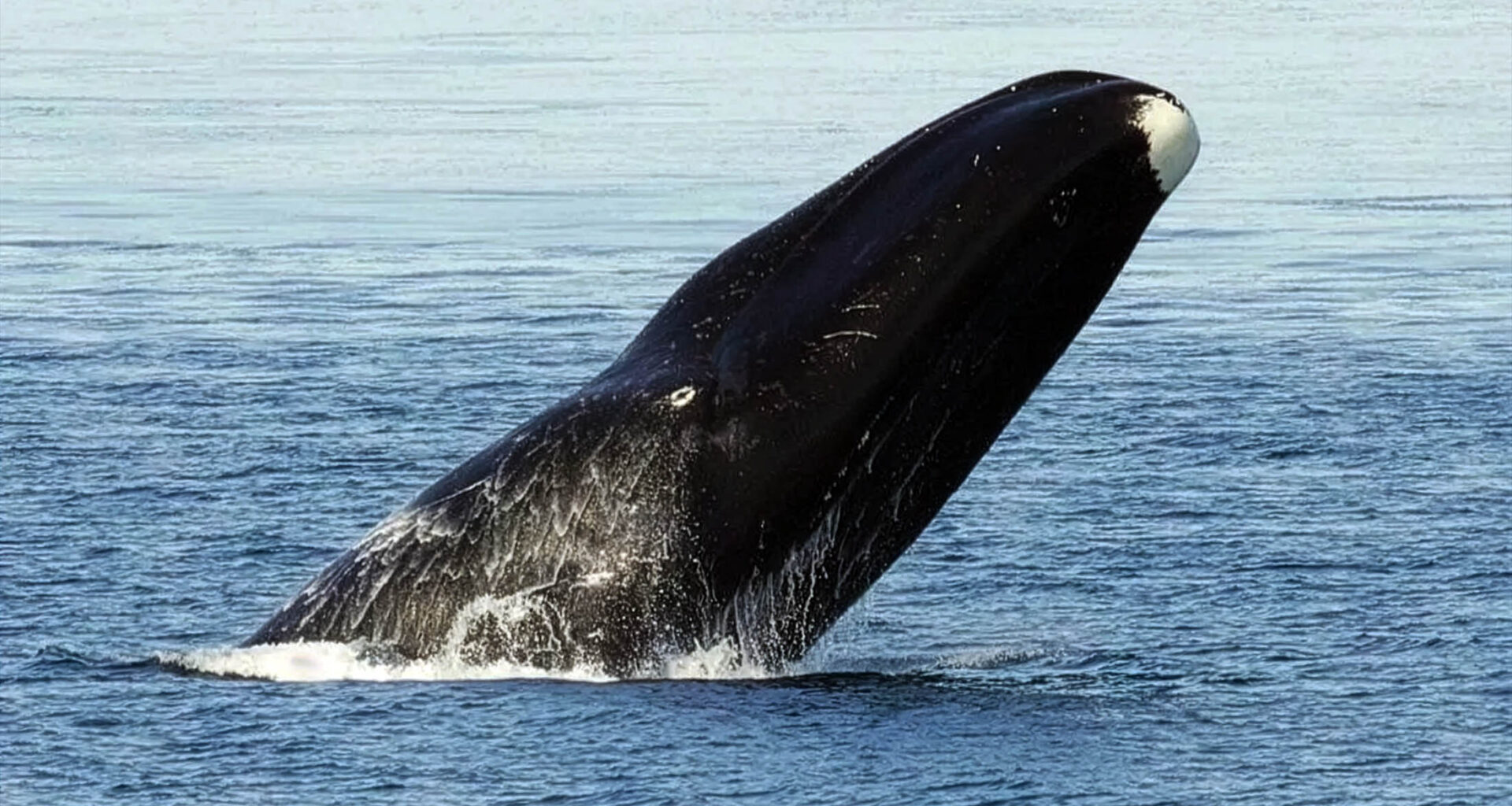
Some animals seem to break the rules of biology. The bowhead whale is one of them. These Arctic giants can live for up to 200 years, and they spend almost all of that time free of cancer and the other diseases that tend to catch up with the rest of us.
Most big, long-lived animals should be easy targets for cancer, but the bowhead is not.

So how does one of the largest animals on the planet stay healthy for so long? And if scientists can work out the trick, could any of it help people too?
A team of biologists went looking for an answer, and they think a single protein is doing a lot of the heavy lifting.
Understanding the CIRBP protein
New research traces the answer to a protein called CIRBP. It plays a key role in repairing one of the most dangerous kinds of genetic damage, a double-strand break, where both strands of DNA snap at the same spot.
That sort of damage can spark disease and shorten lives across many species, humans included.
The study comes from scientists at the University of Rochester and their collaborators, and it appeared in the journal Nature.
“This research shows it is possible to live longer than the typical human lifespan,” explains biology professor Vera Gorbunova.
“By studying the only warm-blooded mammal that outlives humans, our work provides information about the mechanisms that allow such extended lifespans, underscoring the importance of genome maintenance for longevity.”
Being big comes with health issues
Most human cancers take hold only after a single cell picks up several genetic mistakes, often five to seven of them, in genes that control how cells grow and divide.
Scientists call these mistakes oncogenic hits. By that logic, a huge animal with trillions of cells should rack up hits constantly and face sky-high cancer rates.
But that is not what happens. Big animals do not get more cancer than small ones, a contradiction known as “Peto’s paradox.”
Elephants and whales appear to have evolved extra layers of protection. Exactly what those layers are has stumped researchers for years.
“We first hypothesized that oncogenic hits might explain this, and a whale would need six or seven hits to make them more cancer-proof,” Gorbunova says.
Unexpected results
The bowhead whale turned that idea upside down. When the team tested how many hits it takes to turn whale cells cancerous, the cells needed fewer hits than human cells, not more.
The whale’s protection had to be coming from somewhere else. “we found that whale cells are less likely to accumulate oncogenic hits in the first place,” Gorbunova says.
So instead of cleaning up genetic damage after it happens, bowhead whale cells seem to avoid that damage in the first place.
To learn how, the researchers grew cells from bowhead whale tissue and studied the proteins those cells use to fix broken DNA.
Several repair proteins showed up at higher levels in the whale than in other mammals. One of them was in a class by itself.
 CIRBP protein overexpression extends lifespan and enhances DNA damage resistance, which helps prevent cancer during the aging process. Credit: Nature. Click image to enlarge.CIRBP protein stands out
“There were some other proteins that were expressed in bowhead whales at slightly higher levels, but CIRBP stood out because it was present at 100-fold higher levels,” Gorbunova says.
A gap that size is not a small bump. It is the kind of difference that tells scientists a protein is doing something important.
To see what CIRBP could really do, the team added the whale’s version of the protein to human cells and to fruit fly cells.
DNA repair improved in both. In the fruit flies, the protein did something even more surprising. It made the flies live longer.
CIRBP proteins and cold temperatures
Working alongside scientists in Alaska who study how animals handle cold, the team found another piece of the picture. CIRBP responds to temperature.
“If we just lower the temperature a few degrees, cells make more CIRBP protein,” says Andrei Seluanov, also a biology professor at the University of Rochester.
“What we don’t yet know is what level of cold exposure would be needed to trigger that response in humans.”
That fits the way the bowhead lives. These whales spend their whole lives in frigid Arctic and subarctic waters.
Their core body temperature runs cooler than ours, closer to 93 degrees Fahrenheit than the human reading near 98.6. A lifetime in the cold may be one reason their CIRBP levels stay so high.
Human longevity and CIRBP proteins
The researchers are now looking at ways to raise CIRBP levels in people. Some options would happen in a lab. Others might come down to a change in everyday habits.
“Both boosting the body’s existing CIRBP activity or introducing more of the protein may work,” Gorbunova says. “Lifestyle changes – things like taking cold showers – might contribute too and might be worth exploring.”
For now, those are early ideas, and the team is quick to say it is far too soon to know whether any of them would do anything for human health. More testing comes next.
“There are different ways to improve genome maintenance and here we learn there is one unique way that evolved in bowhead whales where they dramatically increase the levels of this protein,” Gorbunova concludes. “Now we have to see if we can develop strategies to upregulate the same pathway in humans.”
The full study was published in the journal Nature.
—–
Like what you read? Subscribe to our newsletter for engaging articles, exclusive content, and the latest updates.
Check us out on EarthSnap, a free app brought to you by Eric Ralls and Earth.com.
—–