
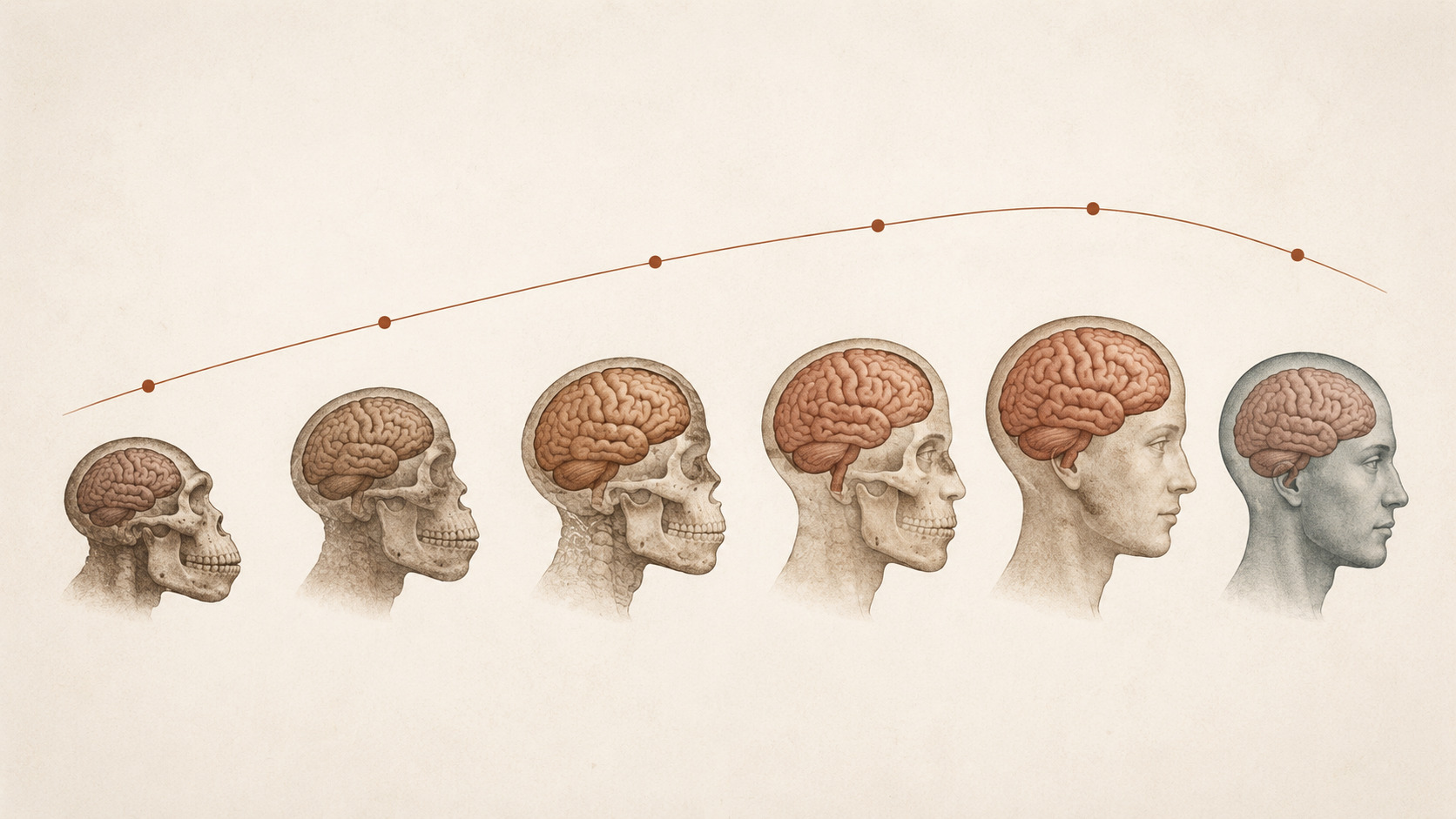

For most of human evolution, the story of the brain seemed to move in one direction: up.
Over millions of years, our ancestors’ brains expanded from ape-sized organs into the relatively oversized command centres that helped make art, language, tools, civilization and science itself possible.
Then, perhaps astonishingly recently, the trend may have gone into reverse.
Some researchers argue that the average human brain began shrinking 3,000 to 10,000 years ago, long before smartphones, search engines or any modern fear that technology is making us think less. If true, this was not a product of the internet age. This time, brain rot meme content is not to blame (although, in the future, who knows?)
It began around the time complex societies were expanding, writing systems were spreading, urban centers were growing, and human knowledge was becoming too vast for any one person to hold alone.
The evidence so far has sparked a fierce debate. Human brains do appear smaller today than those of many Ice Age Homo sapiens, by some estimates around 10%, or roughly 100 to 150 cubic centimetres of brain volume.. But scientists still disagree over when the decline began, whether it happened globally, and what caused it. The answer could involve farming, warming climates, smaller bodies, poorer nutrition, and language.
A Smaller Brain Is not Necessarily a Worse Brain
 These are skulls of hominins over the last 4.4 million years. Credit: Rodrigo Lacruz.
Let’s get something out of the way first. A smaller brain than that of our Late Pleistocene ancestors doesn’t necessarily mean humans are becoming stupid.
Men, on average, have larger brains than women, largely because they have larger bodies, but that does not translate into greater cognitive ability. Albert Einstein’s brain was not especially large. At 1,230 grams, Albert Einstein’s brain fell at the low end of the average weight for an adult human male (which is typically around 1,400 grams). Yet Einstein’s thinking and intelligence were clearly above average. He was a genius, after all.
×
Thank you! One more thing…
Please check your inbox and confirm your subscription.
What seems to matter is not just volume or mass, but a host of other things, especially brain wiring. How neurons connect, which regions expand, and how the brain works with the body all seem to play significant roles.
That is why the shrinking-brain findings, if true, are not alarming at all.
However, the findings are indeed highly surprising and controversial.
For millions of years, the hominin brain expanded dramatically. Our lineage split from the ancestors of chimpanzees roughly 6 million years ago, and over that span, brain size increased severalfold. Large brains became one of the defining traits of the genus Homo.
Then, in Homo sapiens, the trend may have reversed.
A 2023 paper in Frontiers in Ecology and Evolution by Jeremy DeSilva at Dartmouth College and colleagues argues that human brain reduction from the Late Pleistocene or Holocene to the present is “a longstanding anthropological observation documented with numerous lines of independent evidence.” The authors note that many earlier studies, dating back nearly 90 years, reported smaller average brain volumes in recent humans than in older Homo sapiens.
DeSilva’s team says Pleistocene Homo sapiens brains in their revised dataset averaged 1458 cubic centimetres. That is almost identical to their cited average for Neanderthals from the Würm period. Modern values, depending on the dataset, sit closer to about 1300 to 1350 cubic centimetres. The authors argue that, across several datasets, the reduction is about 100 to 150 cubic centimetres.

The Brain Is Expensive Real Estate
One reason a smaller brain might evolve is that brains cost a lot.
The human brain makes up only about 2% of body mass, but consumes around 20% metabolic energy. In evolutionary terms, that is a luxury organ. It needs fuel, cooling and a long childhood to build. If a larger brain no longer provides a proportionally higher survival benefit, or if bodies become smaller, evolution may not keep paying the bill.
That is why several explanations for the shrinking Homo brain focus more on energy.
Maciej Henneberg, professor emeritus at Adelaide University, told Live Science that his research indicates “human brain size declined during the [entire span of the] Holocene by about 10% of its volume or about 150 ml on average.” He links this to the post-Ice Age world, when humans increasingly turned to farming and animal husbandry, lived in larger communities, and became less dependent on brute strength for hunting large animals.
In Henneberg’s view, bodies shrank too. He told Live Science that “At the end of the Ice Age, male body height was about 1.75 m [5.74 feet], whereas in mid-Holocene agricultural communities it was 1.65 m [5.41 feet].” If the body shrank, a smaller brain may partly follow.
A brain belongs to a body. A lighter body can support a smaller brain while preserving similar proportions. Poor nutrition, disease, social inequality and childhood stress can also affect growth.
Did Farming Make our Brains Smaller?
 Credit: Public Domain.
Agriculture is one of the leading suspects.
When humans began farming, they gained more predictable food supplies and supported larger populations. But the early agricultural diet was often narrower than the hunter-gatherer diet it replaced. Grain-heavy diets could bring calorie stability while reducing access to diverse proteins, vitamins and minerals. Farming also brought infectious disease, crowding, inequality and new forms of labour.
Marta Lahr at the University of Cambridge has argued that nutrient deficiency could help explain shrinking brain size after the shift to agriculture. The BBC notes that Lahr’s 2013 analysis of skulls and bones from Europe, Africa and Asia found that the largest-brained Homo sapiens lived around 20,000 to 30,000 years ago, and that brains began shrinking around 10,000 years ago — roughly when farming spread.
DeSilva and colleagues have proposed a more provocative idea: perhaps individual brains shrank because human societies became smarter.
Division of Labour
In their 2021 work, and again in their 2023 response paper, they suggested that as populations grew and tasks became more specialised, humans may have shifted some cognitive burden away from individuals and onto groups. No single person had to know everything. Knowledge could be distributed across different individuals and sub-groups, and eventually offloaded into writing.
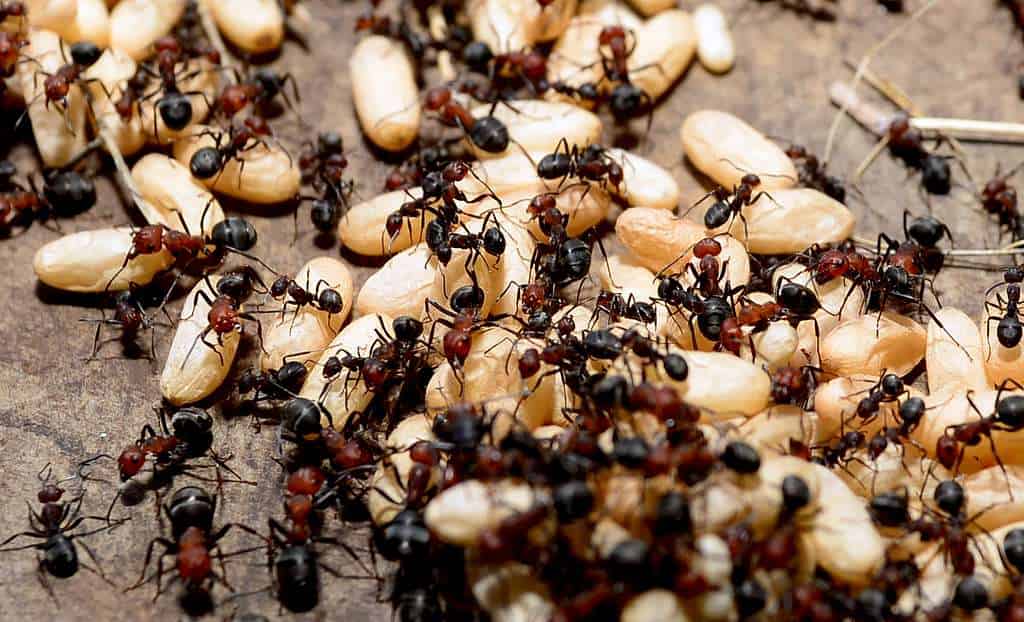
The analogy they drew was ants.
In some eusocial insects, such as ants, individual brain size can change with social complexity and division of labour. A colony can solve problems collectively even if individual workers specialise in narrower tasks. DeSilva’s team argues that human societies may have experienced something broadly similar: more cooperative intelligence, more specialisation, less need for every individual brain to carry the whole load.
“I’m a decent enough anthropologist and anatomist, but you wouldn’t want me fixing your car or investing your retirement savings on Wall Street,” DeSilva told Live Science.
This is an attractive idea because it fits the world we know. Modern humans routinely outsource memory to books, phones, search engines and institutions. A surgeon, programmer, farmer and airline pilot each depend on knowledge networks no individual could recreate from scratch.
But the ant-like comparison is controversial.
Not Everyone Got Complex
Eva Jablonka of Tel Aviv University says that even if brain size fell during the rise of complex societies, it does not prove that smaller brains were adaptive to those circumstances.
“Not all hunter-gatherer societies became complex in the same type of way as, say, the Egyptians did 3,000 years ago, but brain sizes have reduced in these societies too,” she said.
“If 3,000 years ago much larger more complex societies emerged, this could correlate with much greater differences in social classes. If, as a consequence the majority of people were poor, then we know that poverty and malnutrition and things like that would compromise the developing brain.”
Brian Villmoare of the University of Nevada, Las Vegas, and Mark Grabowski of Liverpool John Moores University argue that the evidence does not support the claim that complex societies drove a recent reduction in human brain size.
“They argued that humans may be like this — in a large society, the group could solve complex problems, even if people in complex societies were not as intelligent as hunter-gatherers,” Villmoare told Advanced Science News. “We don’t see evidence in support of any argument that proposes similarity simply because both humans and ants are social animals.”
Still, the strongest counterview is not that DeSilva’s explanation is wrong, but that the basic pattern may be overstated.
Maybe Brains Didn’t Shrink At All
Villmoare and Grabowski reanalysed the available data in a 2022 study and argue that there was no reliable evidence for a recent decline. They said the original dataset included too few skulls from the crucial period, mixed specimens from different regions where agriculture and complex societies arose at different times, and included many recent skulls in a way that could distort statistical patterns.
More than half of the 987 skulls examined from DeSilva’s dataset represent only the last 100 years of a 9.8-million-year span of time — and therefore don’t give scientists a good idea of how much cranial size has changed over time.
Villmoare said the original work used only 23 skulls from the timeframe critical to the brain shrinkage hypothesis and lumped together specimens from locations including England, China, Mali, and Algeria. That is a problem because agriculture did not appear everywhere at once. If complex society drove smaller brains, the timing should vary by region.
Villmoare and Grabowski also objected to including earlier hominins when the question was specifically about Homo sapiens. “Our analysis re-examined [the] data, which is a pretty comprehensive set of cranial capacity measurements, but we eliminated anything other than our species, since the question was specifically about potential change in our lineage — no other species were relevant,” Villmoare told Advanced Science News.
Their conclusion was stark. “In fact, based on this data set, we can identify no reduction in brain size in modern humans over any time-period since the origins of our species,” Villmoare said.
“[We] found that human brain size has not changed in 30,000 years, and probably not in 300,000 years,” Villmoare said.
An Increasingly Complex Question
DeSilva’s team responded in 2023 by revising their dataset, adding some additional samples, removing juvenile Neanderthals that had been accidentally included, eliminating a duplicated skull entry, and dropping data from the problematic Morton collection. They argue the reduction remains robust. They also say a simple comparison between Pleistocene humans and modern humans still reveals a significant difference.
Several independent datasets nevertheless support the broader idea that human brains, or at least cranial capacities, have decreased since the Late Pleistocene or Holocene. The human brain reduction has been reported for nearly 90 years, across many studies. These include Henneberg’s large Holocene skull dataset, the Beals et al. global cranial-capacity dataset, regional studies from East Asia, Australia and China, and more recent analyses by Stibel and DeSilva’s group.
The disagreement is not simply “shrinking versus not shrinking”. It is about whether the decline is global, how large it was, when it began, and whether it can really be tied to the rise of complex societies.
And the truth is that there are many assumptions and uncertainties at play. The fossil record is patchy. Samples are unevenly distributed. Europe is overrepresented. Some old measurements come from scientific traditions shaped by racist and sexist assumptions. Cranial capacity is hard to measure consistently. And skulls mostly reveal information about brain volume, not directly about cognition.
So, the debate is not settled by a single chart.
Climate may have reshaped the skull
Another explanation looks to temperature.
Stibel argues that brain size began shrinking after the last Ice Age, as the climate warmed. His work suggests a correlation between warmer periods and smaller human brains.
“What we saw was, the warmer the climate, the smaller the brain size in humans, and the cooler the climate, the bigger the brain,” Stibel told the BBC.
The logic is thermodynamic. A big brain burns energy and produces heat. In a warming climate, a slightly smaller brain could reduce heat output and make cooling easier. Humans in hot climates often have taller, leaner bodies that shed heat more efficiently. The brain may have followed a related pressure.
“These days if get hot we can put on a T-shirt, jump in a pool, or turn on the air conditioning, but 15,000 years ago these options weren’t available to us,” Stibel said.
He added: “The brain is the largest energy hog of all the organs. So, if the brain is a huge consumer of energy and heat, then it should likely adapt to climate as well. Our theory is that smaller brains dissipate heat better, and have a reduced heat output too.”
This idea is a bit unnerving considering today’s context. If climate helped shrink brains in the past, could today’s warming world do the same?
Perhaps — but the answer is not straightforward. Modern humans buffer climate with housing, medicine, clothing, food systems and technology. At the same time, extreme heat already harms pregnancy, childhood development, sleep and health. Any future effect on brain development would likely be mediated through social inequality, nutrition, disease and the degree of heat exposure.
Language May Have Made Brains More Efficient
Ian Tattersall of the American Museum of Natural History offers yet another possibility.
He argues that human brain reduction may have begun far earlier, perhaps around 100,000 years ago, as humans shifted toward symbolic thought and language. In his view, early humans may have relied more on brute-force cognition, where larger brains provided more raw capacity. Language and symbolic thinking may have reorganised the brain into a more efficient system.
“We have very peculiarly shaped skulls, so early humans are very easy to recognise – and the very first ones have extremely large brains,” Tattersall told the BBC.
He links the change to a period when humans began producing symbolic artefacts and engravings. “This was the time when humans began producing symbolic artefacts and engravings with meaningful geometric images,” he told the BBC.
Tattersall’s core idea is not that language made humans dumber, but that it made thinking more efficient. As he told the BBC: “This sort of symbolic thinking must have required a much more complex set of connections inside the brain than was present earlier. My suggestion is that having these extra connections allowed the brain to function in a much more energy-efficient way.”
However, this theory has a lot of holes in it. Other researchers say the fossil evidence does not show a clean decline that early. Most importantly, the origin of language is also famously difficult to date. Speech leaves no fossil.
“I love this theory, I think it’s actually brilliant. But we haven’t seen the data to show that there was a decline as far back as 100,000 years ago that didn’t result at some point in a reversal where brain size began increasing again,” Stibel commented.
So, Are We Becoming Less Intelligent?
Probably not in any simple sense.
IQ scores rose across much of the 20th century, a pattern known as the Flynn effect, even as some researchers argue that average brain volume declined across the Holocene. Literacy, nutrition, education, public health and abstract problem-solving environments all changed dramatically over that period and these things seem to matter much more than any reduction in brain volume.
The smaller-brain debate therefore cuts to a deeper question: did evolution reduce our individual cognitive machinery, or did culture build a larger mind outside the body?
For now, the evidence supports caution. Many researchers see a real decline in average cranial capacity from the Pleistocene or Holocene to today. Others argue the data are too messy, biased or poorly sampled to prove it. Even among those who accept the shrinkage, there is no agreement on why it happened.
It could be warming. It could be farming. It could be smaller bodies. It could be nutrition. It could be language. It could be collective intelligence. It could be several of these at once.
What seems clear is that the old story — bigger brain, smarter human, inevitable progress — is clearly not as clear-cut as we’ve been told.