

Kim Kardashian is all about her nutrition nowadays. The reality TV star was one of the latest guests on comedian Amy Poehler’s podcast Good Hang, where she opened up about consuming dozens of pills for her health every day.
“I take probably 35 supplements a day,” the 45-year-old billionaire told Poehler in an episode released on Tuesday. “I spread them out three times a day and I thought, ‘OK, I can’t do this fish oil right now anymore. I have pill fatigue.’
“I got my bloodwork and it was so evident that I stopped, and I had to start again. … I wish there was an IV drip I could do every day, and I would just do it on my way to work.”
As celebrities dive deep into wellness culture and some of the most influential people share health hacks that supposedly improve their lives, we’ve decided to reach out to registered dietitians to hear their expertise. Keep reading to learn what two experts had to say about adding supplements to your diet.
This article is for informational purposes only and is not a substitute for professional medical advice, diagnosis or treatment. Contact a qualified medical professional before engaging in any physical activity, or making any changes to your diet, medication or lifestyle.
Do people need dozens of supplements daily?
Toronto-based registered dietitian Abby Langer was clear: no one should be taking this many supplements every day.
“There’s absolutely no reason to take a lot of the supplements that people take, never mind in that quantity — that is extreme,” she said. “Everything that you need to be healthy is not found in a supplement unless you’re deficient in something.”
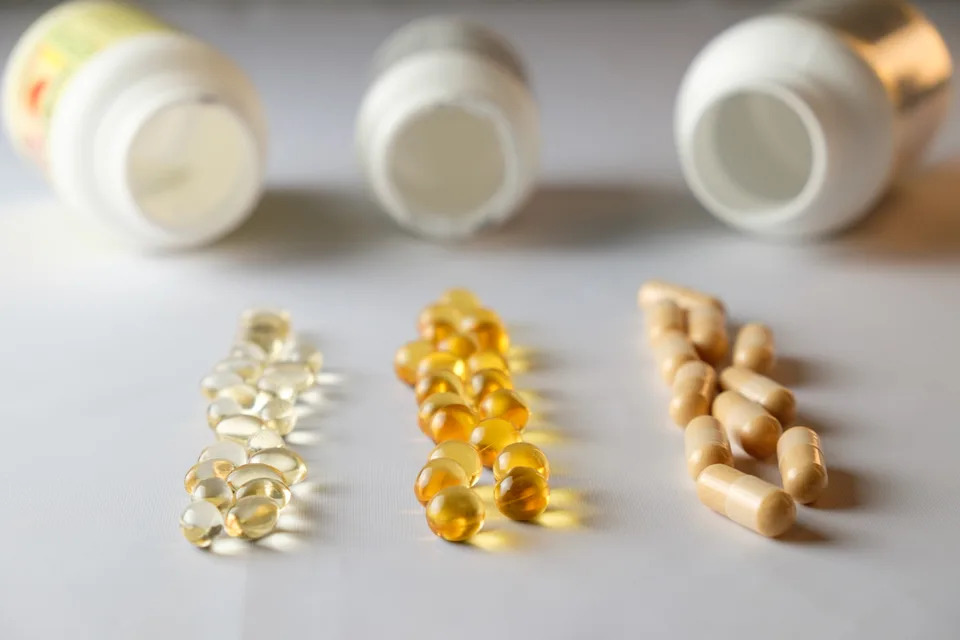
No one should be taking dozens of supplements each day, experts say.
(Na Zarr via Getty Images)
The Good Food, Bad Diet author added that if you are taking supplements, you should ask yourself whether you’re making the right choices with your diet. Are you getting enough fibre? What about eating enough fruits and vegetables? As a baseline, you should also ensure you’re eating regular meals and choosing a variety of foods.
“Those things are going to help you far more than supplements,” she continued. “You can’t supplement yourself out of a bad diet.”
Vancouver-based registered dietitian Angel Luk noted “there’s a time and place for everything,” adding supplements can sometimes serve a purpose: “In the name, it actually means ‘to supplement,’ meaning whatever you can’t get through a food-based diet, you would then supplement.”
She noted some experts may support taking supplements like vitamin D, especially if you can’t get enough of a certain nutrient despite eating a healthy diet. However, she advised against taking supplements if there’s no support from current research.
Luk mentioned that for a long time, people were advised to take omega-3 fish oil supplements. But current guidelines from the Canadian Cardiovascular Society have advised against these over-the-counter supplements because they offer no benefit.
Is it dangerous to take supplements?
Luk continued to say that health-care professionals would use a case-by-case approach to determine whether a person shouldn’t take a certain supplement. Some people may have kidney issues or metabolism problems that would warrant such advice.
While some people may see supplements as “natural,” Langer explained they can still be dangerous. For instance, some supplements can interact negatively with medication. Others — specifically pills containing curcumin and garcinia — are known to cause liver injury if taken in abundance.
“You shouldn’t be taking anything in high doses, and most people don’t need supplements at all,” Langer reiterated.

If you’re taking supplements, be sure you’re not overdoing it and possibly causing complications with your medication or overall health.
(d3sign via Getty Images)
There are two terms consumers should know, according to Luk. The first is the placebo effect, where if someone believes something will work, they may see a positive outcome. The other term is nocebo, where if a person’s expectations of negative effects — even if it’s a neutral supplement — could lead to actual harm.
Regardless, Luk warned that gastrointestinal distress is her first concern for someone taking numerous supplements daily. Moreover, she warned that regularly taking dozens of supplements can offset a person’s appetite, leading people to stop eating foods that are actually more nutrient-dense.
Should I be taking any supplements at all?
Langer noted that many supplements don’t have enough human evidence to prove their efficacy.
“As a dietitian, I rarely recommend anything beyond vitamin D. Personally, that’s all I take,” she said. “If I had a client who came to me and was taking that many supplements, I would probably tell them to stop taking most of them.”
She also warned that the supplement and wellness industries are multi-billion-dollar industries that exist because they convince people that something’s broken and sell a supposed solution.
“Falling for that can be really dangerous,” she said. “Most supplements do not improve health unless you’re actually deficient in whatever you’re supplementing.”

“Regardless, putting something into your body, just because it’s a supplement and you think it’s natural doesn’t mean it’s safe,” dietitian Abby Langer says.
(Viktoriya Skorikova via Getty Images)
Luk shared that it’s likely “completely fine” to take a few supplements a day, noting that our bodies are designed to eliminate excess nutrients. Unless someone’s health-care provider warned them not to take certain supplements, they should be OK.
“Only a minority of the population needs a dietitian, nurse practitioner or doctor to advise them to completely avoid supplementation even at very, very low dosages,” she added, sharing people with medical conditions should always ask their health-care provider for more help.
The takeaways
Overall, people shouldn’t be taking 35 supplements throughout their days. “If you have to take that many supplements or you think you need that many supplements in order to be healthy, it’s very concerning,” Langer said.
Luk shared she had a client come to her in the past who’d been taking between 30 and 40 supplements. Luk suggested trialling fewer supplements because her client had been experiencing symptoms like decreased appetite, gastrointestinal distress and an inability to cope with the burden of tracking all the supplements.
“People are only going to change when they’re willing,” Luk said, noting her client was resistant to — and almost offended by — her advice.
“Hopefully, [you’ll] have the open-mindedness to either try taking something or stop taking something and really be mindful and create short-term goals,” Luk shared.
Let us know what you think by emailing us or threading us @yahoocanada. Follow us on TikTok, WhatsApp and Instagram.