
What if a routine blood test could reveal the long-term risk of death, not by measuring cholesterol or glucose, but by identifying sugars attached to blood proteins? In a recent study published in Molecular & Cellular Proteomics, Iago Carballo of the University of Santiago de Compostela and an international team showed that total serum N-glycome can predict mortality in a general adult population, independent of traditional risk factors.
Emanresucamit via Wikimedia Commons
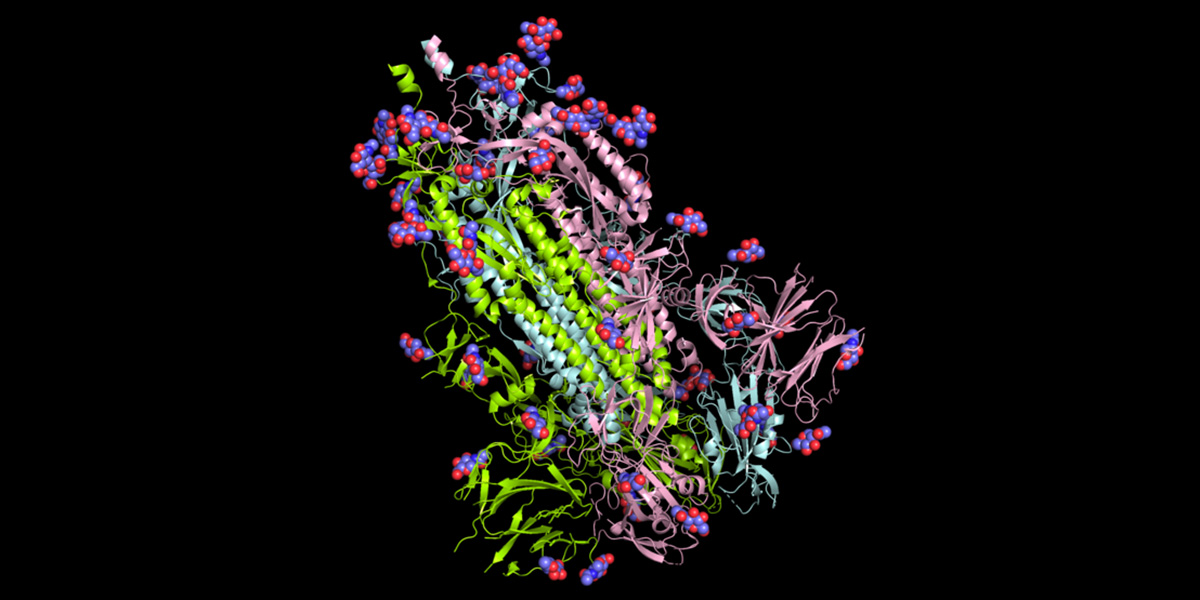
Glycans (red and blue) attached to the surface of angiotensin-converting enzyme 2, the receptor for COVID-19.
The researchers analyzed blood samples from 1,516 randomly selected adult participants enrolled in the A-Estrada Glycation and Inflammation Study, or AEGIS, cohort in Spain and followed participants for a median of 7.5 years to record mortality. The team analyzed the total serum N-glycome, which represents all glycans attached to serum proteins, by grouping glycans with similar structures and chemical properties into quantifiable glycome peaks or GPs. They found that individuals with higher levels of GP16 and lower levels of GP22 were significantly more likely to die during the follow-up period.
GP associations remained robust after accounting for age, sex and established clinical risk factors. Distinct glycan patterns were also linked to cancer-related and cardiovascular mortality, suggesting that serum protein glycosylation reflects underlying biological processes related to these conditions. The findings highlight serum N-glycan profiles as a promising complement to existing risk prediction tools for identifying individuals at elevated risk earlier in life.