
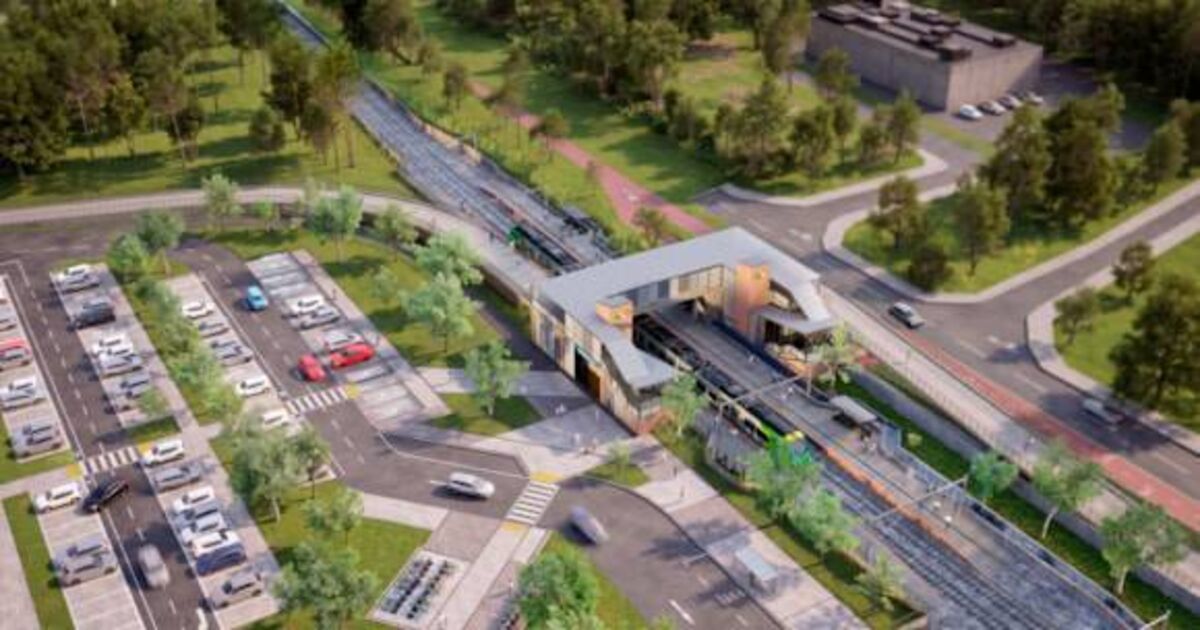
Phase 1 of the scheme is now well advanced, he said, including the new Kent Station platform, twin-tracking of the Glounthaune to Midleton service, and the re-signalling of the full Cork network.
Phase 2 will include the eight new stations, a new depot, and the full electrification of the Cork rail network.
This, Mr Cronin said, will help deliver the remaining infrastructure to allow trains to operate up to every 10 minutes across each of the three commuter lines to Mallow, Midleton and Cobh.
“We would hope to see a 12 to 18-month construction period for the Blackpool and Dunkettle stations, completing before the end of 2028, the start of 2029,” he said.
“The remaining six stations are expected to go into the railway order process before the end of this year, and it’s expected that not just the six stations, but the fleet depot, and the electrification of the Cork network would be part of that railway order, and there’s about a five-year build period on all of those.
“I’d like to say 2032 we will see operational status in the Cork area, that’s our aim.
“A five-car electric train will carry the passenger equivalent of nine buses or 1,000 cars, so in terms of reducing traffic congestion, this is going to be transformative for Cork,” Mr Cronin said.
“This will be effectively a Dart service into Cork.”
The CACR is a separate project to the €2.5bn Luas Cork project, which is a planned 20km light rail line running east to west across the city, from Ballincollig in the west to Mahon Point in the east, with 27 stops planned.
Public consultation on the new stations at Blackpool and Dunkettle will close on Friday, June 12, with full details available at https://www.irishrail.ie/en-ie/about-us/iarnrod-eireann-projects-and-investments/cork-area-commuter-rail.