
These members emphasised that the first round of indirect price increases (caused by the Iran war oil shock) could become more broad-based, feeding through to a greater risk of second-round price increases.
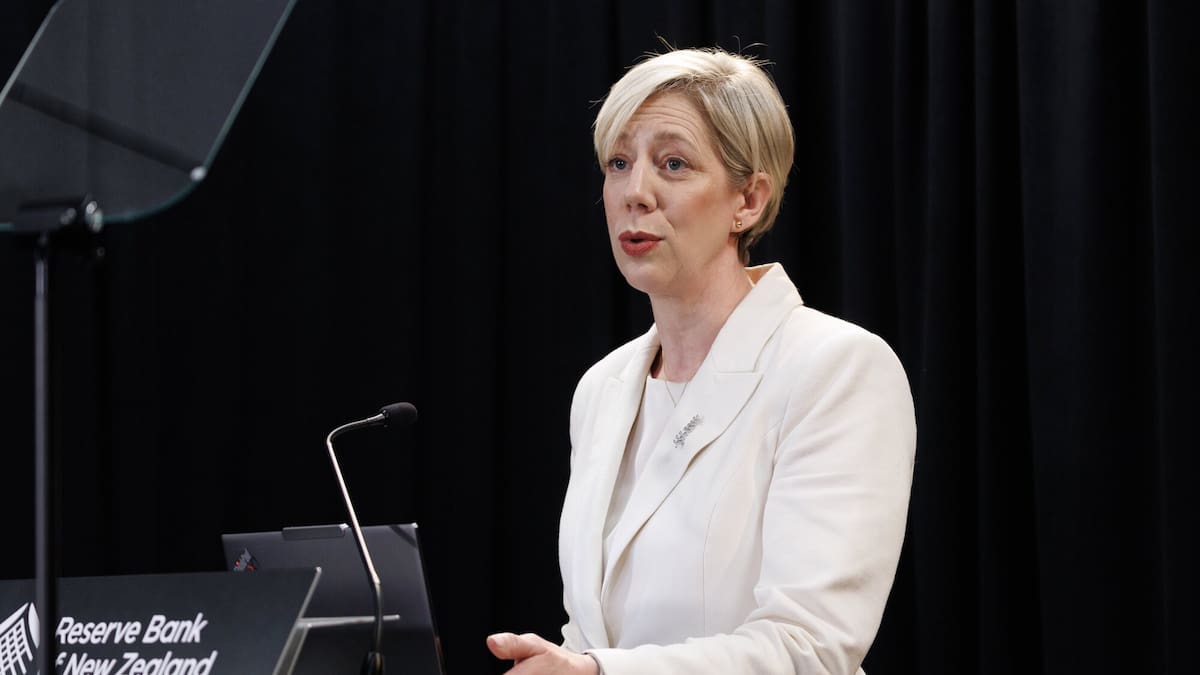
Commenting on the split vote, Governor Anna Breman said, members were completely free to vote the way they wanted to.
“Everyone has an individual vote, and everyone has individual accountability for their votes,” she said.
“We’re also very pleased that this time we have increased the level of transparency, so there’s more information on the justification for different votes.”
That vote showed the RBNZ’s position was finely balanced, said ASB chief economist Nick Tuffley.
“Nevertheless, by July we expect the vote to tip in favour of lifting the OCR at that point,” he said.
“One risk is leaving the OCR too low for too long, and having inflation take off – at the cost of having to lift the OCR more aggressively later on.
“The other risk is lifting too soon, but while the OCR remains in stimulatory territory, that risk can be mitigated by simply pausing to see how risks pan out.”
Upwards of three 25-basis-point increases were implied over the rest of 2026, he said.
BNZ head of research Stephen Toplis moved his forecasts ahead of the RBNZ.
BNZ is now forecasting a rate hike at every meeting between now and May 2027 – to take the Official Cash rate to 4%.
Governor Breman stressed that there were still many possible different paths for monetary policy from here, with war in Iran and oil prices being key variables.
The central projection was based on the future oil curve from May 21.
It also presented three alternative scenarios.
In the first, oil prices stayed higher for longer, and firms and workers passed on higher costs into prices and wages.
In that scenario, the OCR might need to increase by more than in our central scenario, Breman said.
The second scenario also assumed that oil prices stayed higher for longer, but that firms and workers absorbed more of the cost and passed on fewer increases.
Some OCR hikes would still be required to return inflation to target.
“This illustrates that it’s not just global factors that will influence the outcome for New Zealand,” Breman said.
The third scenario assumed the same oil prices as the central projection, but that global demand weakened more.
That would limit firms’ and workers’ ability to pass on cost increases, and inflation could fall below the target midpoint, Breman said.
In that scenario, monetary policy might need to be accommodative for longer. In other words, rates could still stay on hold or rise by less than forecast.
ANZ chief economist Sharon Zollner said the decision confirmed her expectation that the OCR would be lifted 25bp in July, “and very likely in September and October as well”.
“Beyond that point, while the RBNZ’s current best pick is that they will need to hike once more, to 3.25%, it is very early days,“ she said.
The RBNZ still didn’t have a great deal to work with when it came to assessing the balance of risks around medium-term inflation.
On balance, given all the global uncertainty, it was a good thing that there was a wide range of estimates in the market about how high the OCR needed to go, Zollner said.
“Groupthink was an unhelpful feature of the Covid era, and robust debate is healthy. It certainly appears the committee has engaged in that this week!”
Liam Dann is business editor-at-large for the New Zealand Herald. He is a senior writer and columnist, and also presents and produces videos and podcasts. He joined the Herald in 2003.
Stay ahead with the latest market moves, corporate updates, and economic insights by subscribing to our Business newsletter – your essential weekly round-up of all the business news you need.