
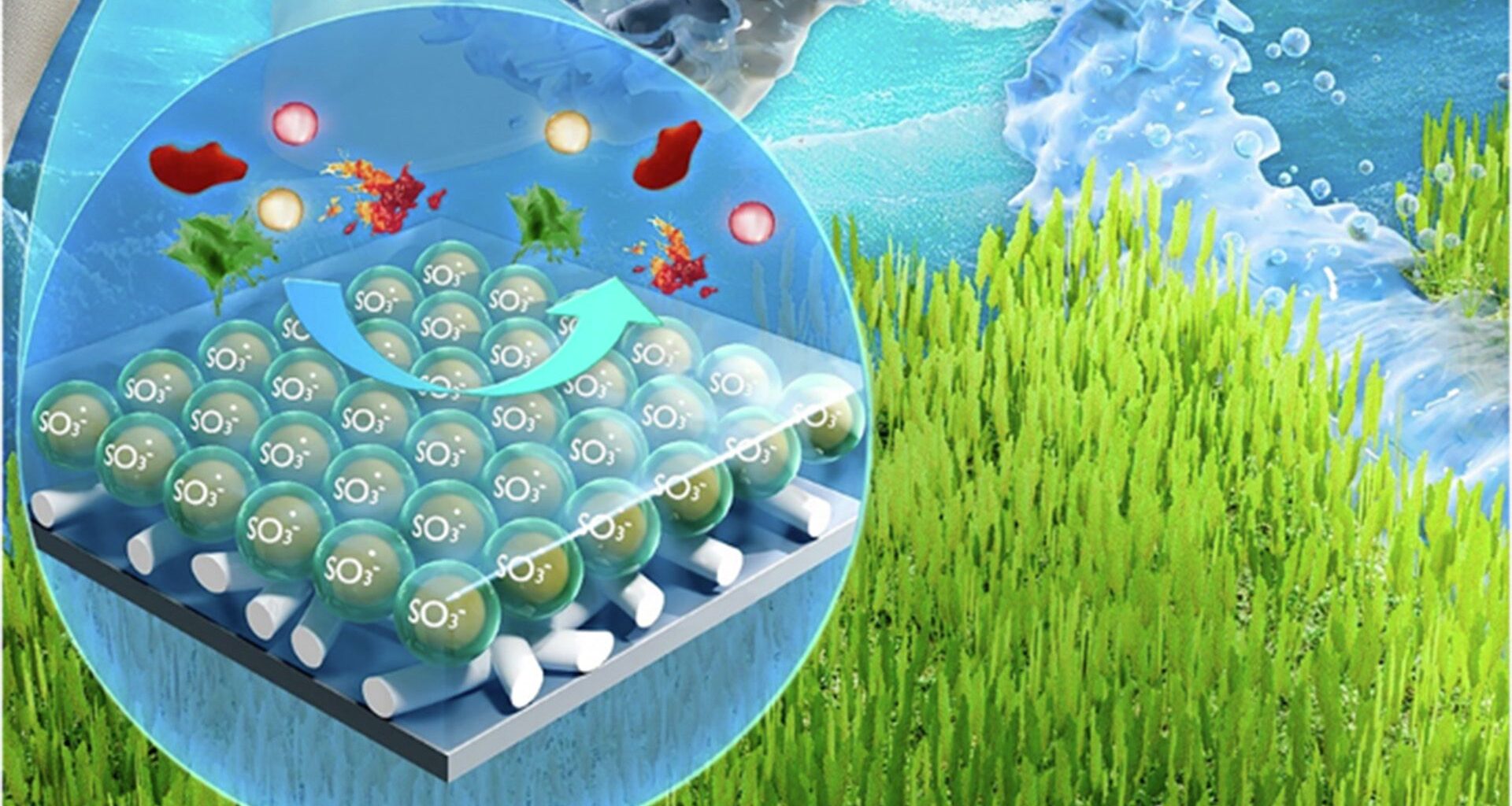
Scientists have invented a self-cleaning coating that prevents stains from food, oil or dirt from sticking to a fabric’s surface, making the spots easy to remove without detergent or large amounts of water. The coating, which creates a protective ultrathin layer of water its developers call “molecular water armor,” could reduce the water and electricity demand of household laundry by over 80%, new research suggests.
Washing clothes is a basic necessity of everyday life, but laundry has a huge environmental footprint because it produces vast amounts of wastewater. A single cycle in a household washing machine uses 10.5 to 16 gallons (40 to 60 liters) of clean water, while the detergents required to remove stains promote the release of microplastics from synthetic fibers and leave chemical residues in the discharged water.
You may like
“Molecular water armor”
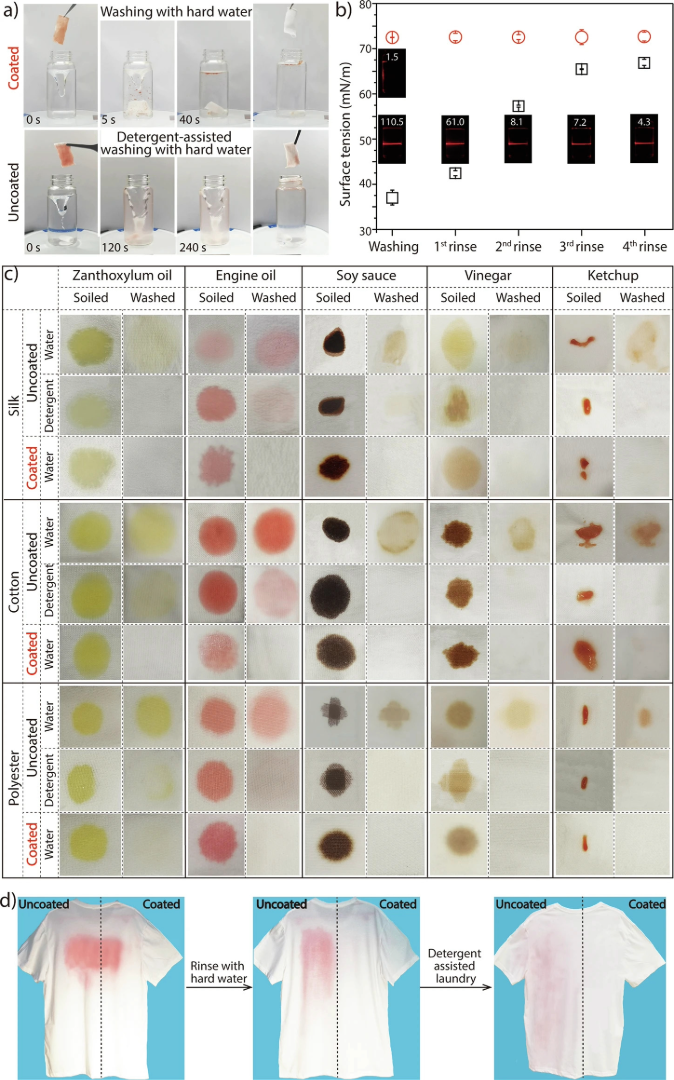
Various comparisons of stains on coated versus un-coated fabrics when washed with water or detergent. Even without detergent, the new coating helped remove stains with great efficiency.
(Image credit: Communications Chemistry / Wang et al.)
What to read next
Wang, R., Wang, H., Chen, Y., Cheng, C., & Wang, D. (2026). A versatile self-cleaning fabric coating as a detergent-free laundry product. Communications Chemistry, 9(1). https://doi.org/10.1038/s42004-026-01942-7