
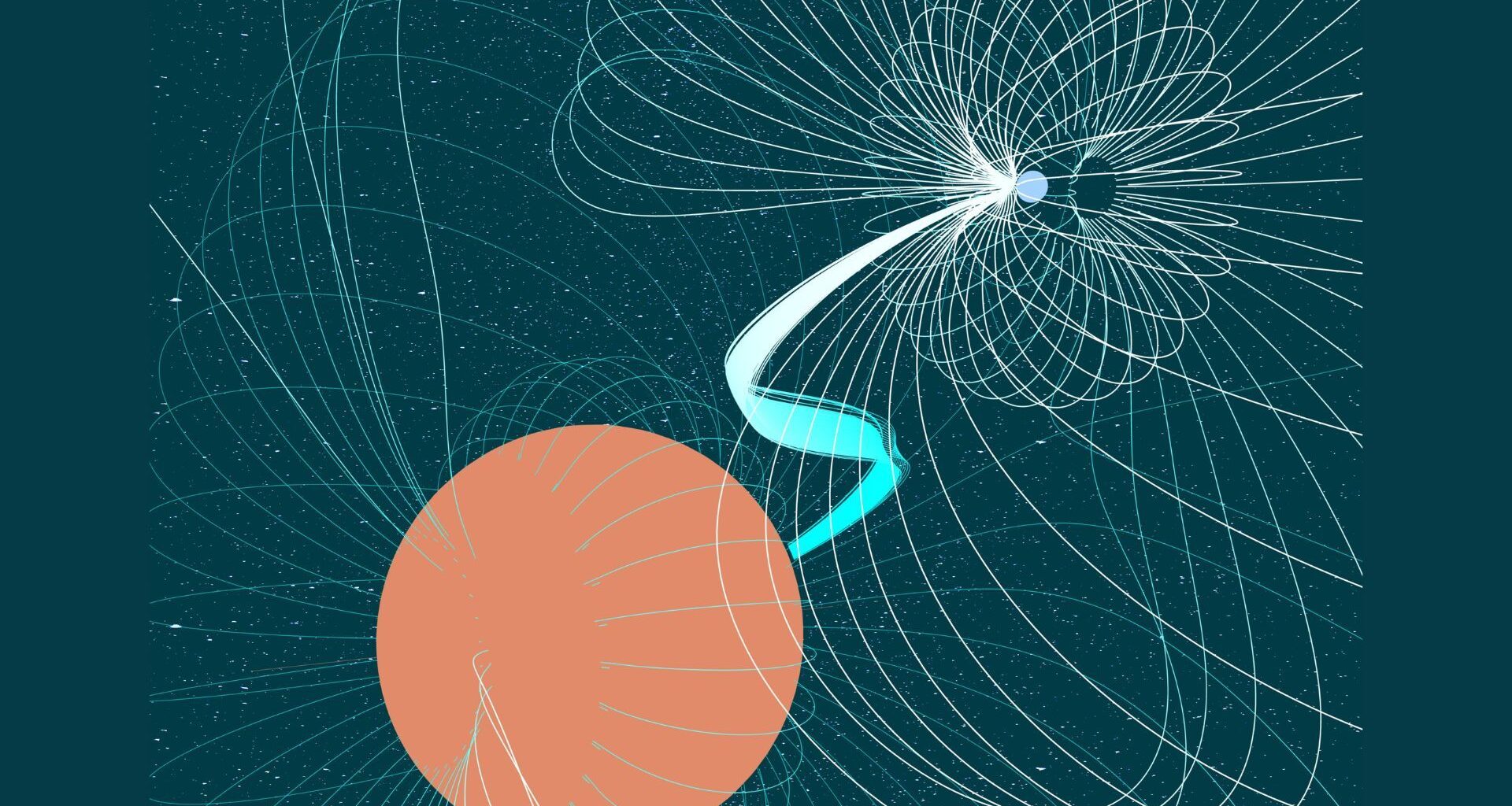
A pair of spiralling stars could be a blueprint for decoding mysterious bursts of radio energy coming from space, according to new research.
Long-period transients have puzzled radio astronomers since they were first detected in 2022. These objects emit strong pulses of radiation every few minutes or hours, each burst lasting only a few seconds. They are much slower than the likes of fast radio bursts, which are intense bursts of energy that flicker for mere milliseconds.
You may like
Something unexplained
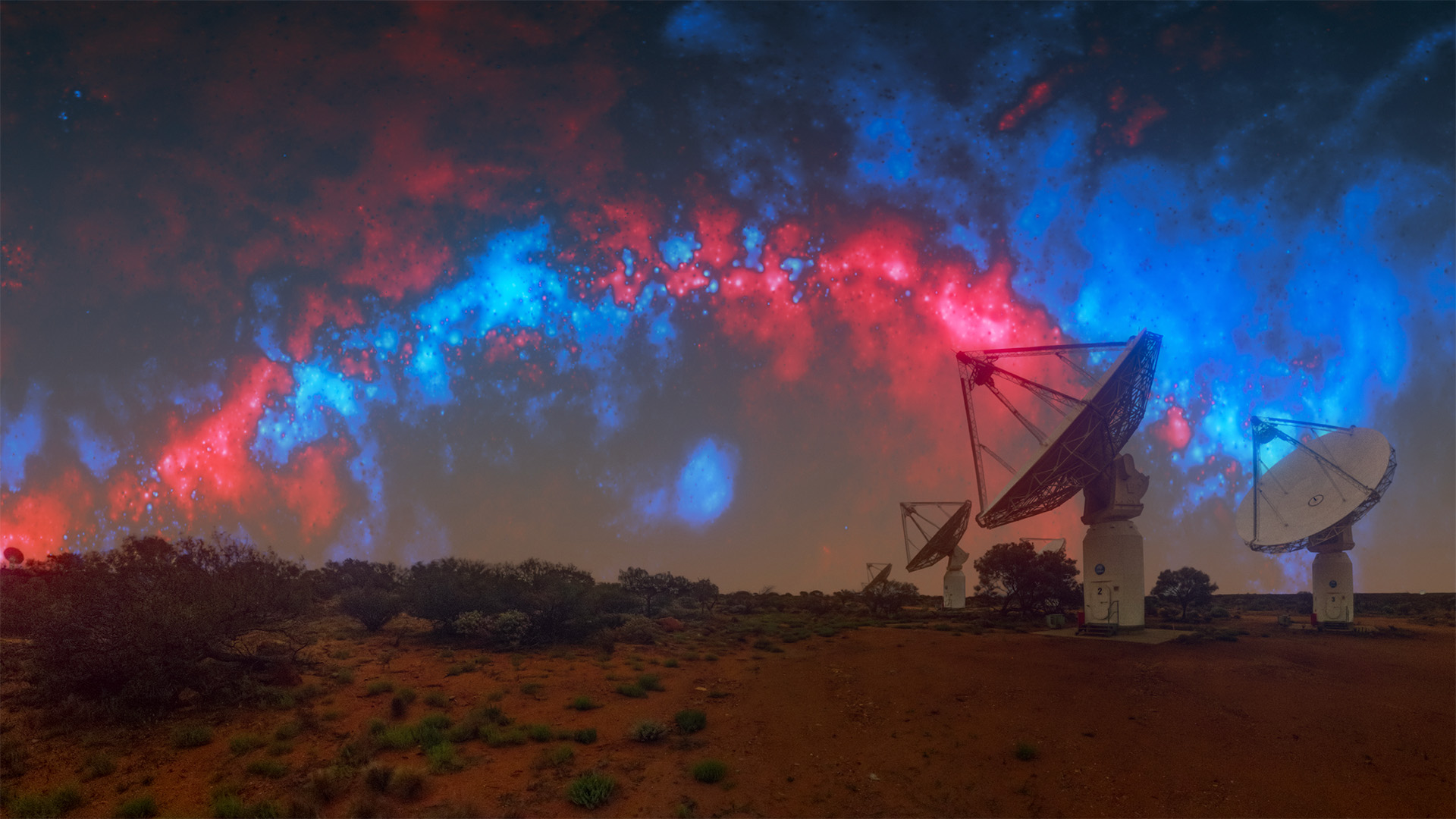
The ASKAP radio telescope (foreground) seen over a radio view of magnetic fields in the night sky (background). The array was instrumental in decoding the radio signals observed in the new study.
(Image credit: CSIRO/Alec Thomson et al./Alex Cherney/Sam Moorfield)
What to read next
Rose, K., Pritchard, J., Murphy, T., Driessen, L. N., Kaplan, D. L., Caleb, M., Wang, Z., Zic, A., Andreoni, I., Carney, J., Barlow, B. N., Dobie, D., Gu, M., Heald, G., Huber, D., Lenc, E., Leung, J. K., Lu, W., Momose, R., . . . Zahedy, F. (2026). Periodic radio and X-ray emission from an accreting white dwarf binary. Nature Astronomy. https://doi.org/10.1038/s41550-026-02882-x