
Should athletes competing at the Olympic Games be paid prize money? That was the question posed to IOC president Kirsty Coventry last month that has reignited the debate around prize money at the Olympics.
“I don’t believe in paying athletes,” was the line taken from the two-minute video posted by New Zealand sports media outlet Sport Nation that has now been circulated thousands of times on social platforms across the globe.
Despite the direct question from the interviewer, Coventry was forced to clarify her response in a later post to the IOC’s athlete365 social platform, stating: “I have always said that I don’t believe in paying athletes prize money at Olympic Games, as this would benefit only a small number of athletes.”
Coventry also added: “Our role as the IOC is to find ways to directly support a large number of athletes on their journey to becoming Olympians, at the Olympics and as they transition into life after sport.”
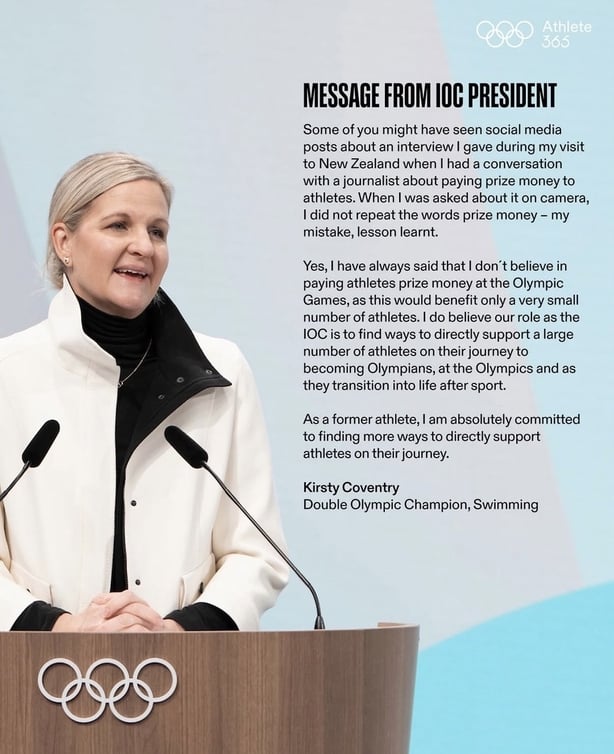
Kirsty Coventry had to clarify comments she made in a video interview on social media
While amateurism lay at the heart of the modern Olympic movement’s founding values — and was deeply rooted in classism — the landscape has shifted dramatically since the 1980s.
A love of sport is no longer the sole driver of participation, yet the IOC’s stance on not paying athletes has remained unchanged for more than a century.
The Irish view
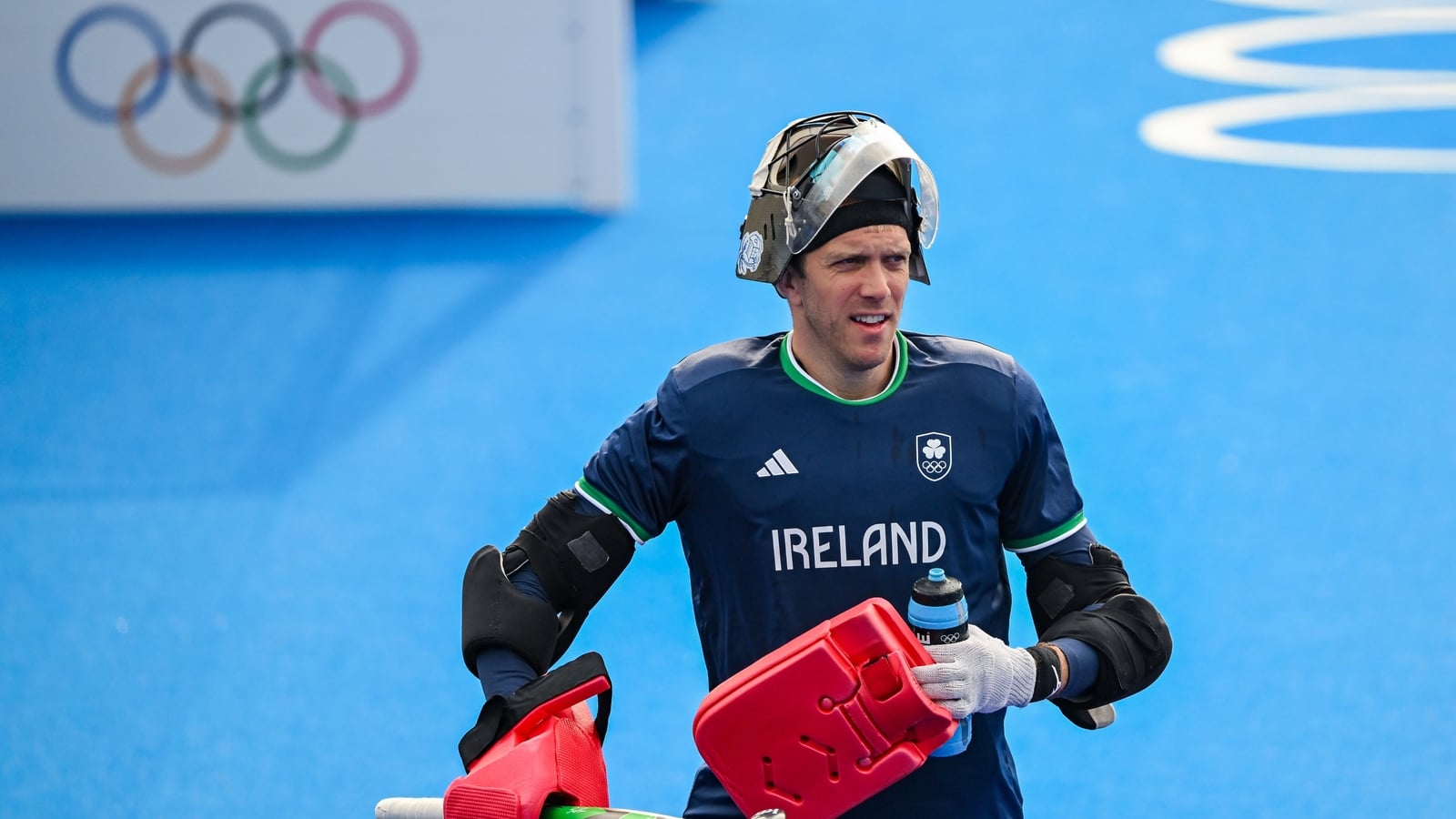
Two-time Irish Olympian David Harte’s phone was buzzing with friends and fellow sportspeople sending him the video. He hoped it was sensationalised, but was disappointed to discover Coventry’s words were not twisted.
“I just really had looked at it and hoped that it was a bit of clickbait – just in as a new president – someone who has represented her own country at five Olympic games, Olympic gold medallist, everything personifies what it is to be an Olympian and then coming out with that kind of headline,” Harte said.
Harte, recently retired, spent the guts of the last two Olympic cycles on both the OFI’s and European Olympic Council’s Athletes’ Commissions where these discussions are commonplace and he welcomes more public debate.
“Obviously she had to come back out and kind of backtrack a little bit because it was out of context, which I understand that, but it blew up the argument that people would have.
“I won’t say it opened up a can of worms, but this conversation has been here before, but now it really has a magnifying glass over it. I’m really curious to see where it goes.”
Bar Harte, Irish Olympians have been publicly quiet on the topic, but you can guarantee WhatsApp groups and DMs were active.
“I would agree definitely the OFI does have the advantage that we are a smaller NOC. I know that I can definitely say you can see the support. And I think possibly also maybe that Irish athletes don’t really feel too affected by it.”
It also might not be the Irish way to vent on social media Harte suggested: “We’re a bit more reserved about it as well that we know we don’t particularly want to go to the use of a different platforms or social media to try and highlight something.”
British gold medal winning long jumper Greg Rutherford didn’t quite take the Irish approach, and was among those to criticise the IOC president for her comments, admittedly prior to the clarifying statement.
In Rutherford’s post on Instagram, he shared a series of pictures with text explaining his stance, accompanied by Heather Small’s 2000 hit ‘Proud’. Well, what have the IOC done to make them feel proud?
World Indoor 60m hurdles champion Derval O’Rourke commented under Rutherford’s post, “exploitation, plain and simple” and called for an athletes’ union.
Ireland’s 2024 chef de mission, and former triathlete Gavin Noble also weighed in, which Harte appreciated, largely supporting the notion that paying medal winners is not the way forward.
In a post on LinkedIn, Noble argued that countries have much more influence over athletes’ earning potential than any form of IOC redistribution mechanism, but highlighted that despite the IOC redistributing 90% of its revenue, this may not be felt by those who need it most.
“Too often that value does not reach the majority of athletes in a direct way. That is the real tension,” Noble wrote.
Rule 40
There is one aspect of the Olympic charter, Rule 40, that might not be well understood by the general public, and maybe the IOC want to keep it that way.
Not only are athletes not paid by the IOC in any capacity for their participation in an Olympics they also cannot promote their own sponsors during a specified “blackout” period whilst the Games is on (longer than the full duration) and vice versa.
The list of conditions around Rule 40 are extensive, confusing and on the surface look extreme, but may be necessary to prevent what Harte calls “ambush marketing” from other companies who want to jump on the lucrative bandwagon without paying their way.
After all, without the commercial arm, the modern Olympics wouldn’t be viable in its current format but there are real impacts on an athlete’s ability to earn around the games because of Rule 40, which Harte said led to him having little to no footage from his personal experience of the 2016 Games in particular.
“I don’t even have that much footage of myself at the Olympic Games, because you were so worried about sharing it or concerned that it might break this rule or step over a boundary. You’re not even allowed to record certain things of live events and stuff.
“Am I going to get banned for this? Am I not going to be allowed to do this? Am I going to be blocked from this?”
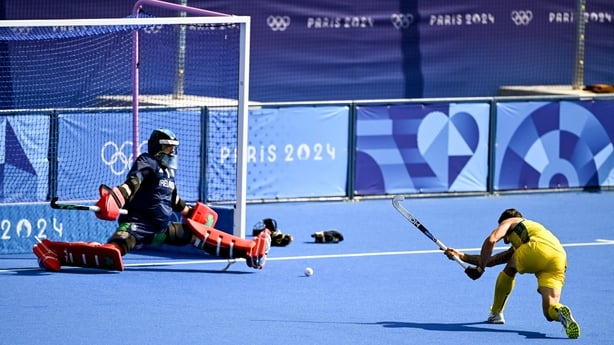
David Harte has little footage from his personal Olympic experience because of Rule 40 fears
Harte was right to be cautious, double gold medallist from 2021 Elaine Thompson-Herah received a brief ban on Instagram for sharing race footage of her wins in both the 100m and 200m at the Games for a breach of broadcasting rights.
But athletes promoting themselves around an Olympics and using footage of their own performances in genuine ways isn’t the same as the ambush marketing techniques that may be employed by companies hoping to piggyback off the global event.
When asked if athletes benefit enough from the Games, Harte responded: “No, of course not” and raised an important point regarding the strict ruling.
“I think if you are a Usain Bolt, Simone Biles, a top skier in the Winter Olympics, someone like Lindsay Vaughan. – those are the ones, of course, that will benefit (from Rule 40).”
When only Olympic sponsors like Allianz, who support Rhasidat Adeleke and Kate O’Connor, and a handful of others can even mention the Games, it means lesser-known athletes with local sponsors may be limited in their marketing power says Harte.
An intentional move by the IOC to protect their brand value, which Harte said he was “all for” but added: “‘John Smith’ from such country, who’s going to finish 50th in a certain particular race or an event. How much attention and traction is he going to get from not being able to even put much stuff up on his own profile?
“That’s where I often find it a difficult discussion, because I feel that those who are at the very top will benefit most from it. There’s not even a trickle down effect, unfortunately.” said Harte, which reflects Noble’s LinkedIn post.
“That’s where I often find it a difficult discussion, because I feel that those who are at the very top will benefit most from it – There’s not even a trickle down effect, unfortunately.” – David Harte on Rule 40
Japanese car manufacturer Toyota ended its partnership with the Olympics and Paralympics in 2024 after a ten-year tenure, with Japanese news agency Kyodo citing similar gripes.
It was reported that the company felt their money was “not used effectively to support athletes and promote sports”.
There were changes made to Rule 40 after consultation with the IOC athletes’ commission for Paris, where athletes can now publish one “thank-you message” per non-Olympic sponsor.
However, the list of conditions is a minefield.
Athletes can’t mention the Olympics, have pictures of Olympic venues, wear official kit or medals and their personal partners aren’t allowed to reshare the social media posts.
If you really want to see the extent of restrictions and have an hour (or two) to spare, the Rule 40 guidelines for Milano Cortina are here.
And what happens to those who break the rules?
The IOC can sanction global companies, but largely it is left to National Olympic Committees like the OFI to monitor and impose the sanctions on athletes.
With the IOC stating it: “Recommends to NOCs that, in principle, monetary measures should be favoured as sanctions rather than sporting sanctions, such as withdrawal from the Olympic Games.”
Ireland’s solutions
The OFI introduced a policy pre-Paris to take the onus off the athletes and still allow them to benefit from their sponsorship during the Games period, but does it go far enough?
Non-Olympic sponsors of Irish athletes who were signed up to the “Team Ireland Personal Sponsor Commitment” were allowed to promote their relationship with that athlete.
Those who weren’t signed up wouldn’t be allowed to market any Irish Olympic athlete in Ireland during the so called blackout period but the same stringent IOC rules apply to those who were signed up.
In the same week as the Coventry backlash, the OFI Athletes’ Commission, backed by its NOC, quietly began pursuing an athlete tax exemption scheme that could transform Irish athletes’ lives.
Whilst the details are not fully available several models were presented to senior officials from the Department of Finance and members of An Tánaiste’s policy team based on aligning Sport Ireland carding payments with the Artists’ Exemption model and modernising sportspersons tax relief.
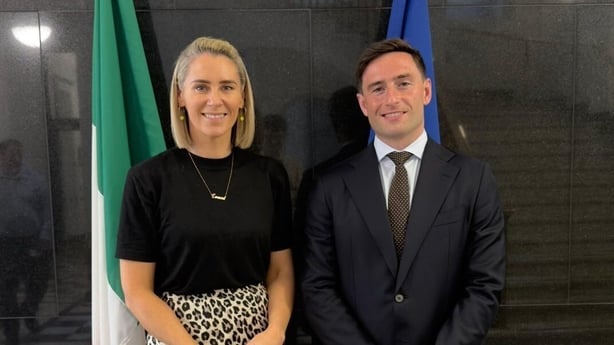
The OFI athletes’ commission met with the Department of Finance last month
Harte explained that the proposals have been in the works for years, even during both his tenures on the commission.
“I had sat on the OFI athletes commission for two terms and we had been busy with that. We had lobbied with government and we’d sat down with officials on the same table. I was just really happy to see now that it has become public knowledge and some kind of news that it is going a bit further than what we were able to take it.”
The money Irish athletes receive through carding comes from Sport Ireland, separate to the OFI, but Harte believes more can always be done by all bodies involved on the island.
“When you look at the amount of money being given to athletes, you’re barely covering your costs let’s be honest about it. It’s not really up to the IOC to tell the OFI how they can share their money.
“But looking at Ireland, I do think, of course, there’s always can be more done to support the athletes better.”
“I do think, of course, there always can be more done to support the athletes better.” – David Harte
Harte shared how his 2024 experience was vastly different compared to his first Games in 2016. With athletes now at the heart of planning at the OFI.
“When you went to collect your kit, it was just a far better experience. A beautiful hotel setting with your families and loved ones around you, that the kit quality was good.
“In 2016 we made our way to someplace out in an industrial estate park in Dublin to pick up our kit.
“No one greeted you there. Some fella took a mugshot of you. They didn’t have socks for me. They didn’t have the the correct size shoes for me because I was later to collect my kit.
“I do believe that the heartbeat of all of that around the OFI is centred with the athletes’ commission because you are lucky to have those people who are willing to give their time up voluntarily to share their experiences, good or bad, and then try and improve it for the next athletes.”
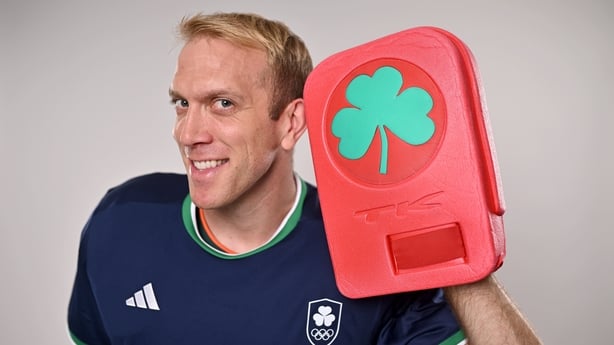
David Harte praised the OFI for the improvement in the athlete experience in Paris
The OFI have worked incredibly hard on the experience piece, but like Coventry was criticised for offering up “beautiful venues, they get beautiful villages. They get a beautiful experience”, nice experiences don’t pay the bills but people do always remember how they were treated, which Harte can testify to.
The big question
Does Harte think Olympic medallists should be paid?
Well the answer is complicated, with the goalkeeper leaving the onus on global sporting governing bodies.
“I think before even going to the IOC, it has been done before with international federations.”
World Athletics took a stance and gave all its Olympic Champions the equivalent of €43,000 in Paris, with plans to reward all medallists in 2028.
“(Don’t) just brush it under the carpet as a bit of a slip of words by the president. Hopefully the conversation doesn’t stop here.” – David Harte
Ultimately, without athletes, there is no Olympics – a fact that had Harte questioning evolution itself.
“When that news did come out and break, you do kind of sit back and you start thinking the whole chicken and the egg thing, because without athletes, there wouldn’t be an Olympic Games.
“But at the same time, without the IOC and what they’re doing, there also wouldn’t be an Olympic Games for the athletes.
“It’s so difficult. But the best thing that probably can happen moving forward is just constantly keep it in the discussion, bring it to the top tables where it needs to be discussed and where athletes will hopefully have a voice also to try and see how best the athletes can be helped. Because at the end of the day, that’s what it’s about.”
Harte’s advice for the IOC: “(Don’t) just brush it under the carpet as a bit of a slip of words by the president.
“Hopefully the conversation doesn’t stop here.”