

Caroline Mulroney has seen it all when it comes to Canadian politics.
As the daughter of former prime minister Brian Mulroney, whose relationship with Ronald Reagan helped deliver a major Canada-US free trade agreement, she has witnessed decades of close relations between the two countries.
“It was his work with Ronald Reagan that led to our first free trade agreement with the United States, built on their friendship and the belief that our economies would do better working together,” she said from her office as Ontario’s President of the Treasury Board and Minister of Francophone Affairs – roles she will soon leave.
But today, she said she has never seen those ties so strained.
“I haven’t seen it like this before,” she said.
Relations have significantly deteriorated since Donald Trump took office again in 2025.
Complex American tariffs have challenged a long-standing free trade agreement between the US, Canada and Mexico, known as USMCA, which is due to be reviewed this summer.
Negotiations could lead to changes with more tariffs and stricter auto production rules on the cards.
The car industry has become one of the clearest examples of how deeply integrated the two economies have become.
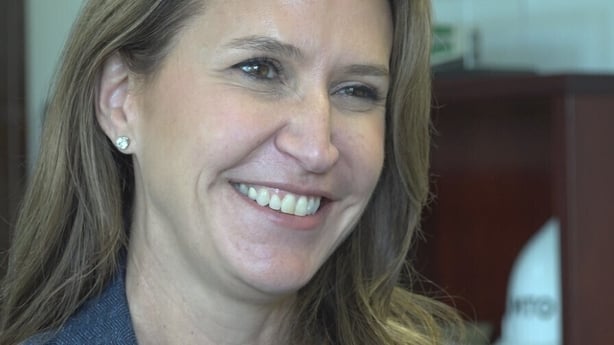
Caroline Mulroney has seen the close Canada-US ties forged by her father Brian Mulroney wane
The US president takes issue with a supply chain that sees an American truck cross the Canada and US border multiple times before final installation.
“There is no such thing as an American-built vehicle, no such things as a Canadian-built vehicle. We build vehicles together,” said Brian Kingston, President of the Vehicle Manufacturers’ Association.
Changing trade policies and unpredictability within the market are leading to some carmakers cutting production in Ontario.
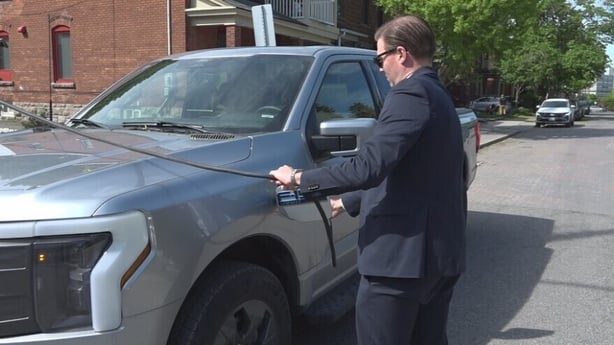
Brian Kingston believes cross border co-operation is vital for the vehicle manufacturing industry
More than 100,000 workers in the Canadian car industry will be watching to see if the US, Canada and Mexico free trade agreement will be renewed this summer or if they must prepare and react to new rules.
“If we don’t have access, there is no Canadian automotive industry. That is just the way our industry is structured. We do need an agreement with the Americans, if not, our industry looks smaller and it will employ less people,” he said.
Wake-up call
However, many Canadians see this new US approach as a wake-up call and believe it is high time for Canada to stand on its own two feet.
“We do have to become less dependent on the United States, not only in economic terms but also in a strategic sense,” said Associate Professor of Canadian history at the University of Ottawa, Damien-Claude Bélanger.
“The Canadian government has attempted to limit our dependency on the United States now, really since the 1940s. It has been a long-standing effort by a whole series of governments, both Liberal and Conservative. But it has never been done so seriously as it has been now and that’s likely to, over time, have an effect.”
The federal Canadian government and provincial politics have insisted that Canada is not turning its back on the US, but merely turning away, and looking elsewhere for alliances and investment.
“This may feel like a setback but actually it’s opening up a number of opportunities globally,” said Donna Skelly, Speaker, Legislative Assembly of Ontario.
“Ireland and Canada, I believe, have an opportunity to identify where we can collaborate. We have such deep ties. Let’s just move forward,” she said.
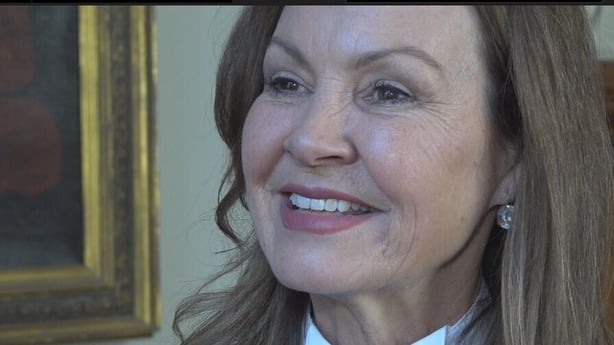
Donny Skelly believes strains in Canada’s relationship with the US can also open up opportunities
Canadians are rethinking their relationship with the United States and how it looks at its nearest neighbour.
According to official figures, number of Canadians who entered the country after returning from the US in 2025 was down 25%.
A study by the University of Toronto, by tracking mobile phone activity, also suggested that there was around a 42% reduction in visits to US cities by residents of Canada last year.
Speaking to people on the streets of Ottawa, some said they’ve stopped travelling to the US “just on morals”.

Canadians are recalibrating their attitudes to their southern neighbour
One man said he would regularly travel from Ottawa to New York state, a 45-minute drive away, but stopped bringing his smartphone with him out of fear that US border officials would see anti-Trump content on his device and bar him from entering.
Still heavily dependent
But the US and Canada are two countries whose economies and industries have been deeply intertwined for decades. Untangling those connections is easier said than done.
Canada’s economy remains heavily dependent on the US with nearly 70% of its exports heading south of the border. Most products are also entering the US duty free.
Even if there is a trade deal in the next few months, it’s hard to see where the relationship goes from here.
For Caroline Mulroney, she is hopeful that the two nations can come to an agreement.
“I understand the ground has shifted in a dramatic way and I assume in a fundamental way, one that will stay with us,” she said.
“Our economies are deeply integrated and no province in Canada knows that better than Ontario. We have to get back to a place where we can trade more freely than we are now,” she added.