
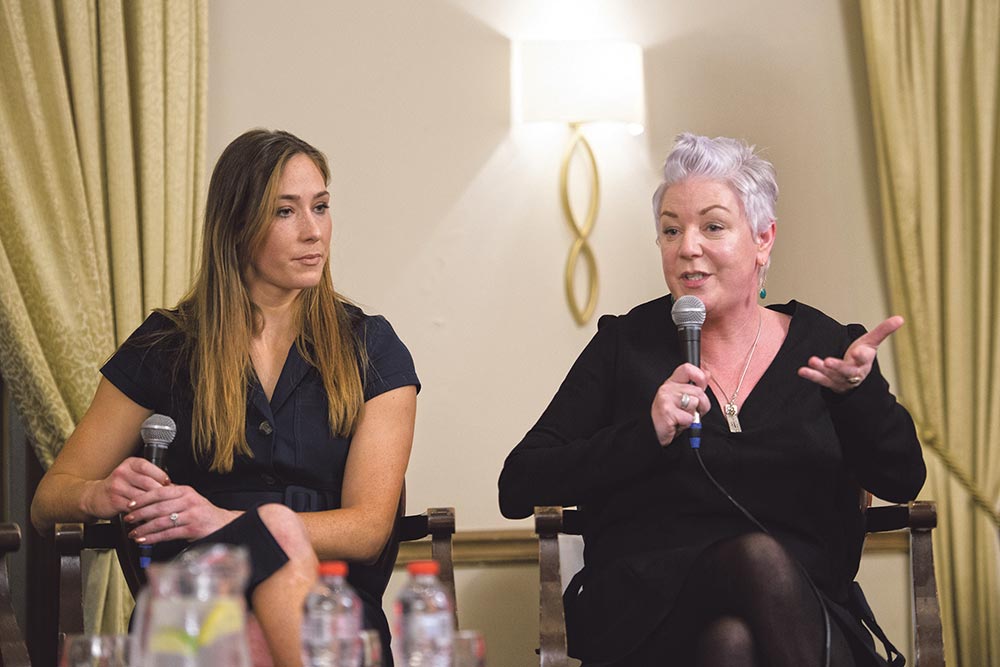
A Clare doctor who has has been diagnosed with haemochromatosis, also known as iron overload, has shared her own experience of the condition during World Haemochromatosis Awareness Week, urging people with a genetic history to seek testing.
Haemochromatosis causes the body to absorb too much iron from food and is Ireland’s most common genetic condition. If left untreated excess iron can build up in vital organs leading to irreversible damage, with serious complications including liver disease, heart problems, diabetes and joint damage.
Often referred to as the “Celtic Gene,” Ireland has the highest prevalence of the condition in the world, with around 1 in 5 people carrying the gene, including Ennis’ Dr Maire Finn.
Approximately 1 in 83 are genetically predisposed to developing haemochromatosis, however despite how common it is, haemochromatosis is often missed because the early symptoms can be vague and easily mistaken for stress, ageing or general fatigue.
Common warning signs include persistent tiredness, brain fog, abdominal discomfort and joint pain, particularly in the knuckles sometimes referred to as the “iron fist.”
When Dr Finn became extremely tired a number of years ago, she admits she first blamed the stresses of every day life, despite her own brother’s diagnosis of the condition.
She openly tells us, “It’s actually embarrassing from the point of view that I am a doctor and completely ignored this. It’s probably a cautionary tale. If you do have a family history, that’s the biggest clue you may actually have the condition. The symptoms tend to be very vague and overlap with so many other conditions. It’s often hard when people present with fatigue or joint pain or abdominal pain which can be for lots of reasons, so it isn’t always the first thing a doctor would be thinking of, including myself.
“One of my brothers was diagnosed, and I just completely ignored it because I’m very busy. I was extremely fatigued, but had two small children, was a single parent working full time. Who isn’t tired?”
It was only when she went for an insurance medical that the condition was spotted, with Dr Finn saying the diagnosis was an “eye opener”.
“Fatigue was the main thing for me. I was in my early 40s, and women, because we menstruate, it is managing it a little, not perfectly of course, but we are losing a little blood. Then pregnancy will deplete our iron stores. It was after I’d had my children when it presented in me. I had some abdominal pain. But these are vague symptoms so it’s really important to have it in the back of your mind if you have a family history, could it possibly be haemochromatosis? It’s important to check for it.”
She explains the screening test isn’t carried out during routine bloods and urges people to talk to their GP if they have concerns. Initial screening involves a simple iron panel blood test to measure iron levels and if Serum Ferritin or Transferrin Saturation (TSAT) levels are raised, a genetic blood test is then recommended.
She assures that once diagnosed treating haemochromatosis is very easy. “You restrict your diet from an iron point of view, but mostly it is about just taking away blood, the opposite to getting a blood transfusion, with a venesection.”
Once the condition is manageable, one way of alleviating it can even help wider society by donating blood.
“My ferritin levels were very high originally, and it took a long time to get it down to a manageable level. But once somebody is at a kind of a manageable level, and the ferritin levels need maybe a venesection once every six months, very often the best thing to do is to donate blood to the Irish Transfusion Service. That is a really feel good thing as well, because you’re doing something that is good for you and good for the general population too. That’s mostly what I do now.”
The Irish Haemochromatosis Association (IHA), the only registered charity in Ireland dedicated to supporting people living with haemochromatosis and their families, is urging anyone experiencing symptoms to speak with their GP about screening for the condition.
Speaking about Ireland’s role in advancing research and awareness, Professor John Ryan, Consultant Hepatologist at Beaumont Hospital and Chair, Irish Liver Foundation, said: “The key message is that once haemochromatosis is diagnosed, it is highly treatable. It may be frequently missed because early symptoms are so non-specific, but we have the tools to diagnose this early and prevent complications. Along with the European Iron Club, I’m delighted to be hosting a conference in Trinity College in June, bringing together a truly outstanding line-up of speakers and international experts who are advancing vital research in haemochromatosis.”
Professor Suzanne Norris, Consultant in Hepatology and Gastroenterology at St. James’s Hospital added, “Early diagnosis of haemochromatosis is vital, which is why serious complications as a result of haemochromatosis can be avoided if a patient is diagnosed as early as possible. The work of the Irish Haemochromatosis Association has helped to increase awareness of Ireland’s most common genetic disorder and educate the public on identifying symptoms and seeking treatment.”
The Irish Haemochromatosis Association is expanding its work within nurse education, by partnering with the HSE NW nurse education and training team and the Irish General Practice Nurses Educational Association to deliver a pilot venesection training programme for nurses in the community. The aim is to make venesection treatment more accessible for patients in community settings.
For further information or support, visit www.haemochromatosis.ie.