
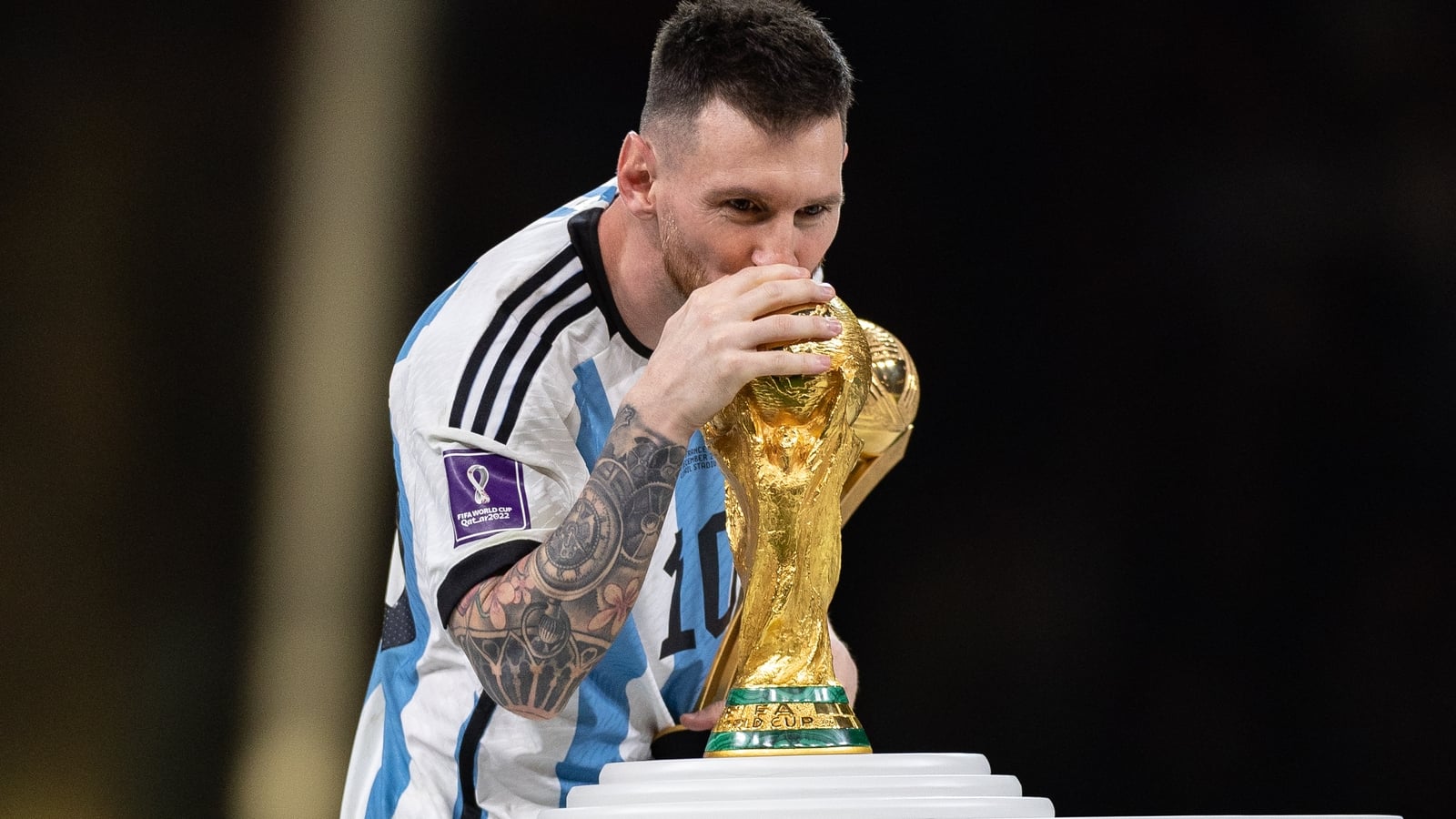
The 2026 World Cup gets underway in less than 12 hours and for better or worse, it promises to be a unique tournament.
Mexico will face South Africa in the first match of the tournament at 8pm this evening to kick things off, the first of 104 matches in what could either be described as the most ambitious or the most bloated World Cup ever.
Spain enter as the tournament favourites and reigning European champions, France possess the squad depth and finishing pedigree of back-to-back finalists, and England arrive with something approaching belief under Thomas Tuchel after however many years of hurt we’re at now.
Reigning champions Argentina, led by Lionel Messi, are seeking to become the first back-to-back winners since Brazil in 1962, with Messi aiming to eclipse Diego Maradona and win the tournament twice.
Brazil have the firepower to mount a genuine challenge, while for Portugal captain Cristiano Ronaldo, it’s his last chance at lifting the one major trophy to have eluded him during his career – whether or not that particular sideshow helps Portugal remains to be seen.
The old cliché about never writing off the Germans still rings true, especially under Julian Nagelsmann, while the likes of Colombia, Senegal and Morocco look more than capable of springing a surprise.
The headlines – from an on-pitch angle at least – look promising and there’s some big match-ups that will no doubt get fans excited, but given the new expanded nature of the tournament, it might take us a while to get there.
With 48 teams competing across 12 groups, there’s too much room for early mismatches and fixtures that just aren’t going to get people excited, outside of the countries competing.
Sunday’s meeting between Germany and Curacao and the Monday clash between Spain and Cape Verde have the potential to be absolute shellackings, while fixtures like Qatar v Switzerland and Uzbekistan v Colombia are unlikely to get the blood pumping.
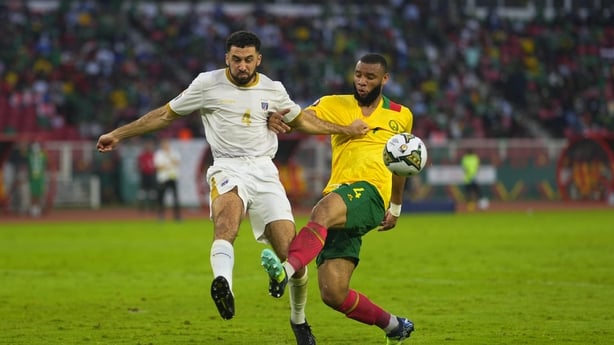
Cape Verde’s Roberto Lopes (left)
There’s the feeling that much of the jeopardy that we’ve seen in group stages of previous tournaments has been removed with the generous path to the knockout stages making the early phase of the competition feel safe for the big guns.
The top two from each group advance automatically, along with the eight best third-placed teams, so that two thirds of the teams involved will progress to the round of 32 knockouts.
It’s a system that seems designed to ensure that there’s no unfortunate early exits for the sponsor-friendly giants of world football. Teams will be able to lose two games and still progress to the knockouts, albeit with a less favourable draw.
Far be it from Ireland fans to be critical of teams progressing from low scoring groups, but there is very much the chance that our Italia 90 record of progressing to the knockout stages without actually winning a game could be repeated.
The extended group phase means that, for many, the real excitement won’t get going until the knockout stages. That will suit teams, however, who are still nursing back players to full health after a hectic club season.
The likes of Messi, Neymar, Lamine Yamal, Bukayo Saka and Nico Williams are all likely to be either rested or very carefully managed during the first couple of group games.
With the teams that go deepest in the competition playing eight matches, thought will have to be given to injuries and fatigue.
Weather conditions will also play a major role with cities like Miami, Houston, Guadalajara, and Mexico City among the locations where extreme heat events are most frequent during June and July.
FIFA has mandated hydration break at the 22nd and 67th minutes of all matches regardless of conditions, and the match schedule has been structured so that daytime games are largely assigned to air-conditioned stadiums. Even with that, playing at high temperatures will present its own challenges.
Given the conditions, on paper this tournament should suit the likes of Spain, Brazil, Argentina and Mexico, who are used to playing in sweltering heat.
Spain, as mentioned, are the bookmakers’ favourite as they seek to add the World Cup to their European title. They have the deepest, most complete squad in the tournament, with a midfield that other teams can only dream of.
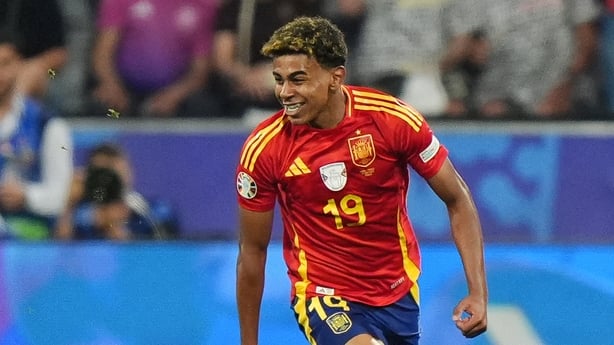
Lamine Yamal
Much will hinge on the fitness of Yamal however. A hamstring injury means his availability for the group stage is uncertain, but they have time to ease him into the competition.
France look to be Spain’s biggest challengers for the title and if both, as expected, win their groups, the first time they can meet will be in the semi-finals – a hugely exciting prospect.
With the likes of Kylian Mbappe, Ousmane Dembele, Michael Olise and Desire Doue, Les Bleus possess some of the world’s best attacking players and the overall quality to beat anybody.
This is Didier Deschamps’ final tournament in charge and, having finished runners-up last time out, they’ll be desperate to go one better.
The same can be said of England who come into the tournament off the back of a run to the final of Euro 2024 where they were eventually beaten 2-1 by Spain.
There’s been a change of manager and of style with Gareth Southgate’s often dour approach jettisoned in favour of Tuchel’s more fluid and high-intensity approach.
The German hasn’t been afraid to make the big calls heading into the tournament, leaving the likes of Phil Foden, Cole Palmer and Trent Alexander-Arnold behind as he opts for players suited to his system rather than the big names. It’s a gamble and one that will no doubt be used as a stick to beat him with if things don’t go to plan.
Elsewhere, perennial challengers Brazil and Argentina come into the tournament with big question marks hanging over them.
Carlo Ancelotti has been handed the reins of the Selecao and while they have genuine quality in attack and defence there’s uncertainty about the midfield. Their qualification path to the World Cup was far from smooth and while they have a genuine sprinkling of quality in Vinicius, Raphinha and Marquinhos, they’re not the team they once were.
The same can be said of Argentina who are looking to become the first back-to-back winners since Brazil in 1962. With the now 38-year-old Messi looking to drag out one last hurrah, much will depend on whether or not he’s able to turn back the clock.
The clock will be also an issue for Irish fans watching on. With some awful kick-off times from the perspective of our time zone, alarm clocks and lots of coffee will be the order of the day. Brazil’s first game against Morocco is at 11pm on Saturday night, while Argentina get their campaign underway at 2am on a Wednesday.
It’s a tournament that’s asking a lot of its audience, both at home and in the stadiums, in terms of schedule, time zones, and patience. We can only hope that football at the top end will be worth it, but whether 104 matches justifies it all is a question that can only be really answered on 19 July.
Watch every game of the FIFA 2026 World Cup live on RTÉ with highlights on RTÉ Sport digital platforms and live blogs on RTÉ.ie/sport and RTÉ News app