
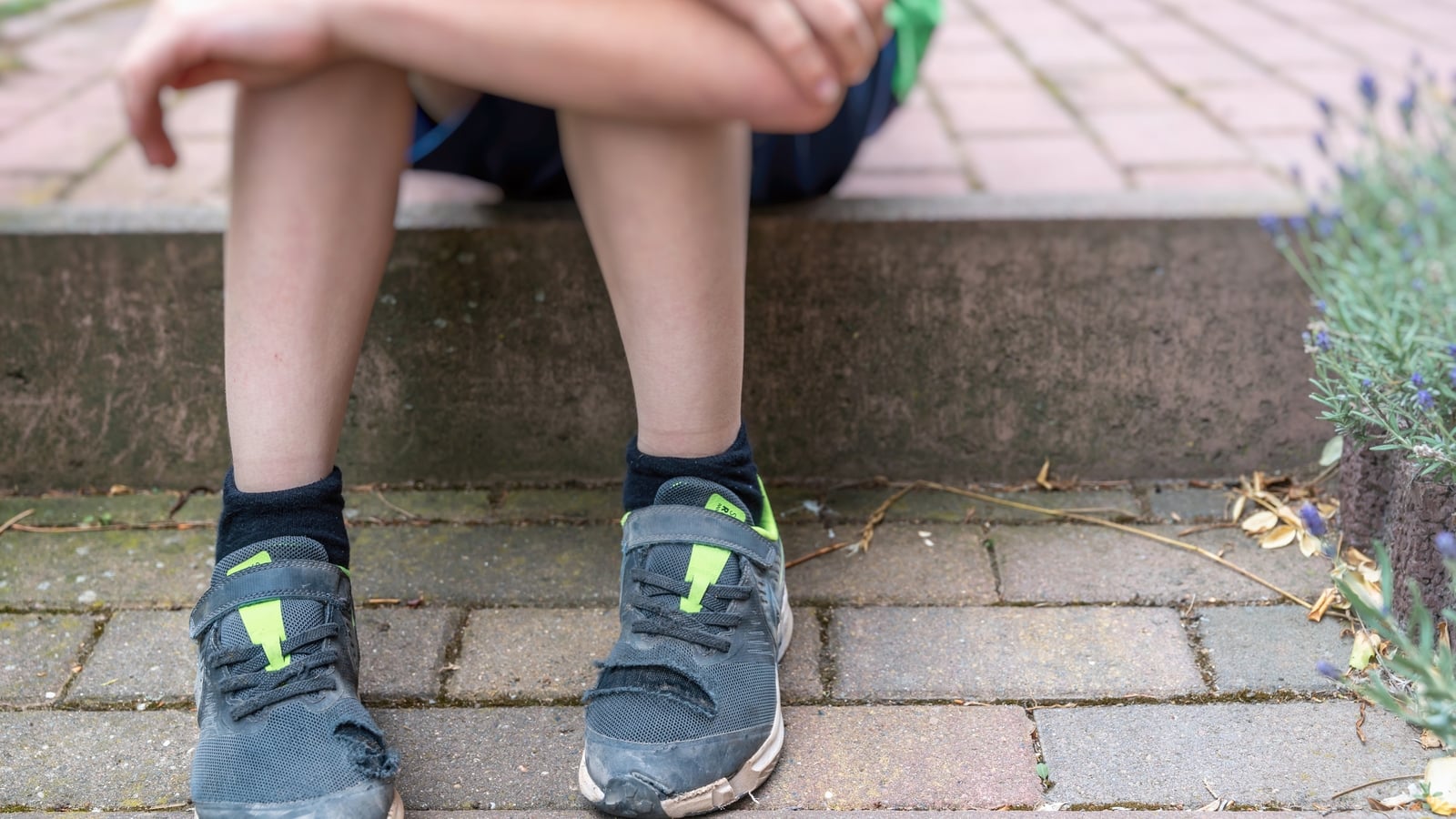
A family living in emergency accommodation in Galway has shared their experience of the difficulties created by the harsh living conditions.
There was a slight increase in the number of people living in emergency accommodation in April, according to the latest homeless figures almost two weeks ago.
The figures, which saw an increase of 31 people, often fluctuate; therefore, it is not necessarily a sign of the number of people becoming homeless easing.
If fewer people are entering emergency accommodation, this will become more evident in the months ahead.
When the figures were published at the end of May, Simon Communities Ireland noted changes occurring in the west, where the number of people in emergency accommodation reduced by 48.
The charity was keen to discover what had happened to lead to a reduction.
April also saw another record of 5,604 children in emergency accommodation.
While Galway had the highest number of children in emergency accommodation outside the Dublin region for a prolonged period, this has improved slightly.
In April 2024, there were 240 children in emergency accommodation in Galway; that figure fell to 230 in April 2025 and to 204 in April of this year.
One family’s story
Included in those children are two boys in the city who have been homeless for over two years and whose mother wishes to remain anonymous.
The family entered emergency accommodation when she was pregnant with her second child, who is now a toddler and has only ever known life in homeless services.
Unable to maintain her job due to her living conditions, she is now on stress leave from work.
She and the boys live with a number of other families in a B&B where there is a communal kitchen and sitting area.
However, most of the time is spent in their bedroom.
Speaking to RTÉ News, the mother highlighted the restrictions in trying to live a normal life.
“We cannot have visitors, and we’re confined to a setting that is not suitable for raising young children,” she said.
Safeguarding concerns at the accommodation heightened the situation and emails from the mother in question show concerns were raised with Galway City Council.
The mother of the two boys said her eldest son then developed “significant behavioural and emotional difficulties”, impacting his younger brother.
“He has become fearful and distressed in situations that previously would not have affected him,” she said.
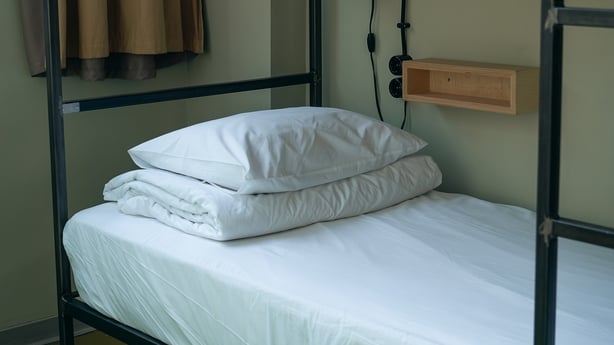
There were 5,604 children in emergency accommodation in April across Ireland
A medical team assessing the child expressed concern about the impact of the accommodation on the family and advised Galway City Council on that basis.
Generally, local authorities in Ireland determine bedroom requirements for families based on the number, the gender and the age of the children in the household.
Same-gender children are usually expected to share a room, which would mean, in this family’s case, that they would be on the housing list for a two-bedroom house.
The medical team overseeing the eldest boy stated from the outset in an HMD (Housing/Medical Disability) form that a three-bedroom house was required.
Forms submitted to the council regarding accommodation requirements, seen by RTÉ News, have described the children as “very distressed”.
A form signed off in March stated: “The family is sharing one bedroom. They have been in the B&B for two years. He is experiencing night terrors and distress, difficulty getting to sleep. Enduring and long-term condition.
“Symptoms worsened since a distressing incident in B&B. Sleep disruption affecting him and his brother.”
It notes a requirement for the children to have separate bedrooms as a result.
The HMD form described the prospect of the eldest boy sharing a bedroom with his brother as “inappropriate”.
In response, Galway City Council deemed “night terrors” as not being “an enduring medical condition”.
Asked about the response, the council told RTÉ News that it takes what is contained in HMD forms very seriously.
Public representatives in Galway say the issue of social housing and homelessness in the city is not the fault of the local authority.
‘Utter crisis point in Galway city’, says Sinn Féin TD
Sinn Féin TD Mairéad Farrell is “inundated” with people coming to her office weekly who are extremely upset.
Elected 12 years ago, she said she has never seen it as bad as it is.
“It’s at total utter crisis point in Galway city. We’re overwhelmed with people facing eviction and homelessness, who have so few options.”
She blames Government policy like the tenant in situ scheme and the new rental rules as reasons for the worsening situation.
The Department of Housing said that its role in relation to homelessness involves the provision of a national framework of policy, legislation and funding to underpin the role of housing authorities in addressing homelessness at local level.
“Statutory responsibility in relation to the provision of homeless services rests with individual housing authorities,” it said.
Asked why she thought the monthly homeless figures showed a slight improvement in the region, Deputy Farrell said it was because the figures do not show the extent of hidden homelessness in Galway.
Indeed, when RTÉ News spoke to those in emergency accommodation, the anecdotes of people sleeping in cars, on couches, in mobile homes and moving back in with ex-partners in the west were innumerable.
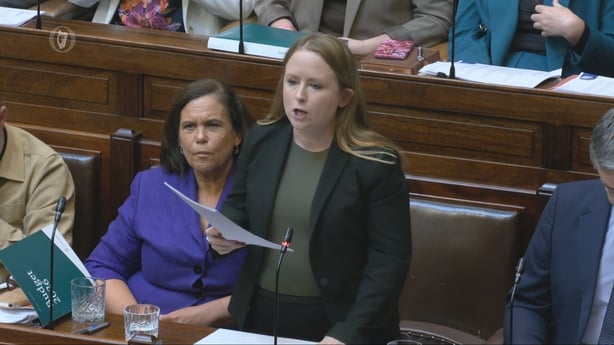
Mairéad Farrell said she has never seen the homelessness situation in Galway as bad as it currently is
Deputy Farrell pointed out that there is now an insufficient level of emergency accommodation available, which was not the fault of the city council.
This was echoed by Fianna Fáil TD John Connolly who has advocated for the mother and two boys featured in this report.
According to Deputy Connolly, demand for social housing – particularly households assessed as homeless – far exceeds supply, which has significantly constrained the council’s ability to meet needs.
“Even though the council is prioritising allocations to applicants assessed as homeless, some individuals and families are spending extended periods in emergency accommodation due to this severe shortage of suitable properties,” he said.
He noted that staff within the housing section at Galway City Council are operating under extreme pressure in very challenging circumstances.
“Many cases are complex, which significantly increases workloads. From my perspective, staff are doing their absolute best, and this is an issue that requires attention at a management and system‑wide level.”
The Fianna Fáil TD said marginal improvements in child homelessness in Galway was not something to celebrate, because Cork, Limerick and the mid‑east region now record higher numbers of children in emergency accommodation than Galway.
However, on a per capita basis, Galway’s adult homelessness rate is lower than most other regional cities, which points back to the question of the extent of hidden homelessness in the region.
Supporting people experiencing homelessness and precarious living conditions into secure tenancies and homes is the Government and Minister James Browne’s top priority, according to the Department of Housing.
It said the new housing action plan has a clear and embedded focus on ending homelessness through a number of “key measures”.
In a statement, it said local authorities and their service delivery partners work closely with all households to provide appropriate emergency accommodation, and the ultimate aim is to support them to secure an exit to a tenancy.
On the issue of safeguarding, the department said National Quality Standards Framework (NQSF) for homeless services operates across all local authority and NGO delivered services.
It pointed out that a framework in respect of child safeguarding is provided under the framework, and that monitoring and reporting of these measures is a matter for individual local authorities.
On family homelessness, it said the housing plan includes a commitment to develop a dedicated Child and Family Homelessness Action Plan.
“This will bring together key stakeholders to drive the continued focus on preventing children and families entering emergency accommodation, providing enhanced supports for children experiencing homelessness, as well as measures to accelerate exits and reduce the time spent by children and their families in homeless emergency accommodation.”
However, it has long been argued that the impact on babies and toddlers living in emergency accommodation is significant.
The mother of the two boys in Galway can attest to that, with the eldest boy now lashing out at his baby brother in alarming ways.
The housing charity COPE is responsible for procuring emergency accommodation in Galway.
Staff include key workers who liaise with those in emergency accommodation and the council.
It did not respond to requests from RTÉ News for comment.