
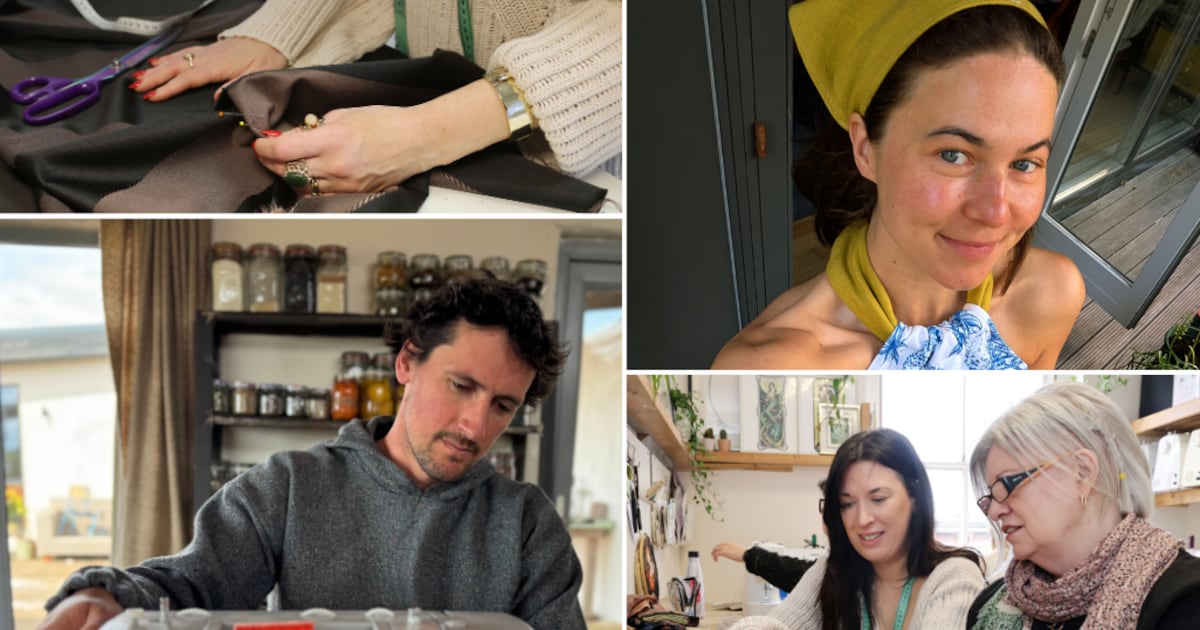
Encouraging to the last, Lorna Daly makes no comment on my dress that’s frayed, cut jaggedly and more closely resembles a potato sack than the cute summer mini I was aiming for.
“I think maybe we could fit in a dart here,” Daly says. Darts are essential for turning two-dimensional fabric into a three-dimensional shape that actually fits a body. In my many hours of self-taught sewing, darts were something I fearfully avoided.
With a triangular ruler, Daly uses blue tailor’s chalk to mark in the darts she instinctively knows will work. “Sew from here to here and here to here,” she says, before moving off to help someone else.
I run the fabric under the machine following her blue chalky lines. Two darts appear. The sack is a dress.
After four months of solo sewing with only online tutorials for guidance, I’ve come to a drop-in class at the When Poppy Met Daisy sewing school on Dublin’s Capel Street.
The rooms are bright, with all the accoutrements of an atelier: fabric draping, scissors hanging, irons steaming and thousands of tiny metal pins in neat boxes. At one sewing station, Anastasiya Fedoruk is constructing a delicate bodice in a maroon polka dot fabric. This is her fourth sewing class.
Beside her, Tuyen Tran is working on a tie-back midi dress in a ditsy floral print. Tuyen tells me she always felt too intimidated to make her own clothes, but after a six-week dressmaking course with Daly, she has fallen in love with the process.
Daly, who graduated from the Grafton Academy of Fashion Design, worked in the industry in London for a few years before returning home and founding When Poppy Met Daisy in 2011. “There was nothing like it in Dublin at the time, where you could dip your toe into fashion design without having to do a third-level degree,” she says.
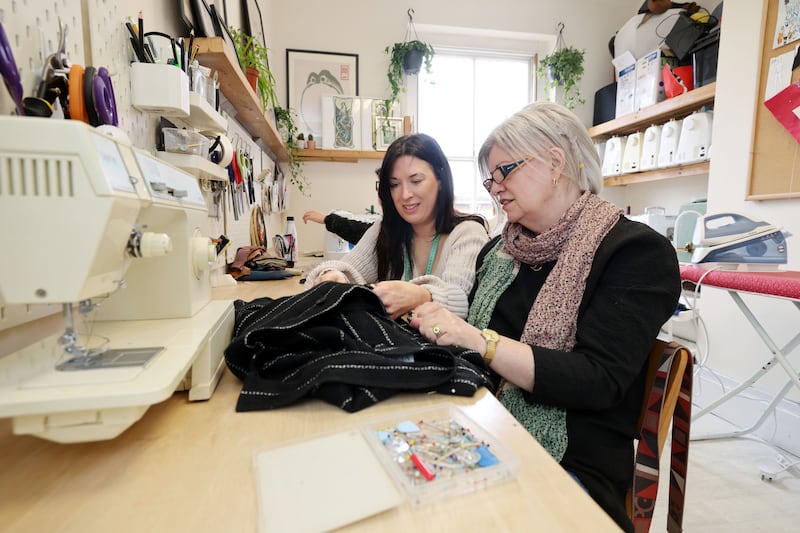 Lorna Daly at a sewing class with Adie Clarke. Photograph: Alan Betson/The Irish Times
In the early years, her students were primarily focused on getting work in the fashion industry, and there were very few hobbyists, but that balance has tipped dramatically in recent years.
“We gained a lot of momentum just before the pandemic with younger people having a greater focus on sustainability and wanting to be able to upcycle clothing, to repair things, and be able to do things for themselves,” Daly says.
[ What I’ve learned after a month of avoiding my phoneOpens in new window ]
“I thought I’d never get back to work again after Covid, but it was the polar opposite. I was inundated, people had been teaching themselves at home, so they had the basics down and wanted to learn more skills.”
Daly’s courses range from a four-hour intro to sewing to intensive weekend corsetry workshops and 12-week pattern drafting courses. Demand for classes is high. Courses regularly sell out, and there are waiting lists for others.
The surge of interest for sewing classes at When Poppy Met Daisy is a hyperlocal glimpse of a much wider trend of people of all ages turning to old-fashioned hobbies, from crocheting and knitting to sashiko stitching. Millions of hours of videos have been posted across Instagram, TikTok and YouTube of people sharing detailed how-to videos of making boxer shorts from bedsheets, or “thrift flipping” men’s button-down shirts into halterneck dresses, or hacks for sewing perfect zippers.
Behind the resurgence of interest in people making their clothes and embellishing them is a desire to do something creative, and an exhaustion with ultra-fast fashion companies. “People are looking to be unique, and people are looking for things that last,” she says.
Making is connecting with your senses, from the sound of the sewing machine and the feel of the fabric
— Aisling McLoughlin, NCAD
Ultra-fast fashion brands like Shein, Fashion Nova and Boohoo can add thousands of new items to their sites every day. These brands target online consumers heavily with ads, relying on impulsive purchases that satisfy desire rather than need.
As people’s shopping habits and social lives have increasingly moved online, there has been a shift in the production values of retailers, says Aisling McLoughlin, who teaches sewing at the National College of Art and Design (NCAD). Clothing is being designed to look good on a screen rather than being designed for comfort, fit and durability.
[ Fast fashion: Can Ireland turn the tide?Opens in new window ]
As a result, the quality of fabric and the attention to detail have deteriorated significantly over the decades, and a disposable attitude towards clothing is one of the reasons Ireland is now the second largest producer of textile waste in Europe, according to research from the European Environment Agency.
Sewing your own clothes takes time and skill, but that time and effort build value.
McLoughlin points to a study from the Ellen MacArthur Foundation, a UK-based charity that promotes the transition to a circular economy, that found fast-fashion items are worn as few as five times, but slow-fashion garments are likely to be worn more than 30 times each.
“Making is connecting with your senses, from the sound of the sewing machine and the feel of the fabric,” McLoughlin says. “People appreciate and love the clothes they have built and wear them more.”
When I see things I like in shops or online, I think to myself, I can make that
— Emma Thompson
In the summertime, McLoughlin teaches a Creative Sewing course in NCAD, and the demand is so high that the course is now being offered twice a year.
“Students come from every demographic but all with the desire to learn how to sew and to explore sewing as a medium,” she says. “Once you can sew a straight line, you can make anything.”
Despite clothing never having been cheaper to buy, McLoughlin sees students being far more inventive and creative during times of economic hardship. As fabric can be picked up in charity shops or second-hand online, some people are drawn to sewing specifically as a way to save money.
For Clíodna Coyle, adopting a beautiful greyhound became the catalyst for turning on a sewing machine for the first time since she was 15.
“Greyhounds need clothes, because they’re skin and bone, but the clothes are frighteningly expensive,” Coyle, now in her early 30s, says. “So my partner, who is an engineer, somehow measured Tilly and drew a pattern that worked.”
Borrowing a sewing machine from her neighbours, Coyle began to sew, remembering how to thread the machine from home economics.
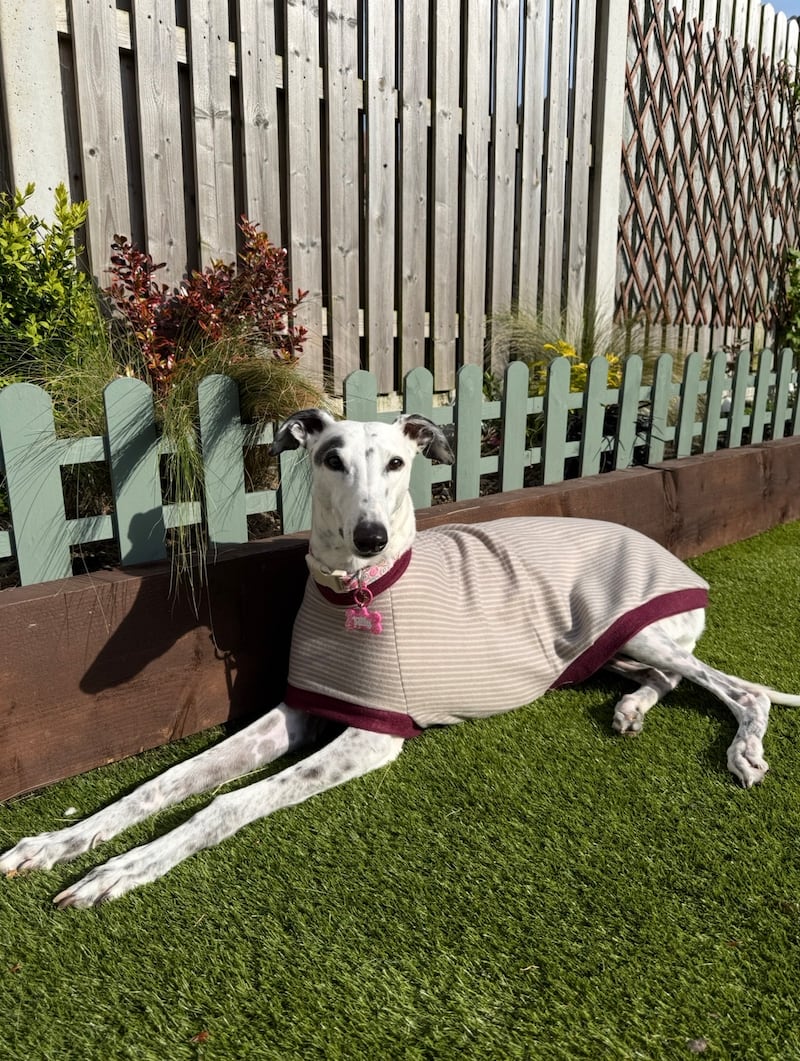 Clíodna Coyle makes clothes for her greyhound Tilly
Tilly’s unique outfits have received attention, and Coyle has started making fleeces and jumpers for other greyhounds on request.
The process has sparked a creative side in her that she doesn’t always get to tap into during the working day.
“It’s addictive, honestly, and it’s also stress-relieving. Whenever I’m at home alone now, or if I’ve had a bad day at work, instead of binge-watching something, I’ll sew. It makes me so happy to see Tilly in a cute jumper that I’ve made.”
Coyle’s experience points to something beyond thrift or necessity, a growing sense that making and repairing clothes is as much about fulfilment as it is about saving money.
As Harrison Gardner puts it, there is a confidence that comes from being able to work a machine and make things to your own taste and fit. Gardner taught himself to sew as a teenager in Australia, turning jeans into bags and patching worn-out clothes in bright contrasting threads.
Gardner is the co-founder and chairman of Common Knowledge, a centre for sustainable living in the Burren, Co Clare. His focus is on teaching people the skills to become more self-reliant, and he sees the sewing machine as one of the most empowering tools there is.
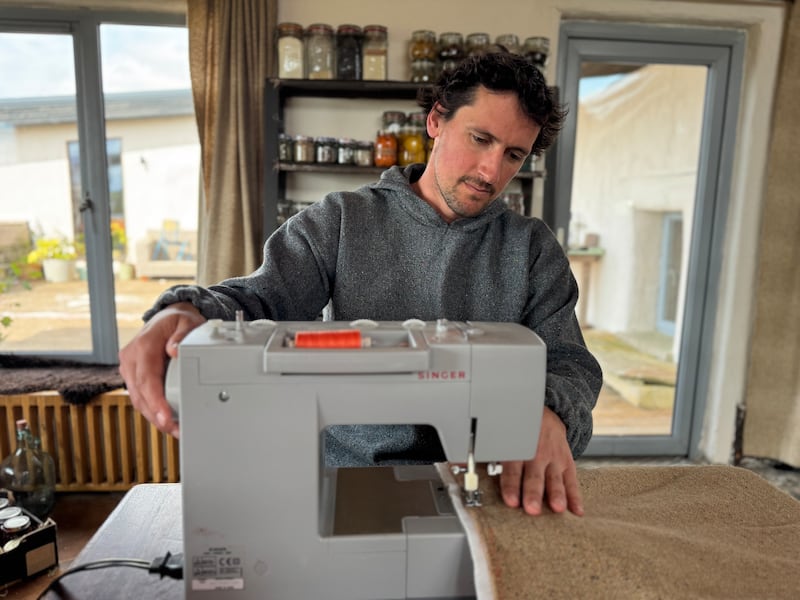 Harrison Gardner taught himself to sew as a teenager
“While you might need 101 tools to explore the full range of carpentry tasks, the humble sewing machine unlocks the entire fabric world in one go,” Gardner says. That’s why, alongside its courses in bricklaying and cabinet-making, Common Knowledge teaches an introduction to sewing course.
Gardner sees a “collective fatigue” around the “one-size-fits-all culture we are in”, and a craving among people to have the skills to make something unique.
“It’s empowering in a very personal way,” he says.
Sewing takes time, often a lot more than anticipated. The first top I made, in a burnt orange cotton fabric, was essentially two rectangles sewn together and held up by two more rectangles.
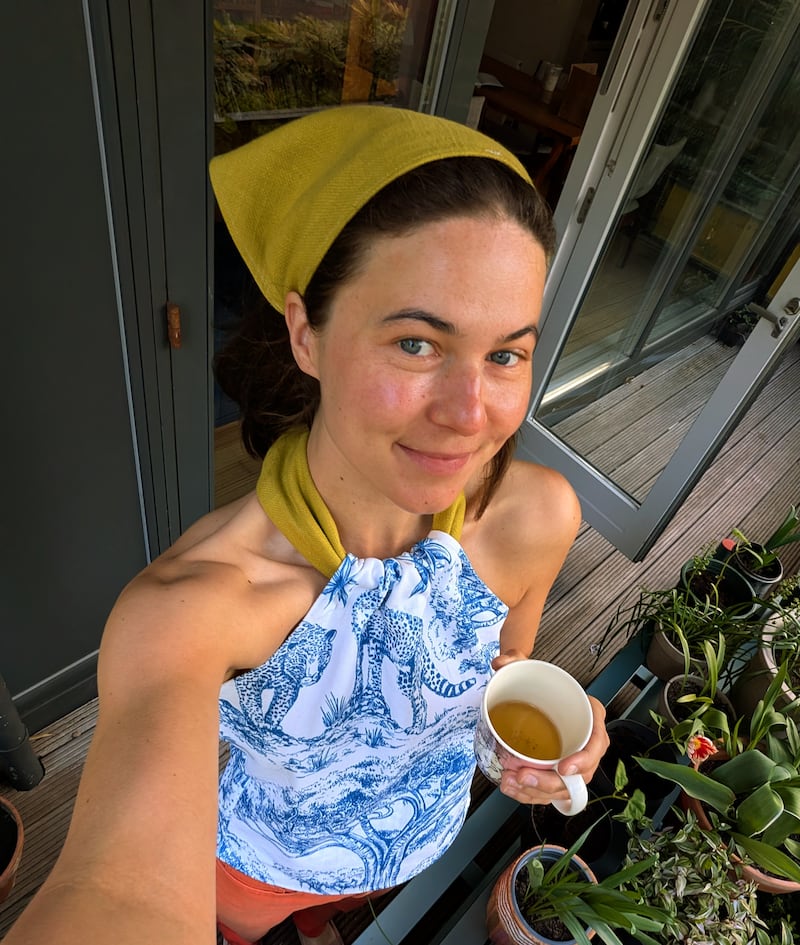 Rosanna Cooney wearing a top and bandana she made herself.
It took me a full day of measuring, cutting, sewing, seam ripping my mistakes, measuring some more, sewing again, until it was finally finished. It was the first time I really realised how cheap clothing truly is. If a similar top in a high-street shop could cost as little as €10, and these companies are profit-making, then how little are the people involved all the way down the production line being paid?
This tension between loving clothes but wanting to live responsibly is shared among many hobbyists, and something Emma Thompson, a worker in the charity sector, feels keenly.
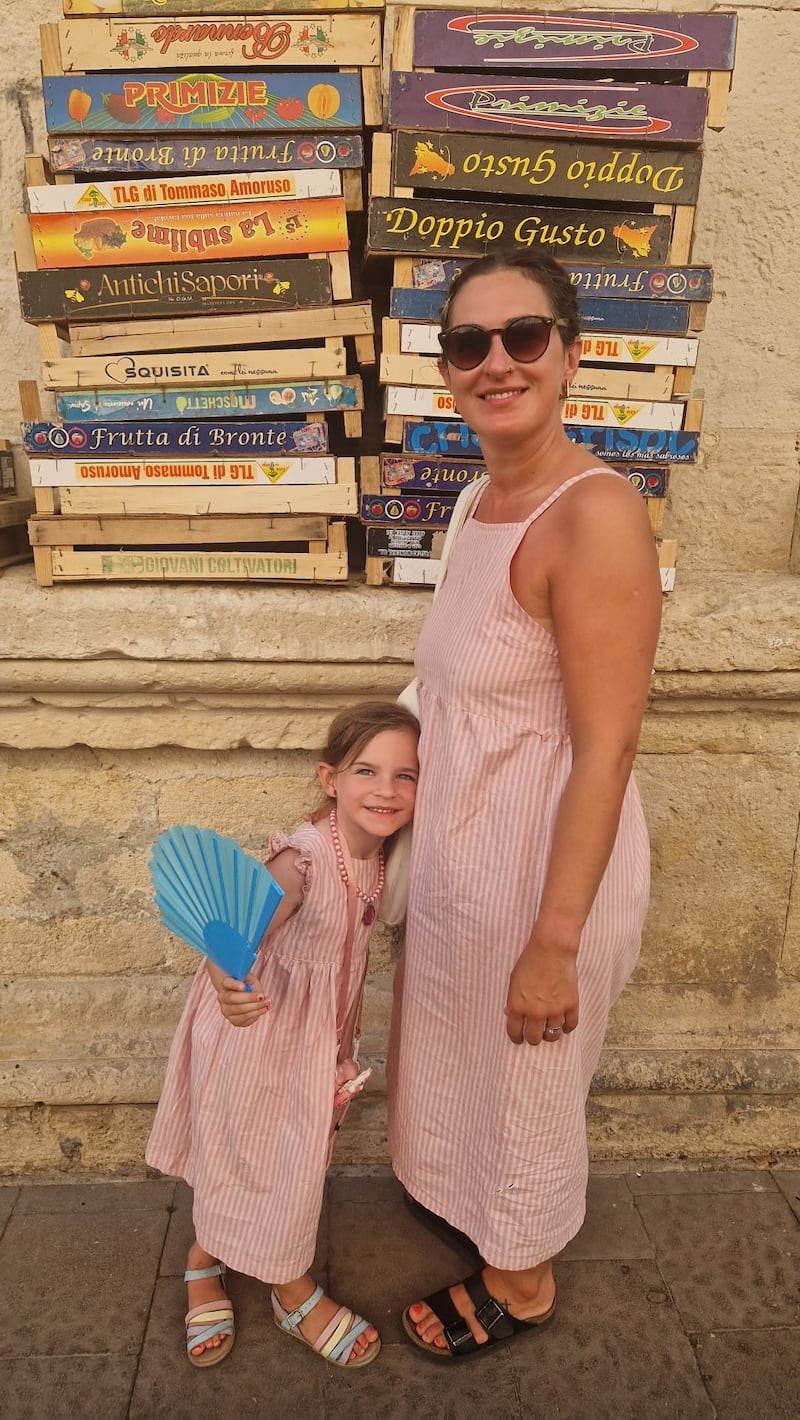 Emma Thompson makes clothes for herself and her daughter
“I try not to buy stuff now from fast-fashion places, because I know the work that’s gone into something,” Thompson says. “I really respect brands that have sustainable practices and pay staff fairly, but I just can’t always afford them, so making things myself has become a solution.”
Thompson began sewing in her early 20s on one of the first electric Singer sewing machines. It was a present from her grandfather, who used to work for Singer. Now in her 30s, she still uses the same machine to make clothes for herself and her kids.
“My favourite piece that I’ve made was for my daughter Selah’s sixth birthday. I made one in the same fabric for myself. She absolutely loves it, and loves that no one else has it,” Thompson says.
“When I see things I like in shops or online, I think to myself, I can make that. There’s also a sense of sticking it to the man, by having the freedom to choose what I wear and not contributing to the rat race of fashion.”