
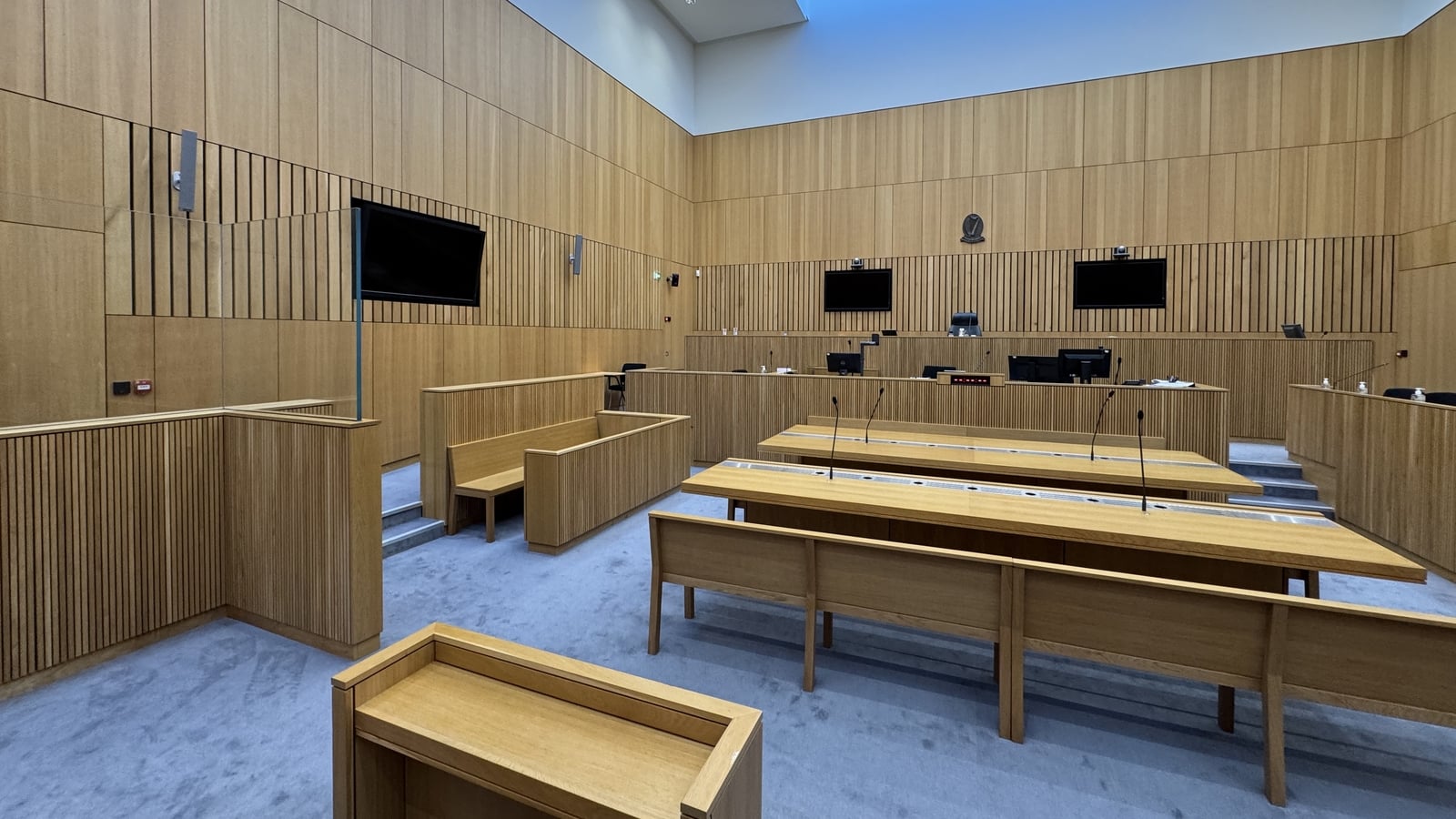
It is estimated that thousands of court cases have had to be adjourned due to the withdrawal of legal aid work by solicitors across the country.
The solicitors have withdrawn their services for the rest of the week, in all cases involving an accused person on bail, in a dispute over plans by the Department of Justice to reform solicitors’ fees for legal aid work.
The dispute centres, in particular, on the introduction of a flat fee per client regardless of the number of hearings involved in a case.
Most defendant solicitors are paid each time they appear for a client in a district court but, from 1 July, the Department of Justice is replacing this system with a flat-fee model.
Currently, a solicitor is paid for each court appearance, starting at €239.38, and then €59.86 for each subsequent hearing.
From 1 July, a new set fee of €455 will be payable regardless of how many court appearances there are – removing the link between payments and the number of appearances for solicitors.
The Law Society, which says it is not involved in organising the protest, has said its members have significant concerns and it is hoping for meaningful engagement with the Department of Justice.
Solicitors in Cork voted today in favour of withdrawing their services completely including cases where people are in custody, from next Monday with the exception of a case involving juveniles.
Legal aid solicitor Frank Buttimer said what was happening was a “complete and utter reconfiguration of the entire criminal legal aid system” with no negotiation.
Hundreds of cases in Criminal Courts of Justice in Dublin were adjourned due to the dispute.
A meeting of solicitors is expected to take place at the Law Society’s headquarters on Friday.
The society met with department officials yesterday and a further meeting is scheduled for later in the week.
Solicitor, Tony Collier, a partner in Ferry’s solicitors in Dublin said the new proposals from the Minister for Justice Helen McEntee would leave the work of solicitors delivering criminal defence work on behalf of the state in the district court, unviable.
He said it would also place a cap on the amount of legal aid services available for the most vulnerable in society.
Mr Collier said solicitors were eager to resolve the matter with the department.
However, he said it seemed there was a lack of willingness on the part of the department to engage substantively with the Law Society.
The Department has said it continue to engage with all the relevant stakeholders and recognises that the Criminal Legal Aid scheme is fundamental to upholding the right to a legal defence.
The minister has said the proposed reforms are aimed at making the system more efficient, fairer and faster.