
For most people, a minor cut or scrape is no big deal — the body heals itself quickly, and antibiotics can deal with any infections. But some wounds, such as severe burns and diabetic ulcers, are prone to bacterial infections that can become resistant to antibiotics.
“Diabetic wounds are very difficult to heal and people live with these wounds for pretty much the rest of their life,” says Vitaliy Khutoryanskiy, a materials scientist at the University of Reading in the United Kingdom.
You may like
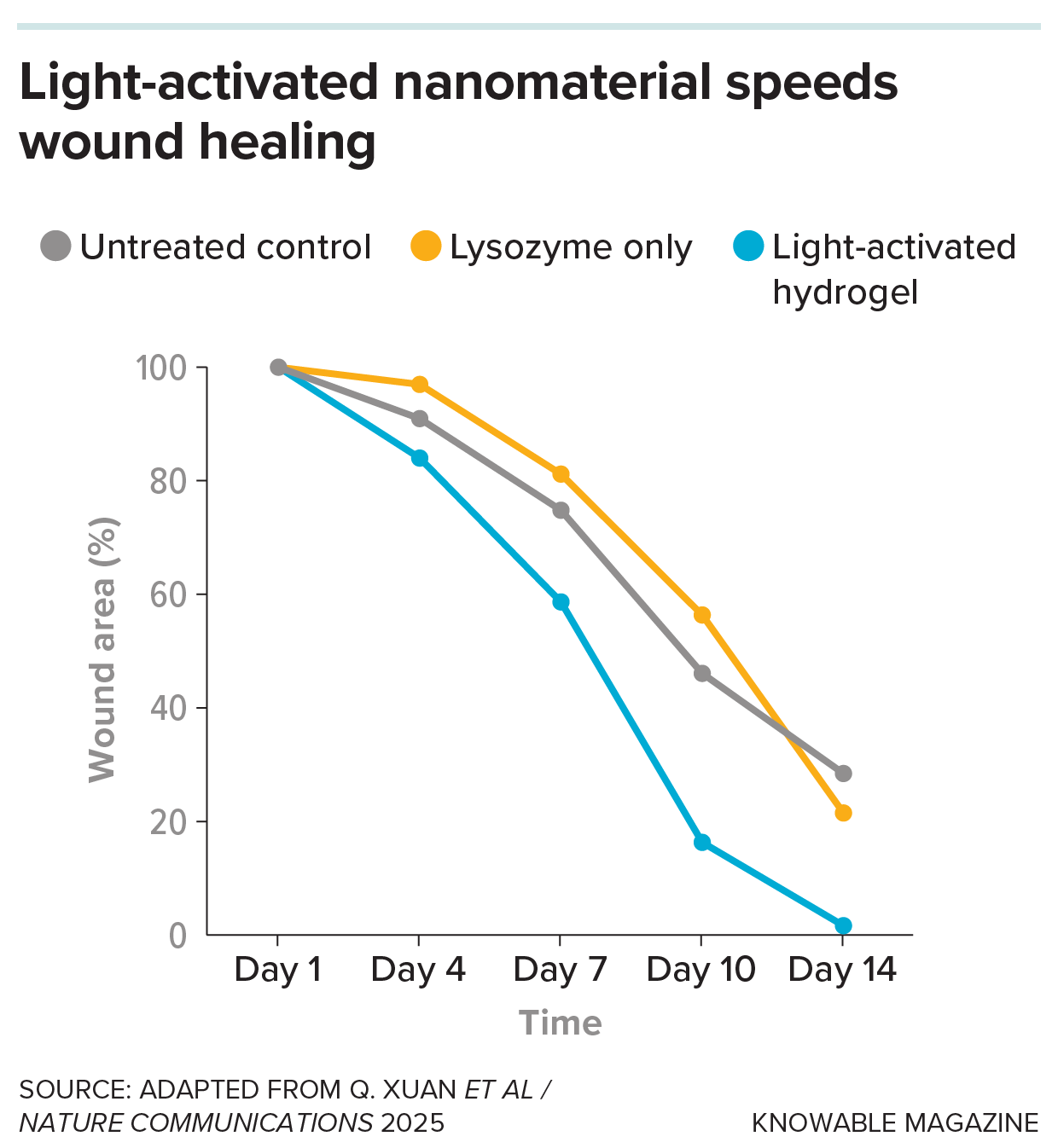
Light-activated nanomaterials that release noxious compounds only when and where they are needed can help eradicate wound infections while preventing damage to unaffected tissues. Here, mice with antibiotic-resistant wound infections were treated with a hydrogel that releases lysozyme, an antibacterial protein, only when activated by light. Their wounds healed more quickly than those of mice left untreated or treated with lysozyme alone.
(Image credit: Adapted from Q. Xuan et al/Nature Communications and Knowable Magazine)
What to read next