
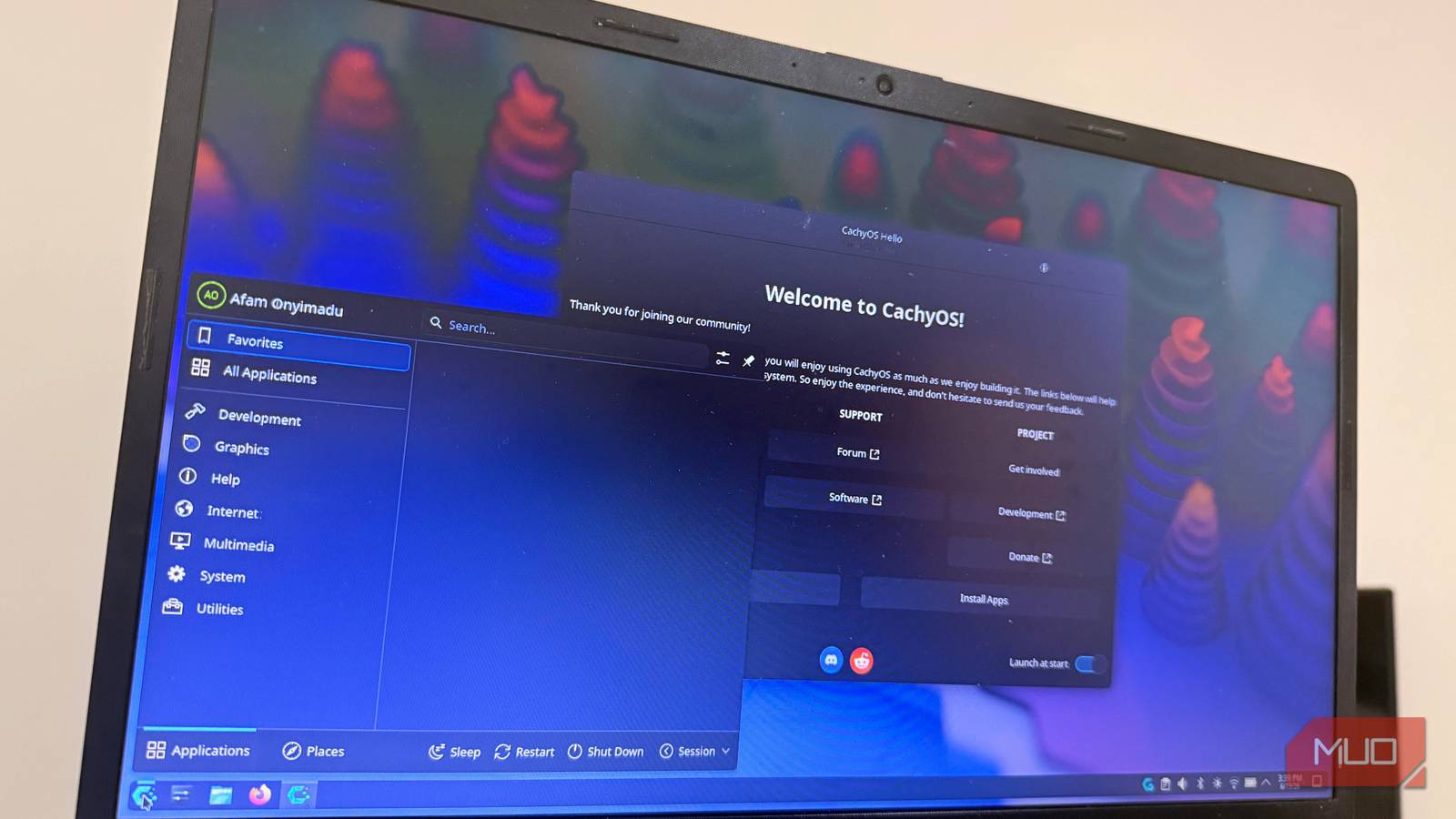
I maintained the most mindless Linux routine for six years: download Ubuntu, install it, and enjoy stability. Because this was my baseline, my laptop didn’t feel slow. However, there is a compromise when code for a distro is compiled to support legacy processors instead of being optimized for modern hardware.
After a week with CachyOS, I started to notice how much speed I was leaving on the table with Ubuntu. The distro is an aggressive, performance-tuned Arch derivative and should be the baseline for what hardware is capable of when not limited by conservative defaults.

Related
I tried 4 lightweight Linux distros on a 4GB laptop, and one surprised me
It’s always the one you least expect.
Ubuntu felt normal
Until I compared it to something else
Afam Onyimadu / MUO
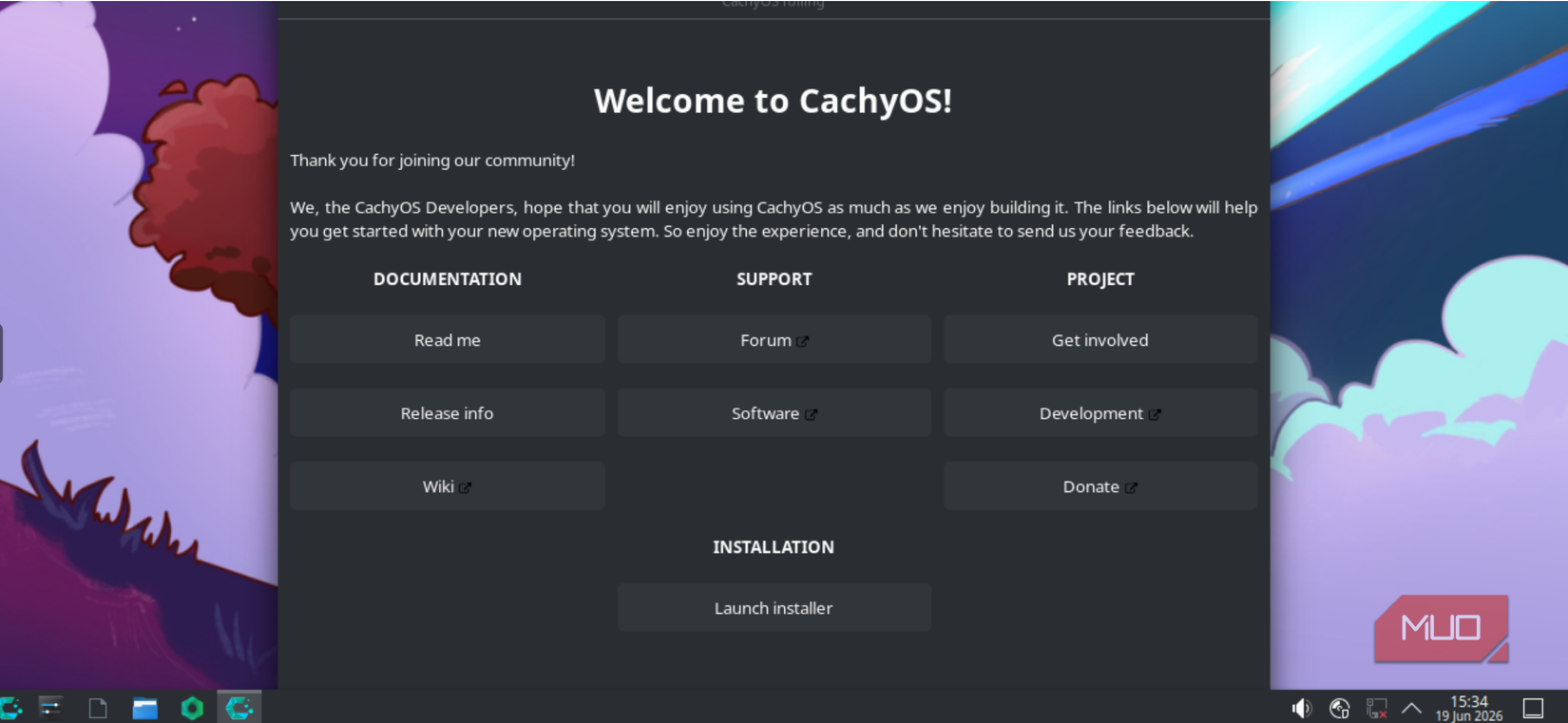
Ubuntu has served me through writing projects, editing work, and my academics. While it’s not necessarily the fastest operating system, it’s nevertheless dependable. It offers excellent hardware support, and the amount of online documentation available makes most problems easy to solve.
However, when you get so comfortable with an OS, it becomes the baseline, and that’s exactly what happened to me. Then I tried CachyOS, and basic system activity revealed what I’d been missing. While Ubuntu was running 277 background processes on my fresh installation, a fresh installation of CachyOS ran 246. Then I did a quick test, timing the launch of Nano from the terminal. It took CachyOS 23 milliseconds compared to Ubuntu’s 135.
Different Nano versions were installed on each system, so this is an observation, not a controlled benchmark.
Now this gap may not prove anything, but it did one important thing: it made me curious. Suddenly, Ubuntu wasn’t feeling like an obvious answer.
CachyOS optimizes things Ubuntu doesn’t
The philosophy matters as much as the numbers
Afam Onyimadu / MUO
Let me give you the short version:
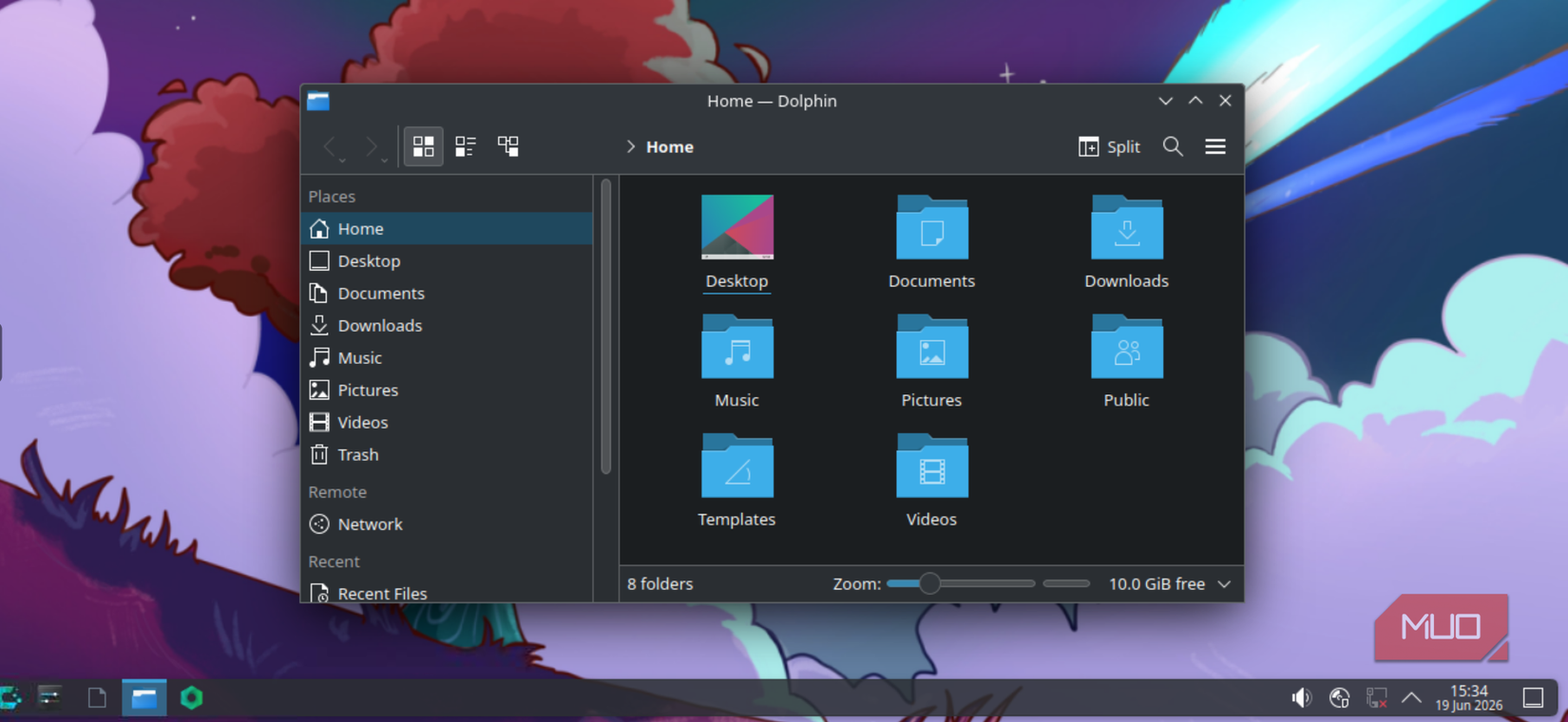
Ubuntu is tuned to run well on devices that include a five-year-old laptop to a brand-new modern configuration. That’s a constraint CachyOS doesn’t carry. It focuses on modern CPUs, and its packages are built with this in mind; several defaults are tuned for responsiveness rather than universal compatibility.
None of these were obvious to me as one big leap. However, I started observing them as a pile of little ones. When I opened apps, they launched slightly faster, and I observed snappier terminal commands. Although my laptop didn’t suddenly feel brand new, these small wins were enough to gradually shift my expectations.
Still, there was one tradeoff. While Ubuntu seemed to demand very little from me, CachyOS was more hands-on, consistent with what I’d expect from an Arch-based distribution. There was the occasional troubleshooting, and I generally spent more time understanding what my system was doing. But this was all worth it, and I expect this experience will vary from person to person depending on how much tinkering they do.
My biggest surprise wasn’t speed
It was how the desktop behaved under pressure
The launch time comparison was good to see, but what I found more interesting was what happened when I pushed both distros to their limits.
I turned to stress-ng for this, saturating every CPU core with a matrix-multiplication workload. At the same time, it ran a Pi calculation to 5,000 decimal places. Ubuntu slightly edged out CachyOS in this test:
Test
Ubuntu
CachyOS
Pi calculation time
18.6s
21.1s
This would have been the end of the story for a purely benchmarking exercise. But there is more to this than raw completion time. CachyOS’s tuning isn’t aimed at achieving the fastest completion times. Many features—including the BORE scheduler—prioritize system responsiveness under load. This is a different objective from finishing the work as quickly as possible.
I often conflate speed with responsiveness, but they are quite different. Even if one system finishes faster, it can still feel worse during real-world use while it’s working. That was the distinction I learned from this experience.
The little improvements kept adding up
Even my filesystem was working harder
Afam Onyimadu / MUO
I had another surprise, and this one was not related to the CPU.
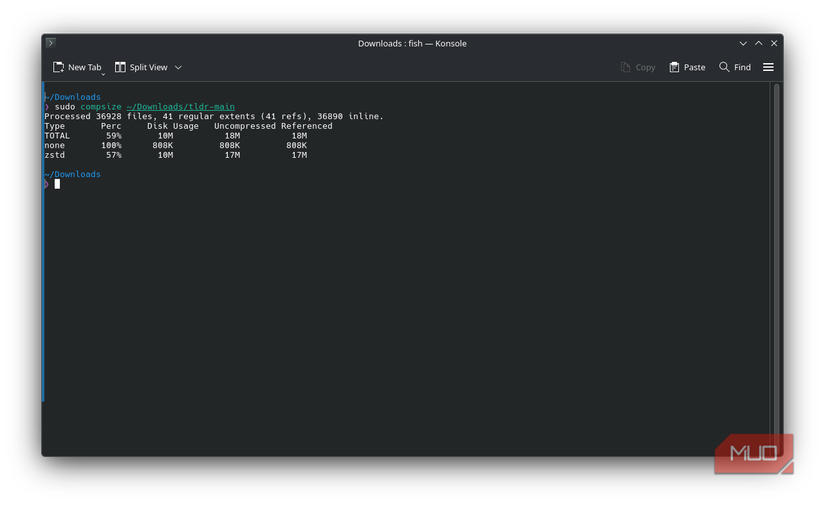
I downloaded the TLDR Pages repository and extracted it to both machines. This repository contains tens of thousands of small text files.
Metric
Ubuntu Ext4
CachyOS Btrfs
Extracted size
149MB
10MB disk usage
Compression
None
Automatic zstd
Files processed
36,928
36,928
Ubuntu uses a default Ext4 setup that leaves the download folder at 149MB. On CachyOS, these same 36,928 files registered as 10MB of actual disk space, thanks to Btrfs with automatic zstd compression.
This dataset contains small text files and is a best-case scenario for compression. Anything already compressed would not see the same gains.
Most Ubuntu installations default to Ext4, which doesn’t compress data on its own. Btrfs, on the other hand, compresses files automatically as they’re written.
However, these results fit into a pattern that I was beginning to see. Everything on CachyOS — the filesystem, scheduler, and packages — is optimized. None of these elements reinvent Linux, but together they get more out of the same hardware.

OS
Linux (Arch-based)
Minimum RAM Specs
3 GB
CachyOS is a high-performance Linux distribution based on Arch Linux.
Six years of “normal” finally had a comparison point
The point isn’t that Ubuntu is a bad operating system. If you need Linux to just work, I’d still probably recommend Ubuntu; reliable hardware support, easy-to-find software, and extensive documentation are all important to have. This is what Ubuntu offers, and that will not change anytime soon.
However, the thing that shifted is more subtle. I used my system for six years without ever having to ask whether it felt fast; there was simply no comparison. But now that I have seen the difference, it’s hard to unsee it. It’s refreshing to see a desktop that remains usable under real load, and the fast launches also make a real difference. CachyOS has been very different, in a very good way.