
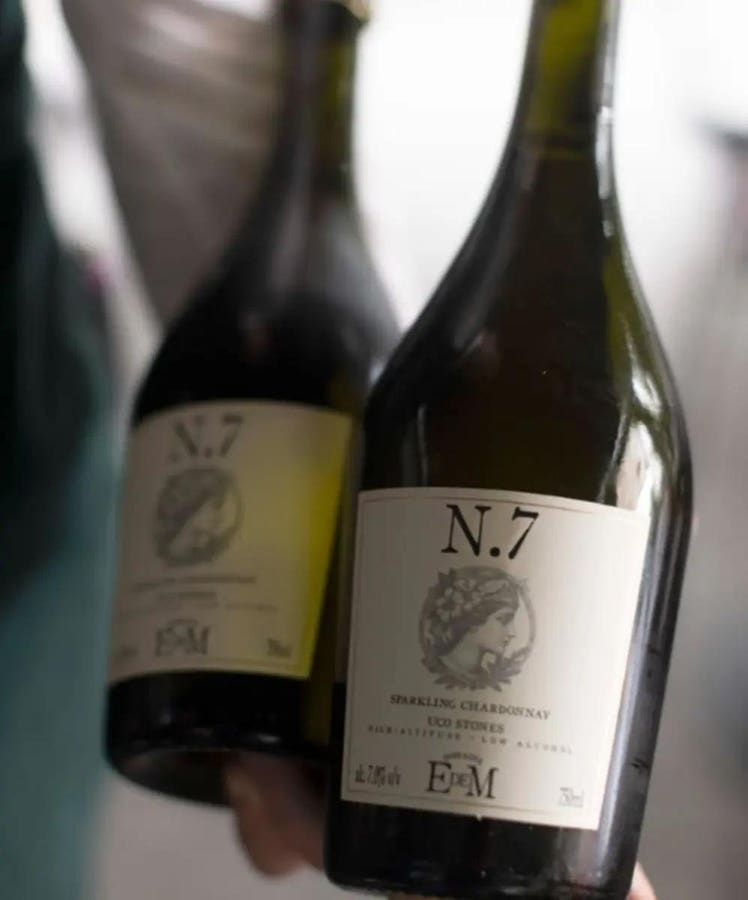
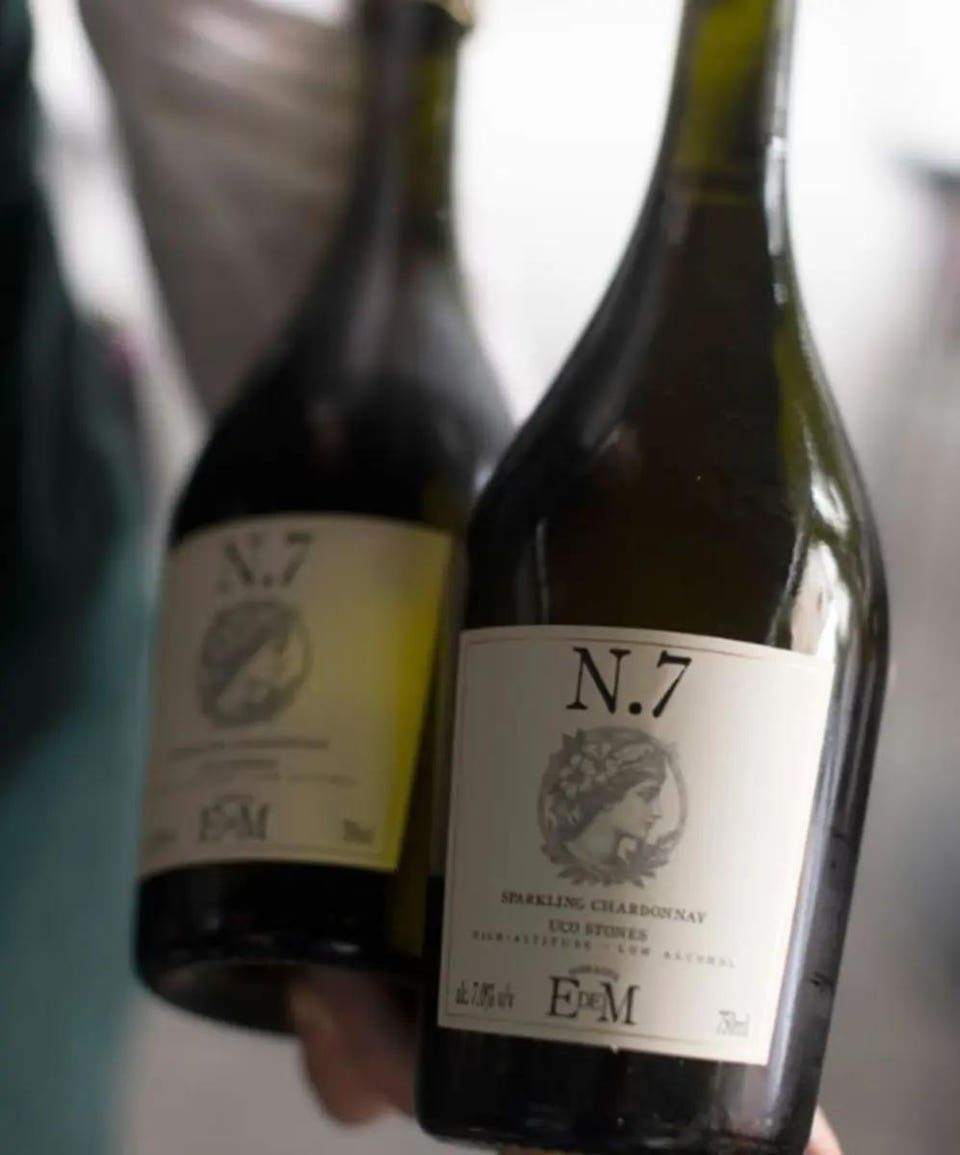
This low-alcohol Chardonnay hails from Argentina.
Domaine EdeM
Laura Catena’s family is no stranger to innovation when it comes to Chardonnay grapes.
Her father was the first winemaker to plant Dijon clones in Argentina. And now, Catena, herself a fourth generation winemaker and physician, is pioneering again with Chardonnay – this time in the low alcohol and non-alcohol wine spheres.
“When we started talking about these categories, I knew I didn’t want to be in it unless the wines were as good as a regular wine with full alcohol content,” Catena says in a Zoom interview. “The concept was: how can we make something really delicious? A lot of wines in these categories are really not delicious.”
Working with their high-altitude grapes, Catena and her winemakers began experimenting. And her team at the Catena Institute of Wine spent five years researching and testing. Until finally, the wines were where she and her winemakers wanted them. In late 2025, they released their first non-alcoholic offerings N.0 Rosae, a de-alcoholized rosé and Brunette, a non-alcoholic Chardonnay under a new label, Domaine EdeM or Elena of Mendoza, named for Catena’s mother, Elena.
“My mother helped introduce our Chardonnay to the U.S. so it is fitting that this project is named for her,” Catena says. “My mother also used to say ‘As I get older, I can’t drink that much, but can you make something that is delicious?”
The latest offering from Domaine EdeM is N.7 Uco Stones, a low-alcohol Chardonnay, with just under 7 percent alcohol by volume, which is half of the alcohol of a typical Chardonnay. Retailing for about $27.99, this wine has more residual sugar than a regular Chardonnay, and it is crafted with the same high quality grapes as a regular Catena wine. It also is elevated with bubbles.
“We did tons of experimentation to arrive at this wine,” Catena says. “We wanted to get as close to regular wine as we could. The wine is not too sweet, but there is some residual sugar, and we found it tasted better with bubbles. There are enough bubbles to lift it up, but not as much as a traditional champagne.”
N.7 is right on trend. According to Vitikit, low-alcohol wines are “emerging as the industry’s most significant trend.” No alcohol and low-alcohol wines are increasing in popularity, with an expected 4 percent compound annual growth rate through 2028.
Catena says N.7 is her everyday, weekday drinking wine. “I like to have two glasses of something,” Catena says. “I’m a doctor so I know a lot about wine and health, and the scientific literature says that women should have no more than a glass of wine per day.”
But since N.7 has half the alcohol content, Catena feels comfortable drinking two glasses. “I like to have one glass of wine while I am cooking dinner, and I like to drink another glass with dinner,” she says.
N.7, Catena says, pairs quite well with food. “Because it has more sweetness than a normal Chardonnay, it pairs better with cheese,” she says. “It’s a great wine for receptions and evernts that don’t have a ton of food.”