
Senior EU figures were quick to praise Keir Starmer’s legacy given his determination to overturn years of Conservative-driven Brexit turmoil and his embrace of the EU-UK reset.
That reset was due to take another stride forward with the second post-Brexit EU-UK summit on 22 July.
However, on the news of Mr Starmer’s resignation this morning, the European Commission appeared to postpone it, saying it was “reassessing” the encounter, which would have involved the outgoing prime minister, Commission President Ursula von der Leyen, and the European Council President António Costa..
Commission spokesperson Paula Pinho said both Brussels and London were looking into “the opportunity of still holding the summit… and we will take it from here”.
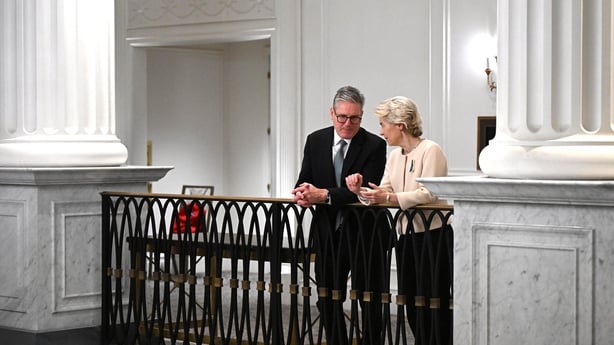
Ursula von der Leyen paid tribute to Keir Starmer following his resignation
There was disappointment in some capitals.
“I fully understand that you’re not going to have a summit with a lame duck prime minister, but postponing the summit isn’t ideal,” said one EU diplomat.
“For a while now we’ve been diligently working with the UK, and actually quite constructively, on having a more pragmatic relationship. This could have been another way point in that pragmatic realignment,” they said.
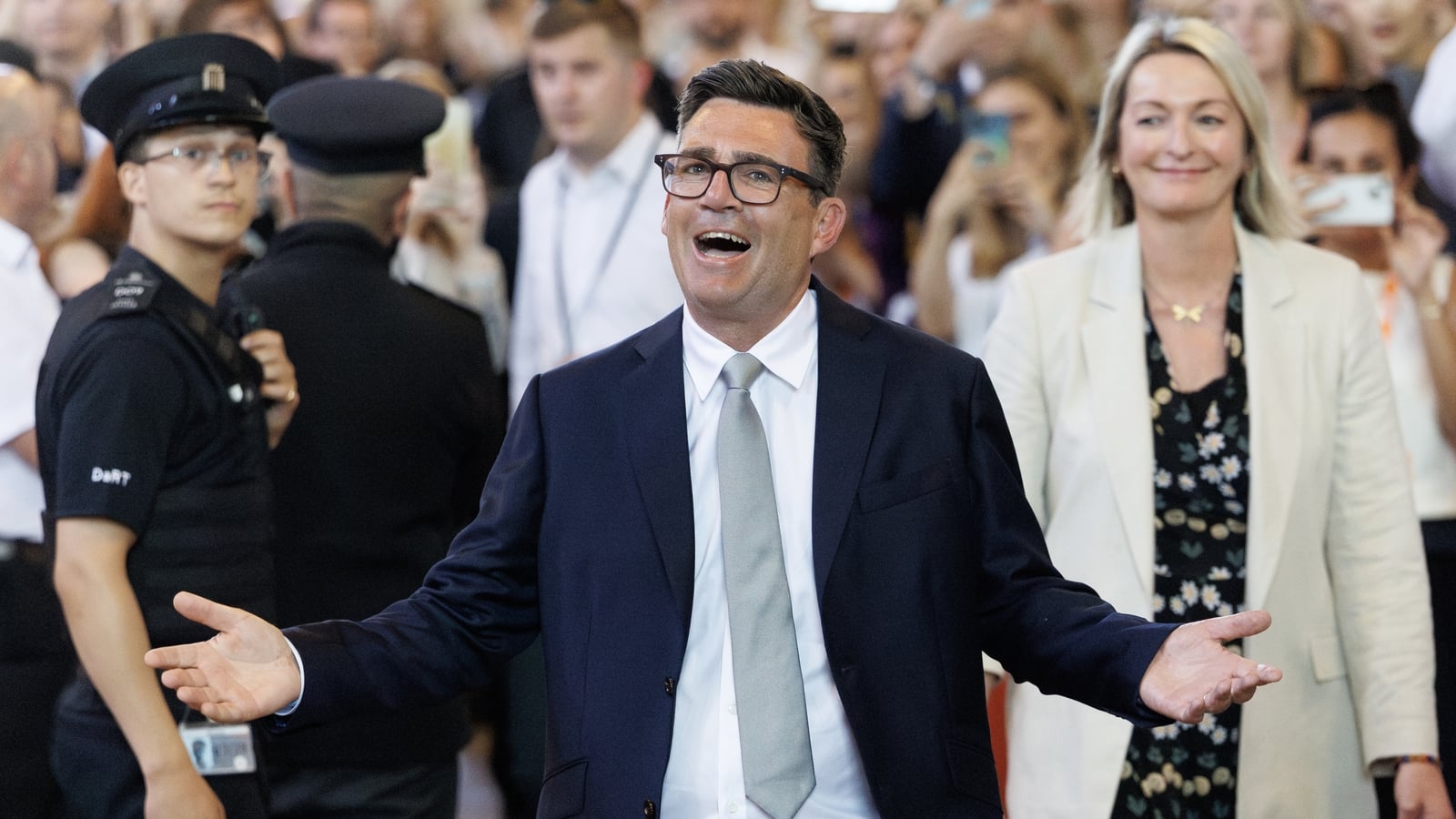
Andy Burnham is an unknown quantity in Europe, but if he commands the broad support of the Labour parliamentary party, with its still huge majority, then there will be expectations that he could go further than Mr Starmer in forging closer relations.
In paying tribute to Mr Starmer this afternoon, Ms von der Leyen praised him for bolstering European security, adding: “It can take many leaders years to grow into the statesman you became in just two years. European and Ukrainian security is stronger because of you. Thank you, dear Keir”.
It can take many leaders years to grow into the statesman you became in just two years.
European and Ukrainian security is stronger because of you.
Thank you, dear Keir. pic.twitter.com/XkX53ZEG4b
— Ursula von der Leyen (@vonderleyen) June 22, 2026
Was there a nod to Mr Burnham that he too could become a statesman in a short space of time?
“It’s a signal to Burnham that he can become a statesman if he’s ambitious in his relations with Europe,” said another EU diplomat.
Likewise, Mr Costa, who represents 27 EU leaders, was effusive in his praise.
“Under your premiership we turned a new page in EU-UK relations. The EU is committed to continued cooperation in this spirit. It has been a pleasure to work with you, as a colleague and a friend,” he said.
Mr Starmer was undoubtedly closer to the heart of European policy making on defence and the support of Ukraine.
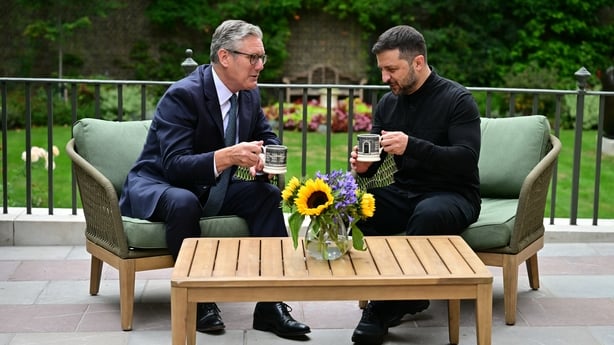
Volodymyr Zelensky praised ‘every conversation’ he had with Keir Starmer
On X, Ukrainian President Volodymyr Zelensky posted: “Keir, thank you for all our cooperation, your support, and the joint decisions that have helped make our Europe and our protection of life stronger.
“The United Kingdom has been, is, and will remain among the world’s leaders. Here in Ukraine, we deeply value Britain, and every meeting and every conversation we have had has always been filled with real substance.”
By contrast, Kremlin spokesman Dmitry Peskov said little would change with a new prime minister.
“Keir Starmer has not distinguished himself in any way from the standpoint of Russian-British relations,” he told reporters in a morning briefing.
“It is hardly likely that anyone on the current British political scene will take a different position on our bilateral relations to Keir Starmer,” he added.
Read more: Writing was on wall for Starmer as Britain set for seventh leader in 10 years
That reflects the unstinting support successive UK prime ministers have shown Ukraine since Russia’s invasion in 2022, including Mr Starmer’s leading role in forging a Coalition of the Willing force that would provide security guarantees in the event of a peace agreement between Kyiv and Moscow.
Mr Starmer hosted President Zelensky along with French President Emmanuel Macron and German Chancellor Friedrich Merz in Downing Street earlier this month for talks on the war.
In the deepening estrangement between Europe and the Trump administration, Mr Starmer was instrumental in coaxing EU leaders into joining a peacekeeping force aimed at deterring Russia in the future.
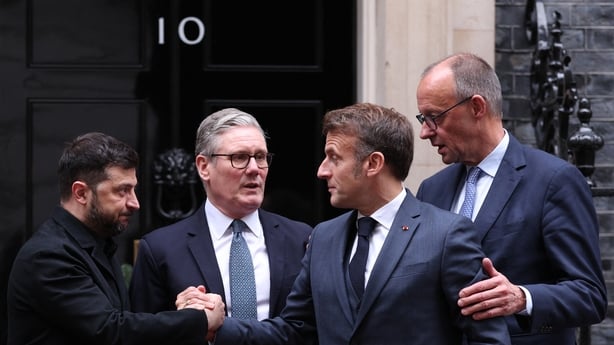
Keir Starmer hosted President Zelensky along with Emmanuel Macron and Friedrich Merz
Although Mr Starmer’s predecessor Rishi Sunak, the former Conservative Party leader, did attempt a more pragmatic approach to the EU, it was the Labour Party under Mr Starmer that enshrined the reset – as well as closer bilateral ties with the big EU member states – in its general election manifesto in 2024.
A paper by the House of Lords European Affairs Committee concluded in November last year that the Labour government had “taken the first important steps to implement these policies”.
It has intensified dialogue with the EU and countries such as France and Germany and has established a notably closer relationship in many areas,” it stated.
However, the committee felt that it was not clear how far and fast Mr Starmer was prepared to go in building on the reset, a sentiment that was widely shared in Brussels.
Watch: Keir Starmer says he will give successor ‘full support’ as he resigns
There were big expectations in national capitals and within the EU institutions that Mr Starmer was interested in a closer and less neurotic relationship compared to successive Tory prime ministers who were hopelessly caught up in the politics of Brexit.
Yet, Mr Starmer had set out key red lines: no return to the EU’s single market or customs union, and no restoration of freedom of movement.
That left many in Brussels scratching their heads at the actual text of the manifesto, which declared that”…to seize the opportunities ahead, we must make Brexit work. We will reset the relationship and seek to deepen ties with our European friends, neighbours and allies”.
Russia’s attack against Ukraine certainly boosted the reset, given the clear alignment of EU and UK policies towards supporting Ukraine.
Specifically, at the first meeting between Mr Starmer and Ms von der Leyen in Brussels in October 2024, the prime minister set out four demands:
A veterinary/SPS agreement in order to reduce border checks on food and agriculture products
A scheme to support UK artists touring Europe
The mutual recognition of professional qualifications and an EU-UK security pact, meaning greater cooperation on defence, stronger bilateral links with France and Germany in particular
An upgrade of the Joint Expeditionary Force, the UK-led, rapid-reaction military coalition consisting of 10 like-minded Northern European militaries
Yet, Mr Starmer’s team seemed to slow walk the negotiations.
The view in Brussels was that Britain had left the EU, and if it wanted to swivel back and get closer again it would have to spell out the concessions it was prepared to accept.
The red lines of no customs union or single market membership did not help.
For example, the EU had proposed a youth mobility scheme to allow young Europeans to study in the UK and vice versa.
“The British side said they don’t accept free movement, which is fair and we understand it perfectly,” said one diplomat at the time.
“But the mobility scheme, as we proposed it, is not free movement, because there are parameters which will limit free movement – it’s not the free flow of people with no control,” they added.
Follow live updates as Starmer resigns and Burnham sworn in as MP
By the time the first full EU-UK summit took place on 19 May 2025, Mr Starmer’s demands had broadened.
Now, Downing Street wanted to link the UK and EU Emissions Trading Schemes (ETS) and to develop more efficient electricity trading arrangements.
The summit produced a Joint Statement, declaring a new UK-EU Strategic Partnership; a Security and Defence Partnership; and a “Common Understanding” on things like the SPS agreement, a linked ETS scheme, a joint “youth experience” scheme and UK participation in the EU’s internal electricity market.
For the SPS agreement, this would require the UK to agree “dynamic alignment” with EU rules, an option which Boris Johnson’s government ruled out back during the Brexit negotiations.
The EU side complains that the UK is very transactional. It won’t give in on anything unless it gets something in return.
While there was much more common ground between Mr Starmer’s government and the EU on security and defence, by late last year progress was slow on an SPS agreement – which Ireland is very keen on, both for bilateral trade and to help ease friction on the Irish Sea border – as well as on the linked ETS scheme and the youth experience scheme.
By Christmas, member states had adopted their own mandate on the above issues, but technical work was taking longer than expected, according to diplomats at the time.
Some member states were pushing for the UK to have to pay into an EU cohesion fund in order to access the internal electricity market. Ireland, by contrast, which would benefit from electricity cooperation, was keen not to have too many strings attached.
“The EU side complains that the UK is very transactional. It won’t give in on anything unless it gets something in return.
“The UK side feels that the EU is just trying to steamroller them, that it’s being far too ambitious in terms of what it wants to get,” said one EU diplomat in December last year.
However, work has continued this year and there were expectations that deals were to be struck on SPS, energy and a youth experience programme at the Brussels summit in July.
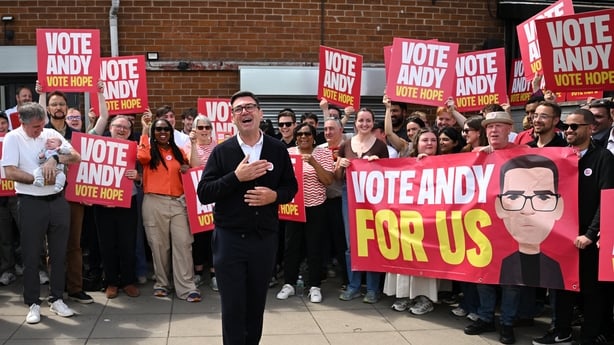
Andy Burnham could, indeed, take office just ahead of 22 July
Diplomats are suggesting that a fresh UK leader, with even stronger pro-EU credentials than Mr Starmer, could have helped focus minds on the key outstanding issues ahead of the summit.
Mr Burnham could, indeed, take office just ahead of 22 July, now that it looks clear that he will not face any opponents, and his arrival coincides with the clearest indication yet that – exactly 10 years since the Brexit vote – the British electorate are suffering from increasing regret at the referendum outcome.
“[YouGov]’s latest survey, a decade later, records the lowest level of support for Brexit so far,” said pollster Peter Kellner of the Centre for European Reform.
“Just 29% of Britain’s electors say that Britain was right to vote to leave the EU – the first time the figure has dipped below 30%. 58% say it was wrong to do so – the joint highest figure so far.
“Almost one in three leave voters have either changed their mind or now harbour doubts about the wisdom of Brexit.
“The generational gap is stark: voters under 25, who had no say in the 2016 referendum, oppose Brexit by ten to one, while those aged 65 and older are narrowly in favour,” Mr Kellner said.
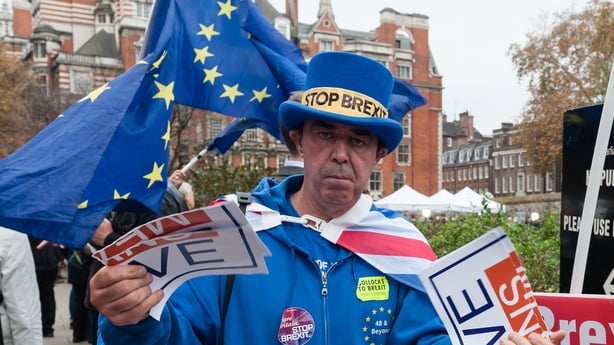
The British electorate are suffering from increasing regret at the Brexit referendum outcome
Mr Starmer will attend a meeting in Berlin on Wednesday involving the leaders of Europe’s top military powers in order to discuss Ukraine and the forthcoming NATO summit in Ankara.
The so-called E5 group was formed in 2024 following increasing calls for European rearmament and improved coordination to support Ukraine against the Russian invasion.
If Mr Burnham is spirited into Downing Street before the July summer recess, that would be Mr Starmer’s swansong.
EU leaders have become used to the dizzying turnover in UK prime ministers, and have learned during the decade of Brexit to calibrate their response to the brutal machinations.
In Mr Burnham, they will hope they have an interlocutor who can finally tame the turbulent waters of UK politics.