
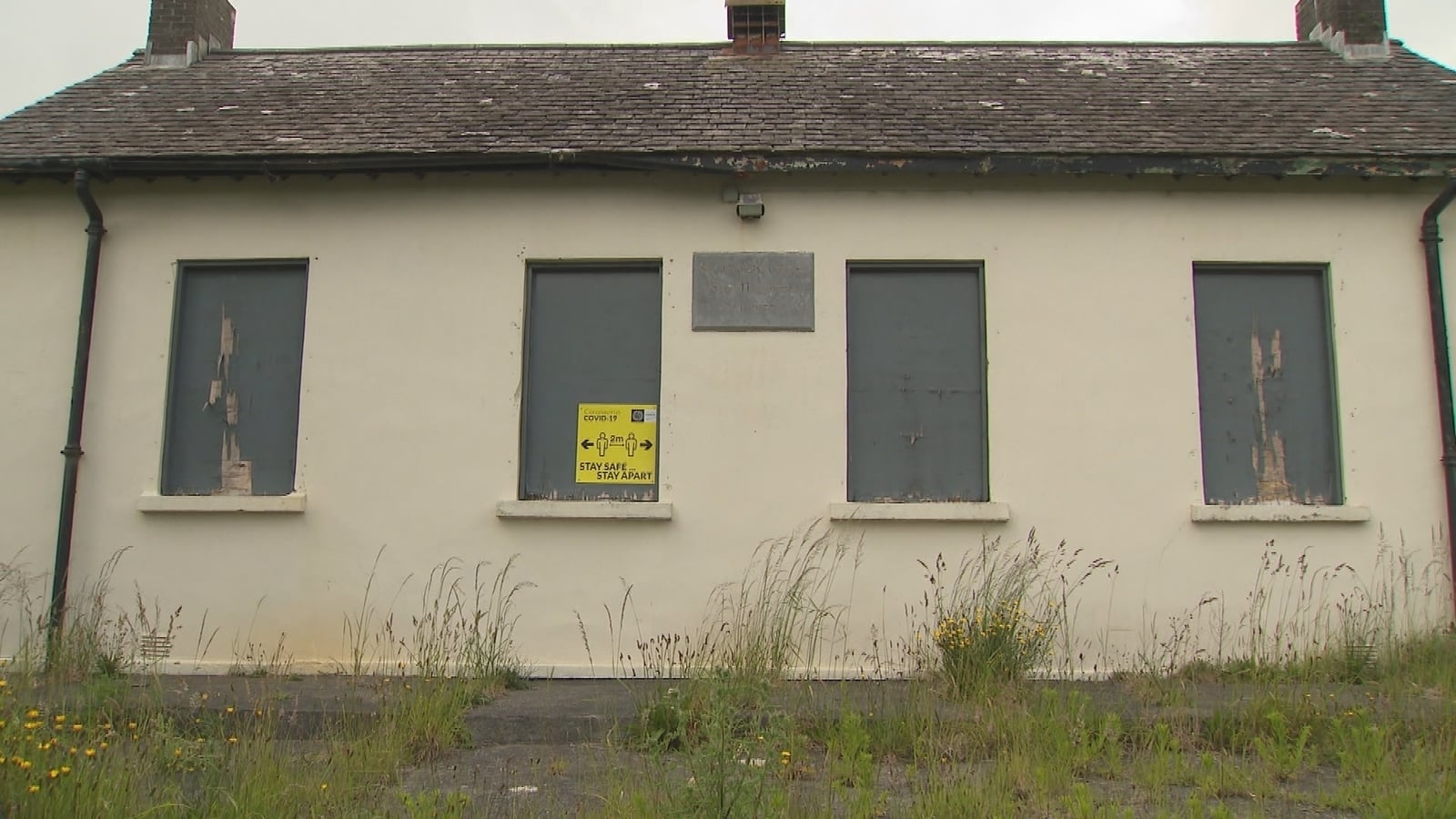
Victims of sexual abuse at a Co Cork national school in the 1960s and 1970s have called on the Government to take responsibility for the trauma they suffered as children.
The survivors attended the same school as Louise O’Keeffe, who won a landmark ruling against the State at the European Court of Human Rights 12 years ago.
Speaking publicly for the first time, the women who are now in their 60s and 70s, say they feel completely let down by the Government.
In the 1990s, garda statements taken by those who attended the school formed part of a criminal case in which former principal Leo Hickey was charged with 386 counts of sexual abuse involving 21 pupils of Dunderrow National School.
He pleaded guilty to 21 sample charges and was sentenced to three years in jail in 1998.
Speaking anonymously to RTÉ News, one survivor called on the Government to take responsibility and give the women peace “at the end of our time”.
“I’m years suffering, along with my fellow victims that went to a school that was run by the State, and to do this to us innocent children,” she said.
“It’s totally wrong, totally unfair, it’s unjust. I want justice for myself and the rest of our victims.”
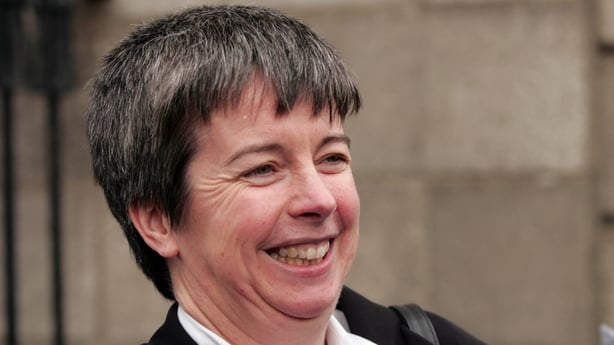
Louise O’Keeffe won a case in the European Court of Human Rights in 2014 (File: Collins)
In 2014, Louise O’Keeffe won a case in the European Court of Human Rights against Ireland for its failure to protect her from the sexual abuse that she suffered at the hands of her teacher in the 1970s.
Ms O’Keeffe took the case to Europe after the Supreme Court ruled the State could not be held responsible because the national school in question had been run by an independent board at the time.
She is advocating for the women and has criticised the Government for “not owning the responsibility” of implementing the European Court of Human Rights findings for her classmates.
“My colleagues were schoolmates, but they were also friends, neighbours, relatives, have never been approached by the State, and yet the State has known since 1998 from the criminal case, that I was not the only girl who was abused in the school.
“So, why aren’t they prepared to offer those women a redress scheme, it is so, so wrong.”
Read more: Abuse survivor Louise O’Keeffe’s fight for justice
The women have spoken for the first time about the abuse they suffered in the two-room school from the time they were in third class up to sixth class.
One survivor said it was like an initiation.
“You felt you were being initiated into something that was expected of you. If it wasn’t you, it could be the girl next to you in the class. He could be abusing two people at the same time.
“There might be some resistance, in that, there might be pushing and shoving in the desk. There might be bickering among the girls about taking your turn. I remember clearly saying ‘just be fair, take your turn, don’t expect me to do it all the time, take your bloody turn like’.”
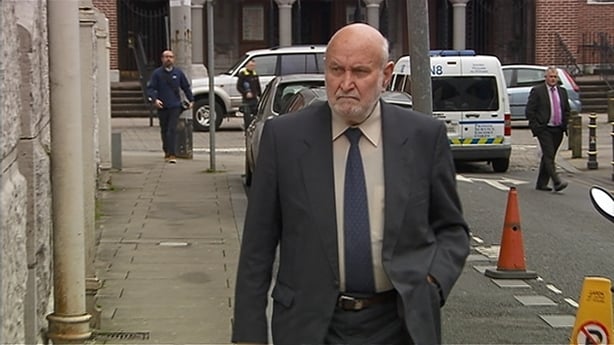
Former principal Leo Hickey was sentenced to three years in jail in 1998
She described the pressure building over the years and the girls becoming more aware by the time they reached sixth class, that the abuse was wrong.
A number of the women described the difficulty of being able to learn and the mental block when trying to do her homework.
“It took hours (homework), and my mother would say you’re making it more difficult than it is, but it was the whole anxiety about facing that man again the following day. You’d just hope it would get better, or go away, but it never did.”
Break times like ‘Russian roulette’
Another survivor said the abuse got worse in the years that she was in the classroom and break times were like “Russian roulette”.
“I suppose he was grooming us when we were very young, maybe seven or eight. Then when we went into third, fourth, fifth and sixth class things changed. You saw him picking people as they went out to play, you’d have to walk past him, he stood in front of his desk, sitting on his desk and it was like Russian roulette then (being pulled out of the line).”
She gets upset recalling taking a shortcut across the desks one day, and being “hauled back”.
“There were three breaks every day, 11 o’clock, the main lunchtime and two o’clock, and he grabbed someone at each break. It was a nightmare, day and night.”
Another survivor described the fear as unbelievable.
“I shouldn’t be carrying it today, I shouldn’t be feeling the way I’m feeling today, I shouldn’t have to come out appealing to the Government to honour their responsibility.”
Despite the appeals, many of the women feel extremely let down by numerous governments and political representatives, including those in their Cork constituency.
Describing the Government as “worse than useless”, one survivor said the Government would continue to “dodge” redress.
“Our lives were ruined, careers were ruined, I feel that I couldn’t learn at school and we weren’t taught. I found it difficult in secondary school as a result because I was trying to stay under the radar.”
Another said that while people like to think that women and children matter in Ireland, they don’t.
“We’re from a rural backwater, we’re two a penny, we make no difference.”
The women told RTÉ News how the abuse impacted family life and the intergenerational trauma is considerable.
They grew up being overprotective of their children, sometimes within their own household, and they were mistrustful of anyone in authority who was part of their children’s lives.
Without redress, the women will have to pursue the matter through the courts, just as Louise O’Keeffe did in the past.
Dean of UCC’s Law School Professor Conor O’Mahony was part of the team that brought Ms O’Keeffe’s case to the European Court of Human Rights 12 years ago.
He views the delay in the Dunderrow women getting redress as “one more example of an established pattern”.
“Ever since the O’Keeffe judgment, the consistent approach of the State has been to deny all responsibility and then seek to delay any steps they do take and to limit the scope of those steps.
“Whether or not there’s a particular aim behind this particular delay or it’s part of a broader pattern, which is essentially the State refusing to give an inch at any point and to do whatever it takes to limit the number of people who would receive compensation and the amount of compensation they’d receive, it doesn’t really matter, the effect is the same.
“The effect is that people who squarely have an entitlement to receive a remedy for their rights’ violation are being denied that and their trauma is being compounded by that denial.”
Government conscious of impact of trauma, dept says
In a statement, a spokesperson for the Department of Education said the Government was very conscious of the ongoing impact of the trauma experienced by survivors of abuse.
However, he said the department could not comment on individual or specific cases which may be the subject of potential litigation.
The department said a “range of specific and general measures” had been taken to fully implement the 2014 European Court of Human Rights (ECHR) judgment in O’Keeffe v Ireland, including the provision of an ex-gratia payment scheme and the development of “extensive measures” to improve child protection in schools.
“The ex-gratia scheme was implemented in order to provide compensation to individuals falling within the scope of the ECHR judgment who had instituted legal proceedings against the State in respect of day school sexual abuse and subsequently discontinued those proceedings following rulings in the domestic courts,” he said.
The spokesperson said the Scoping Inquiry into Historical Sexual Abuse in Day and Boarding Schools Run by Religious Orders, published in 2024, recognised the significance of the issue of redress for survivors and their expressed wish that those running schools where child sexual abuse occurred should be held accountable financially.
“The report of the Inter-Departmental Group (IDG), established to advise Government on the recommendations of the scoping inquiry, was considered by Government and published on 8 July 2025. The IDG recognised that consideration of a redress scheme may have far-reaching implications and advised that a further phase of more detailed work needed to be undertaken to ensure that the Government is fully informed in any decision it may take,” he said.
The statement pointed out that the Government accepted this advice and the IDG has commenced this further work to examine the mechanisms that may be brought to bear to ensure that those responsible for schools where historical sexual abuse happened meet their obligations to survivors.
“The IDG aims to complete its work by May 2027 and will make a report to the minister, based on which Government will give consideration to establishing a redress scheme,” he said.
In 2014, the European Court of Human Rights found the State had failed to protect Louise O’Keeffe on account of the lack of effective remedy.
It had breached Article 3 and 13 of the European Court of Human Rights and yet the case is the second longest average time a judgment of the European Court has been pending implementation in any EU state.

The IHREC has been advocating on behalf of some of the women who attended Dunderrow NS
In a statement to RTÉ News, Council of Europe Commissioner for Human Rights Michael O’Flaherty said the right to an effective remedy and redress is a basic human right enshrined in the European Convention of Human Rights.
“When serious human rights abuse occurs, states have an international obligation to investigate, provide fair and equal access to justice and deliver adequate reparation for the harm and suffering caused.
“Across Europe, questions of reparation for victims of historic abuse fail to receive the political attention they deserve, even in cases where the abuse has been established and the authorities have accepted at least partial responsibility.
He added: “Restorative justice must be survivor-centred. Victims should not be forced to endure complicated and costly court battles. Survivors have the right to truth, comprehensive support and fair and equal compensation.
“They must be treated with compassion and respect for their dignity, avoiding secondary victimisation. All member states of the Council of Europe must fully implement the judgments of the European Court of Human Rights.”
The Irish Human Rights and Equality Commission has been advocating on this matter on behalf of some of the women who attended Dunderrow National School.
While it said it could not comment on individual cases in a statement it expressed concern that “the intransigence of the Irish Government” has forced survivors to take legal proceedings in order to vindicate their rights, leading to “further unnecessary stress and retraumatisation”.
“We are aware of at least 40 cases where the State has paid compensation equivalent to redress payments in settlement of litigation to survivors whose cases come within the terms of the O’Keeffe judgment,” it said.
“There is no justification for delaying redress any further. A Commission of Investigation, or any other process, cannot displace or postpone the State’s obligation to implement the binding judgment in O’Keeffe v. Ireland. Survivors who fall within the scope of that judgment are entitled to redress now.”
Ms O’Keeffe has pointed out that the Dunderrow women do not need to come under the Commission of Investigation which is currently under way.
“It has been investigated by the police, and yet they will not own up to the responsibility that’s theirs, for the other girls in Dunderrow.
“It’s owning responsibility and the only way of owning that responsibility is the State giving that redress to the women.”