
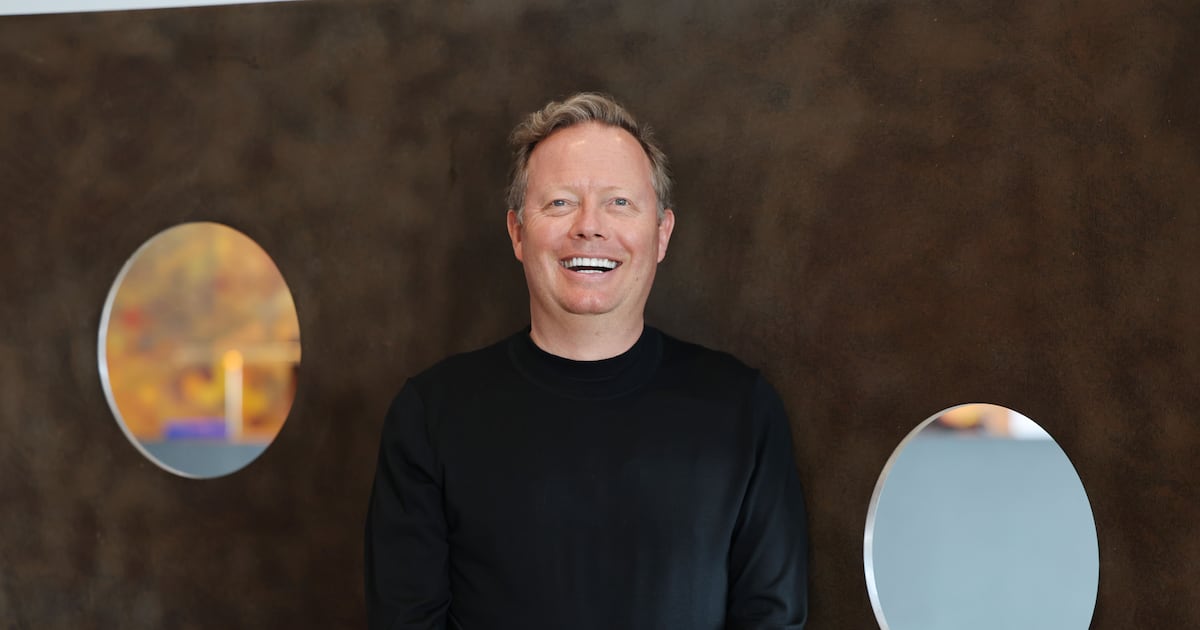
“Twenty minutes ago,” a mildly exasperated Donat Rétif, chief executive of online travel agent Loveholidays, says in exaggeration when asked when his plane touched down at Dublin Airport.
“It was unfortunately delayed. The bags were not loaded. The pilot said the weather was good. You will be there on time – blah, blah, blah – but there was a problem with the luggage. There was no explanation beyond that.”
Did they not know they had the chief executive of a major travel agent on board? “I never tell them that,” he says, laughing. “It is the best way to see what they are doing well and what they are not doing well.”
He’s in Ireland this week to mark a decade of business here for Loveholidays. It has grown quickly over that period and now claims to be the largest online travel agent on the island. It has sent more than three million Irish abroad over that period, including 700,000 last year alone.
The company, which specialises in trips to the Mediterranean and Canary Islands, uses agile technology to expand its reach, boasting an inventory of more than 35,000 hotels. Its business model is to be a one-stop-shop for package holidays.
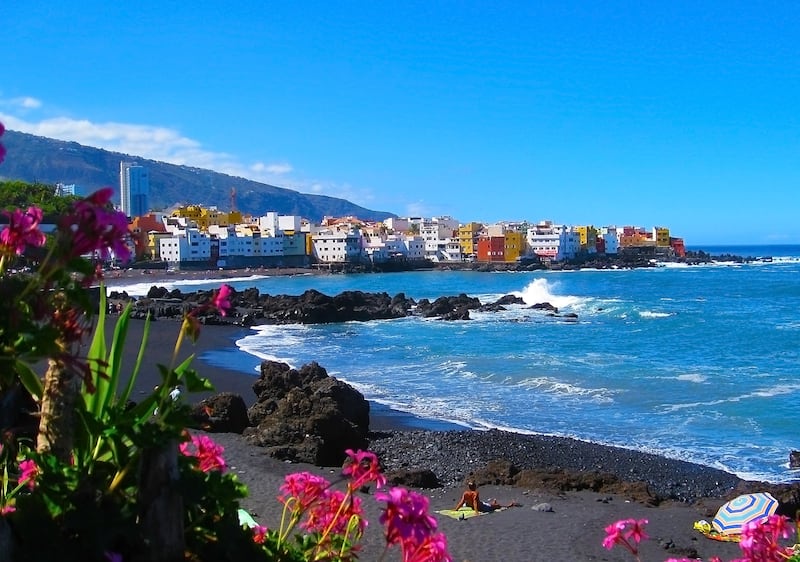 Puerto de la Cruz, Tenerife, where Loveholidays does a lot of its business
The London-based group is not publicly listed, but reportedly saw pretax profits rise by a fifth to £67.6 million (€78.4 million) on sales of £284 million in the year to October 2024. Plans to float on the stock market are well in train and it is estimated to be worth somewhere north of £1 billion.
Curiously, Rétif (55), sitting comfortably now in a room in the Spencer Hotel, Dublin, on the banks of the Liffey, did not set foot on an aircraft until he was 20, having grown up in a small mining town in the south of Belgium.
Initially, he dreamed of becoming a footballer, playing in the national team in the number 10 role – the creative engine of the team – up to the age of 16, but was not good enough to make the cut.
Has he been watching the World Cup? “Oh, yes,” he says. “But our golden generation is like me – it’s old. The new generation is coming but it’s not there yet. I don’t think it’s going to be a good World Cup for Belgium.
“As long as the French don’t win – as a Belgian guy – I am happy. France is a big country. They are very arrogant. They think the rest of the world is second fiddle. We’re this small country on their side, so any country can win but not the French.”
Having moved on from football, Rétif decided to concentrate on his studies, and here he excelled. “It gave me a path to leave my native village,” he says. “It was one of the three poorest areas in Europe. Unemployment is about 38-39 per cent.
“Travel was less common then. I come from a very poor background. I didn’t travel because we didn’t have the means to travel. I had this dream in my head of leaving the country and discovering the world.
“Because I was not too bad at school, I had the opportunity to study in Canada, which was the first time I was on a plane. I love my home, but when I came back I knew for sure I would not stay where I was.”
After his studies, he began his working life in telecoms, including a spell with communications giant Verizon in and around the time of the 9/11 terror attacks, holding jobs in Canada and on the west coast of the US.
 Hijacked United Airlines flight 175 flies towards the World Trade Center twin towers shortly before hitting the south tower on September 11th, 2001. Photograph: Sean Adair/Reuters
“I was an early 30s Belgian guy speaking funny English,” he says. “The economy had completely collapsed. People were very fearful. They didn’t travel and were holding on to their money.”
He returned to Belgium when his father was diagnosed with colon cancer at 56-years-old and given six months to live. “I took my bag and I came back – I had to help my mother,” he says, adding that his father made a full recovery.
From there, he led a company in Belgium that published the equivalent of the Yellow Pages business directory. More recently, he was chief executive of MeteoGroup, which uses advanced technology to predict weather patterns.
“It was interesting because 50 per cent of the economic world is impacted by weather: agriculture, energy, offshore, insurance,” he says. “How many beers people drink depends on whether it is hot or cold, and what the weather is like.
“We developed the best software and algorithm for weather prediction. You can’t dig oil without having at least two official weather forecasts because it is so dangerous, so that’s what we were doing. If you watch the BBC weather forecast, it is still powered by MeteoGroup.”
Then one day Rétif got a phone call from a headhunter friend of his who told him about Loveholidays.
“It was a small company and until that point I had only worked for big companies,” he says. “I was told it was a gem of a company in London, but I thought the name of the company was a bit funny already.
“I asked a few people had they heard of it. Most said, ‘No’. I went on the website and I didn’t like it too much. I said to the guys, ‘I’m used to big, international companies and this is a little UK-only travel business, did you get it wrong?’
“They told me to go and meet the founder. I absolutely loved him. He was the complete opposite to me. Physically, he was a small chubby guy. He is very charismatic and entrepreneurial with 1,000 ideas a minute.
“The meeting was meant to last half-an-hour to get to know each other. I think we stayed two hours talking about football and everything else.
“Once I delved a little more deeply and realised the power of the business and the technology I felt it was something we could build and decided to join. I grow businesses. That’s what I know. I’m not a founder. I don’t have those qualities.”
Three months later, the world – and in particular the world of travel – ground to a halt as the Covid-19 virus spread around the globe.
“No more bookings, and we did not know long it was to last,” he says. “The first two years I was in London were tough. I was alone in my little flat on the fourth floor and all we did at the time was process refunds, chasing airlines to get people’s money back.”
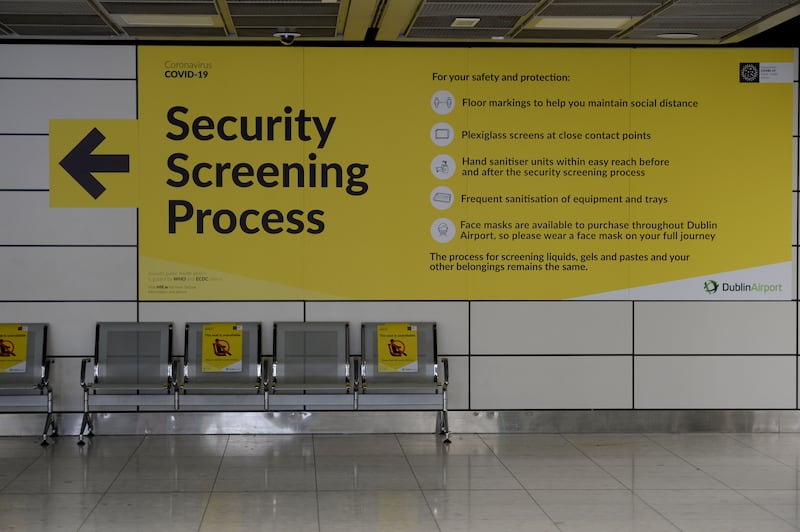 The departures area of terminal once at Dublin Airport during the Covid-19 pandemic. Photograph: Alan Betson
But Rétif was used to firefighting, so did not hesitate when the company offered him the reins. “I was in the US after 9/11 and I was in publishing in 2008 when everything moved to digital,” he says.
Was there any danger of the company going under at that stage? “Yes, we had to raise roughly £100 million or we would have gone under,” he says.
“I had done it before in other industries. There was no panic because I knew what to do. There is an old phrase: if you owe €1,000 to a bank, you have a problem. If you owe €1 million to a bank, they have a problem.
“We went to our lenders and said we had a great business with 44 consecutive quarters of growth outside Covid. People will travel. It is the number one thing people want to do. So help us bridge this and we will recover.”
The company is owned by private equity firm Livingbridge, which he says was also supportive during that period. “I know lots of people have negative things to say about private equity, but they were great with us. They were supportive along the way.
“I didn’t want to cut costs. If you do that, you take away the oxygen the company needs to bounce back. What we did very well – and unlike our peers – is that instead of cutting costs we doubled down on the technology and made sure we would become a scalable business.
“To do that, you develop the technology that is at the heart of the business in a way that you can take it to multiple countries with multiple products. We were selling short-haul from the UK and were pretty good at it. We were fourth or fifth in the world rankings, but our technology was already better.
“We hired a few great people. I have worked in five different industries in five different countries. We were not good at customer service before Covid. The advantage of Covid was that nobody was really looking at what we were doing and we completely rebuilt the company.
“I wanted to build the global leader in package holidays. Most companies offer either flights or hotels. Very few put packages together. The reason they don’t is because it is very complicated to do. If something happens to one element, you need to reorganise the whole trip.
“Since Covid, we have tripled the size of the business. Jet2, EasyJet, TUI, On the Beach – all great companies – were growing at 5-10 per cent after Covid and we were growing at 25-30 per cent. We added more passengers than anyone else.
“When I joined the business, TUI were five times bigger than us. Next year we will probably overtake them. We are now three times the size of On the Beach, who were bigger than us previously.”
[ How Europe solved the jet fuel crisis and saved your summer holidays ]
Loveholidays is well known for utilising technology in its business, but what about the advance of artificial intelligence (AI)? And could it put Rétif out of a job some day?
“No, people are not using AI after they start the booking process because they don’t know what is being provided,” he says. “The issue is trust. That’s number one. We offer billions of combinations of packages.
“AI cannot do that because the cost of pulling all the information, structuring it and normalising it is gigantic. Every hotel presents stuff differently. It would cost something like all the energy of the United States to do that, so they don’t.
“People also come to us to get a deal. That comes from years of negotiation. A machine is never going to get you a deal. AI does not offer multiple payment methods. It also does not know what to do when something like the Middle East war happens.
“It would have to refund every customer within 14 days and deal with all the regulatory bodies. AI does not do that.”
But could it be something that happens down the road? “No, we are very close to the AI companies – we are talking to them all the time – and they don’t want to do that,” he says. “Will AI continue to give us better sources of information? Yes. Will it help us to compare? Yes. Will it take care of the booking process? I don’t think so.”
Speaking of bookings, the tourism and travel industry has been back in crisis mode since the US-Israeli attacks on Iran began in February and closed the Strait of Hormuz and sent oil and fuel prices skyrocketing.
 Donald Trump after Iran shot down a US aircraft while it was on patrol in the Gulf. Photograph: Mark Schiefelbein/AP
“When the war started, we were performing very, very well,” Rétif says. “The month of March was less good, and then we recovered well in April and May, and June is fantastic even before the announcement of the [US-Iran] deal, especially in Ireland.
“We were growing mid-teens. In March, it dropped to single digit growth. In June, we are back to high double digits.
“Ireland has performed even better, which is why I don’t understand reports in the media about many agents saying the market is down by 20 per cent. Ireland is our best market because 93 per cent of our bookings are in what we call low-risk destinations like Spain and the Balearics.
“Irish people are quite traditional in the way they travel. The Middle East and places like Turkey represent only about 7 per cent of our total bookings in Ireland. The number is more like 25 per cent in the UK. So, the market in Ireland continues to grow fast for us, above mid-teens.”
An important part of that growth path has been in maintaining friendly relations with airlines. The company struck a deal with Ryanair in 2024 that allows its customers to book flights with the airline. Rétif denies ever having had a row with the group, despite some reports of tensions.
“No, before we signed a deal, Ryanair thought all the online travel agencies were the same,” he says. “O’Leary said we were all pirates, stealing customers – it was very aggressive. In some cases, he was right, but not about us.
“We are not making any money on flights. Once we managed to talk the same language and explain this to them, we signed a deal. Once you start working with the real people – not the lawyers – they are fantastic, very agile, very humble and they get things done.”
He said he has never met Ryanair chief Michael O’Leary, but has had dealings with its other top executive, Eddie Wilson. As for his impressions of the man, he says: “Very nice guy. What you see is what you get with Ryanair. That’s what I like about them. There is no fluff.
“Our relationship is very good. The challenges they had with online travel agencies were not with online travel agencies like us. The challenge for them was with agencies that only offer flights.
“The model with online travel agencies is they give you a discount on the entry price and they recover that as you add ancillaries. We don’t take any margin on flights. The money we get is on the hotel. Whatever you pay with us for a Ryanair flight is the same as you pay with them.”
Loveholidays is still in the planning phase of its initial public offering, and the war in the Middle East has set the group back. “We were hoping to do it in 2026, but then the war happened,” he says.
“Mr Trump started the war on February 28th, which obviously has an impact on airlines because the price of fuel has increased massively. It had an impact on consumer confidence and will have an impact on all our wallets because of energy prices. I’m not a betting man, but I would be surprised if 2026 is still on the cards.”
Where will they float? “I am not supposed to say that because we have not decided,” he says. “But what I can tell you is we are a London-based company and most of our employees are based in London.”
It’s a busy life he leads, but Rétif says he sleeps well, reads three thriller novels a week and finds time to relax in playing sport. “You have to reduce the size of the ball with age from football to tennis to golf, and soon I will play marbles,” he says.
“My wife is a painter – complete opposite of me, which I like – and she does not give a damn about business.
“I hate socialising. I can count my best friends on one hand. They know if something happens, I will disappear and help them. Usually people in my job, they have a huge network and go to all these events. I despise that. I’m only comfortable in my little group.”
CV
Name: Donat Rétif
Job: Chief executive, Loveholidays
Age: 55
Lives: London
Family: Married with two adult children
Hobbies: Padel, reading, wine-tasting and sport generally
Something we might expect: He speaks four languages
Something we might not expect: He has a photographic memory