
Dublin City Council is launching a plan aimed at addressing the deficit of women represented in the city’s public spaces.
It is inviting people to help shape a long-term strategy that will transform how women’s history is celebrated through Dublin’s streets, statues, and public spaces.
The first project is called ‘Monument to the Women of the Revolutionary Decade’. Many women played an integral role during the period.
Dr Mary McAuliffe, historian and lecturer in gender studies at UCD, said the answer to why this was not done sooner would be a “very long one”.
Speaking on RTÉ’s Morning Ireland programme, Dr McAuliffe said: “It has taken a long time over the past four or five decades for the role that women played [in the revolutionary decade] to become clearer, through the work of many historians…
“And also the release of fantastic files like the military service pension applications, we begin to see how central the women were to the revolutionary period.
“And not just the main women that we always knew about… but so many thousands of young unknown women all around the country, not just in Dublin, and what they contributed to the revolutionary period.”
Dr McAuliffe explained how “the war could not have been conducted without the women, they were central particularly to guerilla warfare that happened during the War of Independence, and indeed in part during the Civil War as well.
“In first aid, intelligence gathering… propaganda was a really main part of their work during this period.
“They took arms and ammunitions from ambushes, they guarded arms dumps, they did all sorts of things.
“The thing they didn’t do was fight on the frontline, a couple did but most didn’t. That was the only thing they didn’t do,” she said.
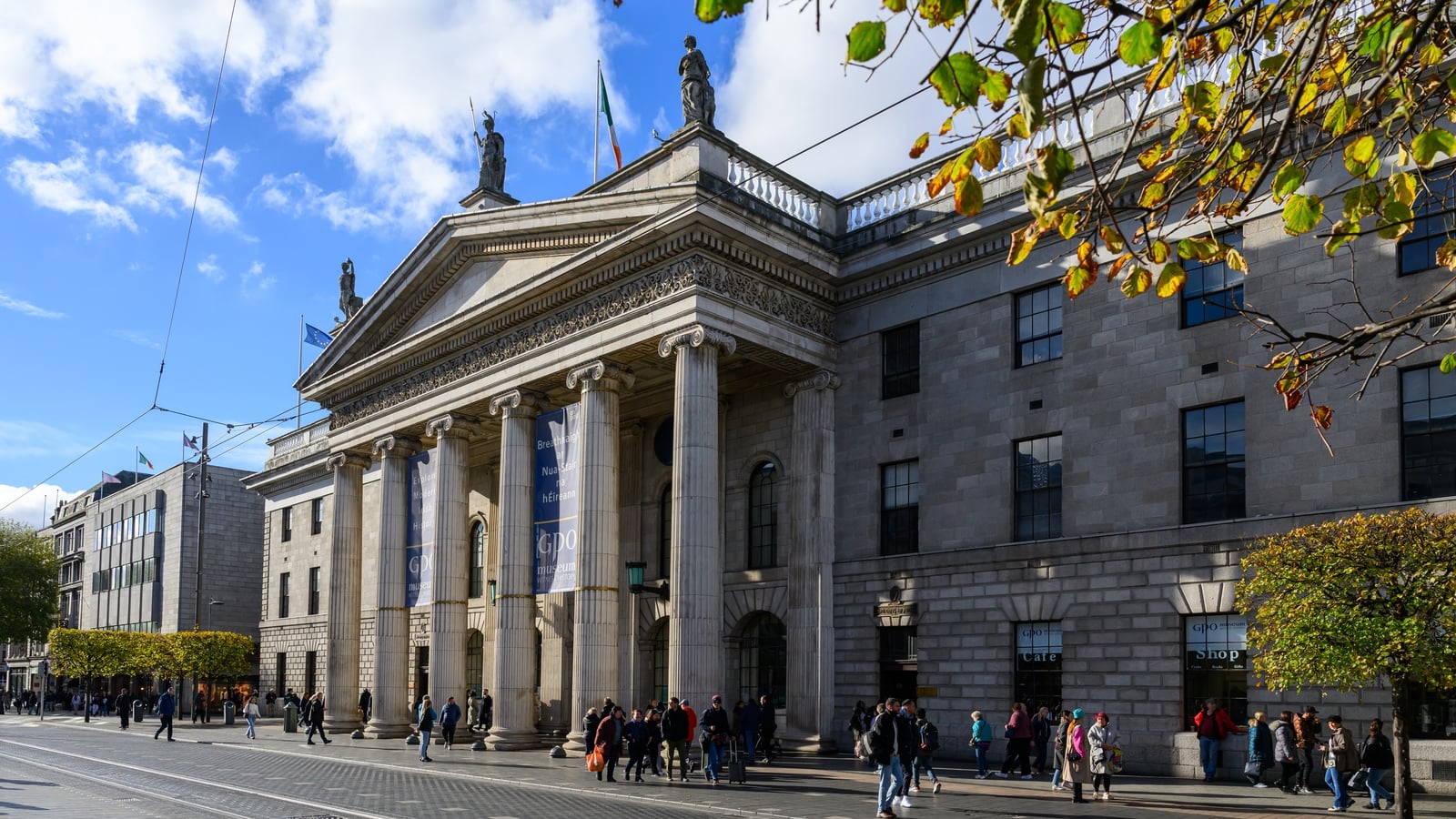
Dr McAuliffe said that because the proposed site of a monument is on O’Connell Street in the capital, opposite the GPO, the last three women who were in the building “and then retreated with the men to Moore Street” should be honoured.
“And that was of course Elizabeth O’Farrell who famously came out with [the] white flag and negotiated the surrender.
“Julia Grenan, and Winifred Carney – who was James Connolly’s secretary.
“They’re both representative of a multitude of women in that O’Farrell and Grenan were in Inghinidhe na hÉireann, they were in Cumann na mBan.
“Carney is of course from Belfast, she’s from Northern Ireland, the other two are Dublin women.
“And of course O’Farrell and Grenan were lifelong partners as well.
“So in those three women you get a lot of representation of who and what these women were.”
Dr McAuliffe said “so many women around the country put their lives on the line during the War of Independence” while it should also be reflected how many of them were “anti-treaty” during the Civil War.
“And hundreds of them were imprisoned in three Dublin sites, in Kilmainham [gaol], North Dublin Union, and Mountjoy.
“I would think Nan Hogan from County Clare would be one I would be very interested in seeing represented,” she added.