
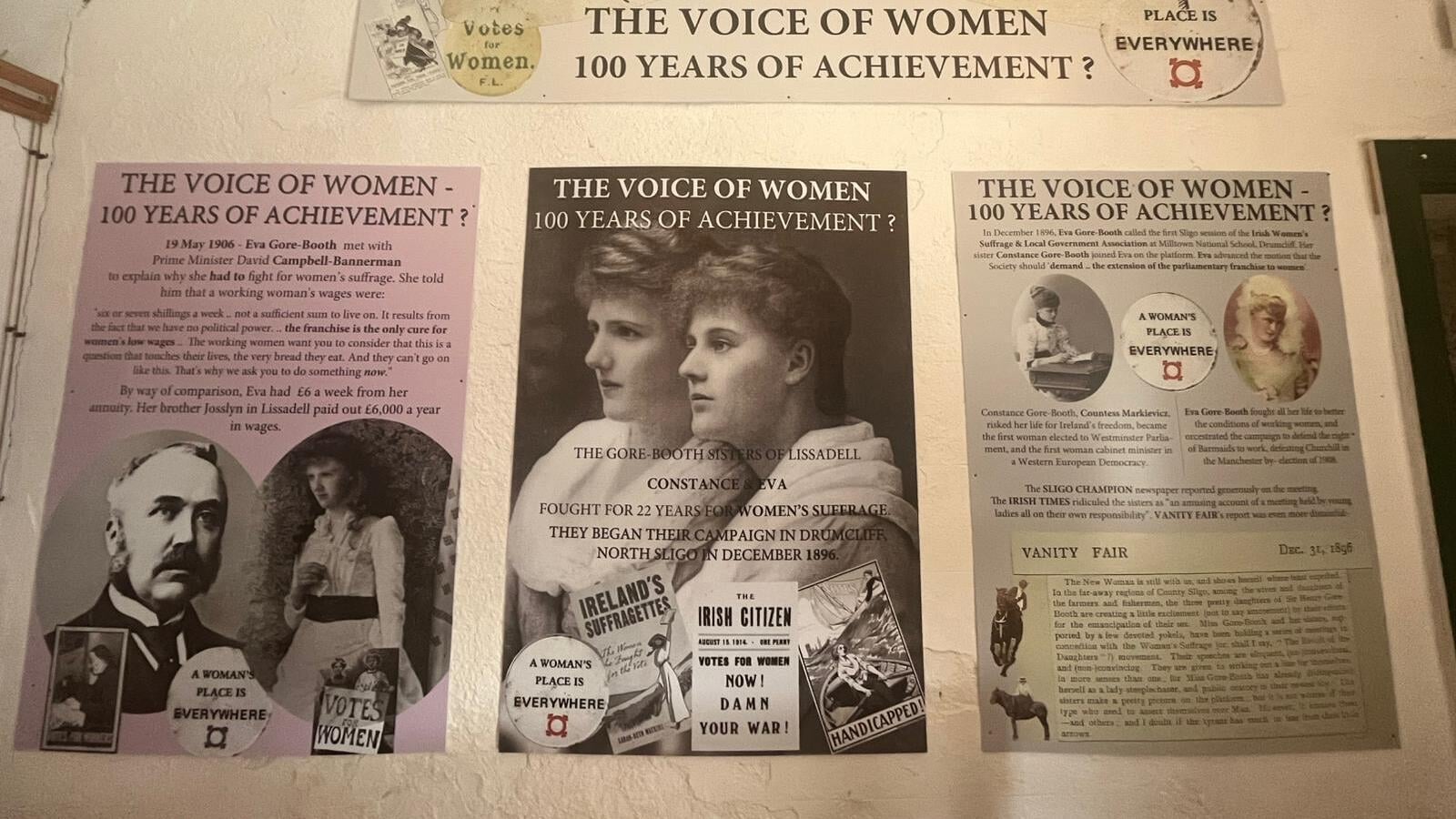
Exhibits detailing the life of Eva Gore-Booth, a lesser-known sister of Constance Markievicz, who championed campaigns that paved the way for women to stand in election, vote and achieve equality have gone on display at Lissadell House in Co Sligo.
Tuesday marks the 100th anniversary of the death of the younger sister of Constance Markievicz, who like Constance, has left a legacy, that continues today.
An artist, poet, pacifist and suffragist, Ms Gore-Booth left her aristocratic origins in Lissadell to champion social reform in Ireland and the UK.
Co-owner of Lissadell House Eddie Walsh SC has said an “incredible collection of material” has been assembled including original books, writings and sketches.
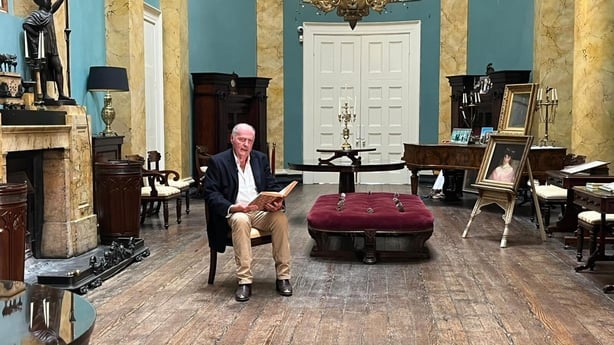
Co-owner of Lissadell House Eddie Walsh SC described Eva Gore-Booth as a ‘humanitarian’
“We’ve sourced many of her works, most of them signed and we think that the public who have an interest in Eva will certainly appreciate the collection,” he told RTÉ News.
Ms Gore-Booth (1870-1926) championed campaigns for the right of women to stand for parliament and the right to vote.
Constance Markievicz was the first to benefit; she became the first woman elected to Westminister, the first woman elected to the Dáil and the first to hold ministerial office.
A campaign Ms Gore-Booth championed against the restriction of the working hours of barmaids, saw Winston Churchill lose his seat in a Manchester by-election in 1908.
Mr Churchill, who supported a controversial licensing bill was offered the position of President of the Board of Trade, a cabinet appointment that required re-election.
Ms Gore Booth asked Constance Markievicz for help and she duly obliged. The 1908 defeat of Mr Churchill was seen as a significant victory for the women’s movement.
She was the third child of Henry and Georgina Gore-Booth, who owned the once 32,000-acre estate on the Maugherow peninsula in north Sligo.
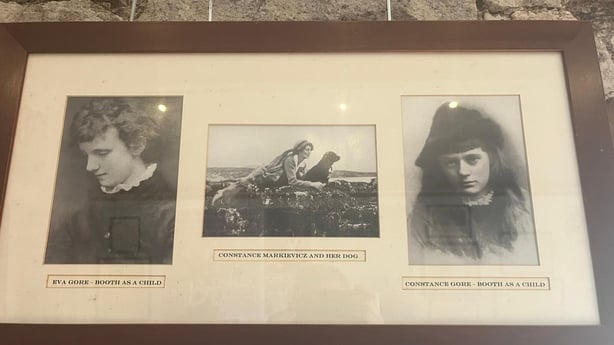
Artefacts of Eva Gore-Booth on display showing her as a child as well as one of her sister
WB Yeats often retreated to the estate near the shore of Sligo Bay; duly acknowledge in the poem; ‘In Memory of Eva Gore-Booth and Con Markievicz’.
While in Italy with her father in 1896, Ms Gore-Booth met Esther Roper, her lifelong partner, who was a Manchester-based social activist, suffragist and pacifist.
Dr Angela Byrne has said it is believed that Ms Roper inspired Ms Gore-Booth to establish the Sligo branch of the Irish Women’s Suffrage and Local Government Association.
Ms Gore-Booth left Sligo to join Ms Roper in Manchester in 1897. Dr Byrne says Ms Gore-Booth and Ms Roper were a team, believing in the need to marry trade unionism and suffrage.
They campaigned for pit-brow and textile workers, florists, and barmaids, bringing huge numbers of working-class women into the suffrage movement.
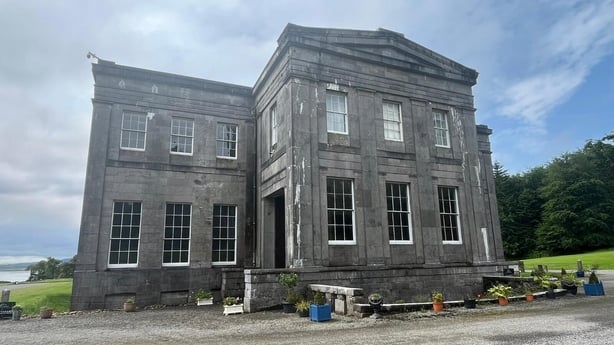
The artefacts of Eva Gore-Booth’s life are on display at Lissadell House in Co Sligo
Ms Gore-Booth was also a prominent pacifist. She travelled across Britain with the Women’s Peace Crusade during World War One, despite poor health.
In the aftermath of Easter 1916, she travelled to Dublin to plead for leniency for the Rising’s leaders.
She attended the trial of Rodger Casement and lobbied for a stay of execution; later, she campaigned for prison reform.
Author of ‘Eva Gore-Booth: Irish Radical Poet, Rebel and Reformer’, Dr Sonja Tiernan said Ms Gore-Booth championed gender equality.
A group, led by Ms Gore-Booth, Ms Roper and others, founded a journal called Urania, that published articles against gender stereotypes.
A painter and a writer, Ms Gore-Booth authored books of poetry, plays, collections of spiritual studies and many essays.
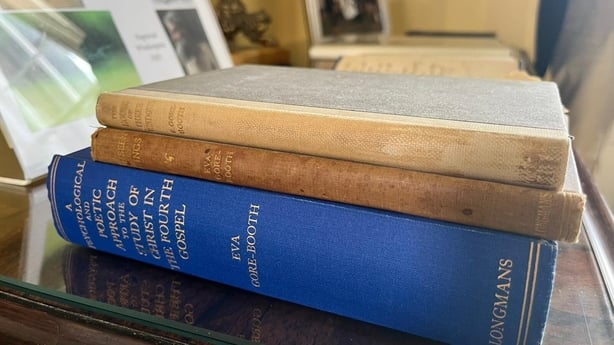
Some of the books written by Eva Gore-Booth which are on display in Lissadell House
She died of cancer in 1926. She is buried, alongside Ms Roper in Hampstead.
When asked to described Ms Gore-Booth’s legacy, the current co-owner of Lissadell Mr Walsh described her as a “humanitarian”.
“Peacefulness and humanity were her prime objectives. She was a truly great woman who deserves to be further recognised,” he said.
The Irish Labour History Society and the Women’s History Association of Ireland will hold a two-day conference in Lissadell on 24 and 25 July.
The conference, entitled ‘Eva Gore-Booth: Centenary Celebration of a Radical, Rebel and Reformer’ will be opened by the former First Lady of Ireland Sabina Higgins.
Society President Moira Leydon told RTÉ News that they felt that the centenary of the death at the Ms Gore-Booth could not go unmarked.
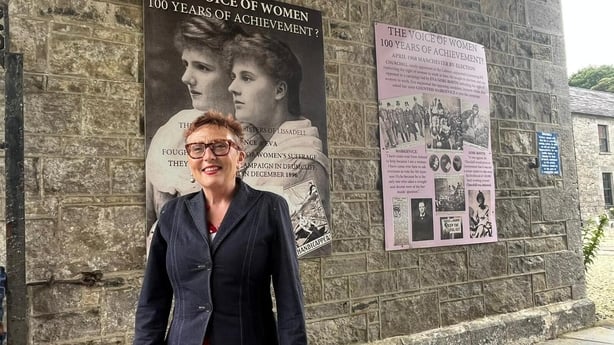
Moira Leydon said Eva Gore-Booth was an ‘extraordinary activist’ who focused on common good
She said the upcoming conference will explore and examine Ms Gore-Booth’s legacy.
Ms Leydon believes her philosophy was that political rights and freedoms were incomplete without economic emancipation and economic security for women.
“She was an extraordinary activist, deeply intellectual, driven by a coherent philosophy.
“Her philosophy of life was infused by equality, justice, anti-militarism, and a focus on the common good as a way to conduct the business of state,” Ms Leydon concluded.
Read more: Herstory: Eva Gore-Booth – 1870–1926: Poet, playwright, trade unionist and suffragette