
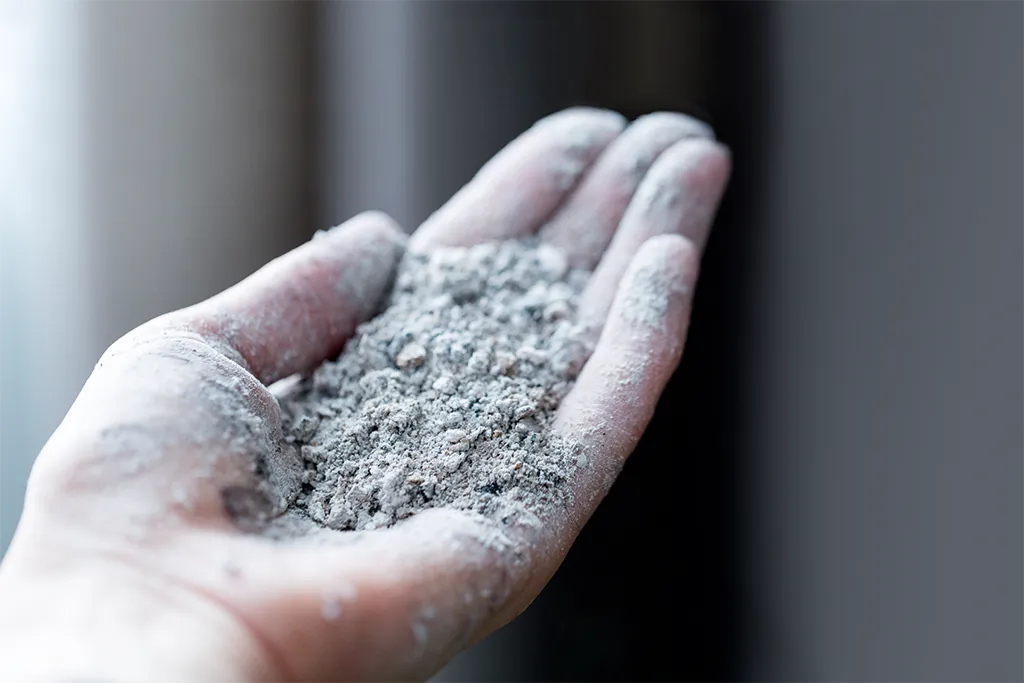
The Health and Safety Executive (HSE) has ordered four companies to stop working with engineered stone over safety fears.
According to a statement from the regulator, the firms received prohibition notices following visits from inspectors.
Each of the businesses was found to lack adequate control measures to keep employees safe while working with engineered stone, it said.
The companies have yet to be named, as the HSE’s policy is to publish notice details five weeks after they are served, in case they are successfully appealed.
Last month, the regulator warned against the dry-cutting of engineered stone, which is also known as artificial stone or engineered quartz.
The material, generally manufactured using quartz aggregate and polymer, is cheaper than traditional stone and has been an increasingly popular choice for kitchen worktops since the early 2010s.
Engineered stone was banned in Australia in 2024 after being linked to a spate of silicosis cases.
HSE head of operations Harvey Wild said: “Our inspectors are visiting businesses across Great Britain to ensure that employers have implemented the correct controls to keep their employees safe.
“We have stopped dangerous work with engineered stone in four workplaces due to serious failures in providing the correct controls.”
He added: “Silicosis is incurable, but it is entirely preventable. No worker should lose their life to a lung disease caused by their job, and that is why we have taken this action.
“If businesses ensure the right controls are being used correctly, then the risks of engineered stone and silicosis can be safely managed. Where these are not in place, workers will be at risk.”
Silicosis is an irreversible condition caused by inhaling crystalline silica dust. It causes the lungs to swell and then harden, stopping them functioning properly. It is the second-biggest killer of construction workers after asbestos.
The watchdog said companies must use engineered stone with a low silica content, use on-tool water suppression, provide respiratory protective equipment (RPE) and carry out regular health surveillance.
The HSE said other breaches found among inspections of the four companies issued prohibition notices included failures to provide RPE, suitable exhaust ventilation and machinery guarding.
Minister for social security and disability Sir Stephen Timms said: “Every worker deserves to come home safe, without fear of losing their life to a preventable, deadly lung disease caused by their job.
“The enforcement action taken by HSE sends a clear message that putting workers at risk of silicosis – an entirely preventable but devastating disease – is completely unacceptable and there will be consequences.”
Dr Johanna Feary, a respiratory consultant at the Royal Brompton Hospital in London, was among those who discovered the UK’s first cases of silicosis among artificial-stone workers in mid-2023.
For a special report in 2025, she told Construction News of the dangers of the material.
“Historically we’ve thought you need 10 years, if not more, exposure to stone dust containing silica to develop silicosis… so somebody who has less than 10 or 15 years of exposure we wouldn’t really worry about. The difference with artificial-stone silicosis is people are getting it much faster, and in many cases it is progressing much faster, than silicosis from natural stone.”
Malak Al Safade, the widow of Wessam Al Jundi, who died from silicosis in May 2024, aged 28, is among those who have called for a ban on the material.
Earlier this month, Timms told parliament that there were no plans to ban engineered stone, as it would “not solve the problem in workplaces that did not have adequate safeguards”.