
Ice cores preserve a detailed record of past temperatures and atmospheric conditions stretching back hundreds of thousands of years.
The tropics, by comparison, have left far fewer clues, making it much harder to reconstruct how temperatures changed there.

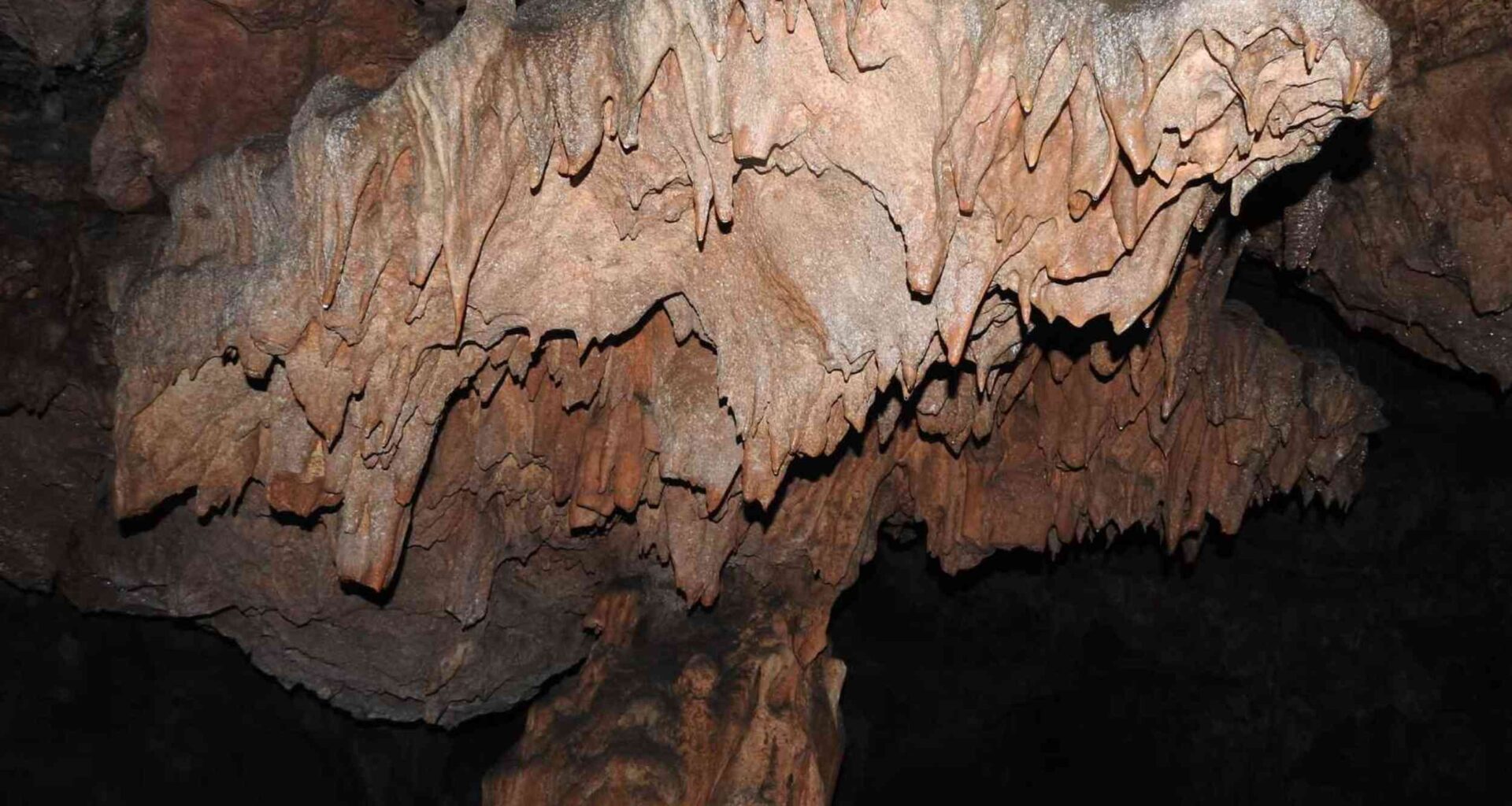
A new study has helped fill that gap using an ancient cave formation from Brazil.
It found that tropical temperatures shifted far more quickly than scientists had expected during one of the last ice age’s most dramatic climate events.
The broken find
In 2009, a stalagmite turned up broken in a pile of rubble inside Rei do Mato Cave in the savanna of southeastern Brazil.
Stalagmites build upward from cave floors, layer by layer, as mineral-rich water drips.
Angela Ampuero, a paleoclimate researcher at the University of São Paulo (USP) and her colleagues recognized the layered rock as a hidden temperature log.
Each band had sealed in tiny pockets of the very water that built it. What made the sample special was its timing.
Careful dating showed the rock grew steadily from about 22,500 to 9,300 years ago, spanning the whole deglaciation, the long from the last Ice Age into the warm world we know.
Bubbles and lasers
The trick lives in those trapped droplets, which scientists call fluid inclusions, microscopic pockets of ancient drip water sealed in the crystal.
Analyze them correctly, and researchers can reconstruct how warm the cave was on the day each pocket closed.
Measuring them takes a laser and patience. Researchers cool one pocket until its water sits on the brink of bubbling, fire a laser pulse to trigger a bubble, then warm it until it vanishes.
The temperature where it disappears reveals how warm the cave once was. They ran this on about 40 droplets per layer, across 21 slices of the column, then averaged them out.
That bought rare precision. Many tropical estimates for this era are uncertain by more than 3 °F (1.7 °C), while this one held each point to a fraction of a degree.
Ten degrees warmer
Laid out in order, the layers tell a clean story. The cave warmed from about 58 °F (14.4 °C) in the coldest depths of the Ice Age to roughly 68 °F (20.0 °C) by the warm period that opened around 10,000 years ago.
It also lines up with an older estimate from groundwater under northeastern Brazil. What earlier records missed were the smaller swings hidden inside the warming.
Ampuero’s curve climbs in two big steps, broken by a brief cool spell about 14,000 years ago.
That dip matches the Antarctic Cold Reversal, a brief southern-hemisphere pause in the warming that glaciers and lakes in the Andes also recorded.
Although the cooling was small, the cave caught it. The faint chill was locked in stone for 14,000 years.
A sudden jolt
The second step is where the record turns dramatic. Right as a northern cold snap called the Younger Dryas set in, about 12,900 years ago, the cave jumped roughly 2.5 °F (1.4 °C) in two centuries.
By natural standards, that is a hard shove upward. Changes in the Atlantic Ocean appear to explain the warming.
When the Atlantic’s great overturning current stalls, heat builds up in the South Atlantic instead.
Cores of seabed mud provide evidence that the Atlantic overturning circulation nearly stopped. Researchers think that trapped warmth then spilled onto the land and nudged the cave warmer.
The same slowdown also dumped more rain on the region, which could have cooled it under heavier cloud. The cave shows the opposite.
Warming kept climbing through the wettest stretches, so rainfall and temperature ran on separate tracks rather than canceling out.
Slower than today
The comparison with today is the study’s sharp edge. That fastest natural jolt, the Younger Dryas spike, still crept slower than the warming this region has logged since 1980.
Thermometers near the cave climb at close to 0.6 °F (0.33 °C) per decade. Modern warming here is more than twice as fast as the quickest pace the deglaciation ever managed. The reason is plain.
Carbon dioxide now climbs by nearly 19 parts per million a decade, far steeper than any natural rise in the measurements of the deep past.
The gap should widen. The climate has not yet caught up with the carbon already in the air, so the authors expect the rate of warming to keep rising for decades before it levels off.
Reading the warning
For the first time, central-eastern South America has a tropical land-temperature record precise enough to resolve changes through time with confidence.
It pins the total warming near 10 °F (5.6 °C) and captures a sudden, ocean-driven jump that older methods had blurred into a vague drift.
That precision makes the cave a benchmark. Models built to project the region’s future can now be tested against a hard local record.
The result provides a direct local benchmark rather than relying solely on indirect estimates. A separate study ties that to mounting stress on the northern Amazon.
The deeper message is about speed. The end of the Ice Age was a dramatic period of natural climate change, yet human-driven warming is occurring even faster, with no sign of slowing.
The study is published in Nature Communications.
—–
Like what you read? Subscribe to our newsletter for engaging articles, exclusive content, and the latest updates.
Check us out on EarthSnap, a free app brought to you by Eric Ralls and Earth.com.
—–