
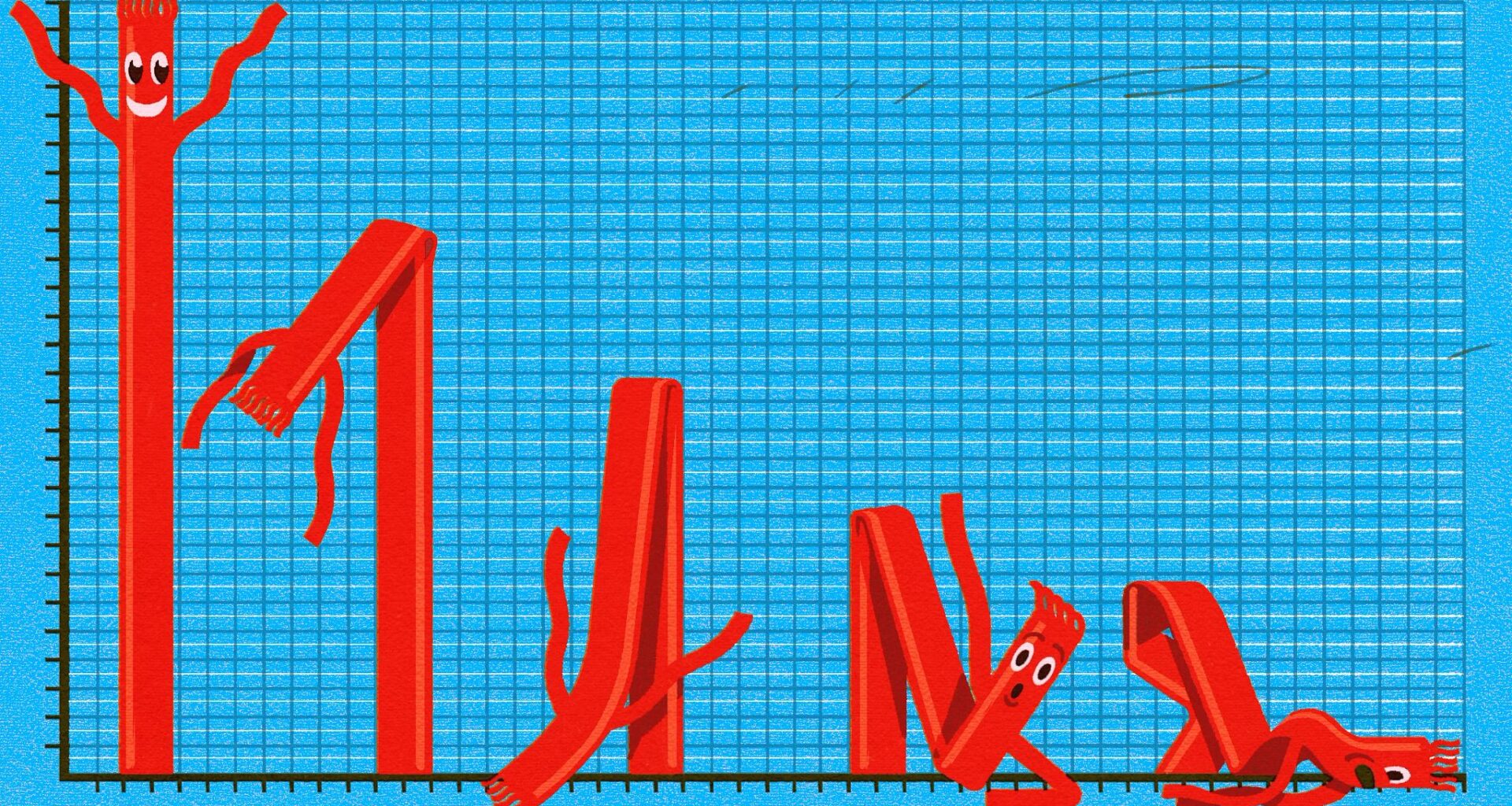
Here’s the weird thing about a recession: By the time it’s official, it’s probably over.
The National Bureau of Economic Research, a private nonprofit organization, determines whether a recession has occurred if there has been a significant decline in economic activity that is spread across the country. However, because it takes the NBER several months to analyze the data — which includes a range of monthly measures of economic activity published by different federal agencies and other organizations — a recession may already be over by the time it makes a determination.
Of course, that doesn’t stop economists, investors, business owners and others from predicting whether a recession is imminent based on different factors such as the unemployment rate, interest rates and consumer spending.
Currently, many economists don’t believe the U.S. is at risk of a recession, despite the recent spike in energy prices, which caused the Consumer Price Index, a measure of inflation, to rise 4.2 percent in May, its highest level since April 2023. However, economists surveyed by The Wall Street Journal said that if oil prices continue to remain elevated, the risk of a recession could rise.


One survey respondent noted that the U.S. economy has shown resilience despite disruptions created by the war in Iran and other circumstances. The unemployment rate remains low, at 4.3 percent in May, and consumer spending, which accounts for about 70 percent of gross domestic product, or GDP (the total value of goods and services produced in the U.S.), is still relatively strong. That said, the Conference Board’s Consumer Confidence Survey, which measures how consumers feel about business and labor market conditions, slipped in May, reflecting concerns about inflation and the war in Iran.