
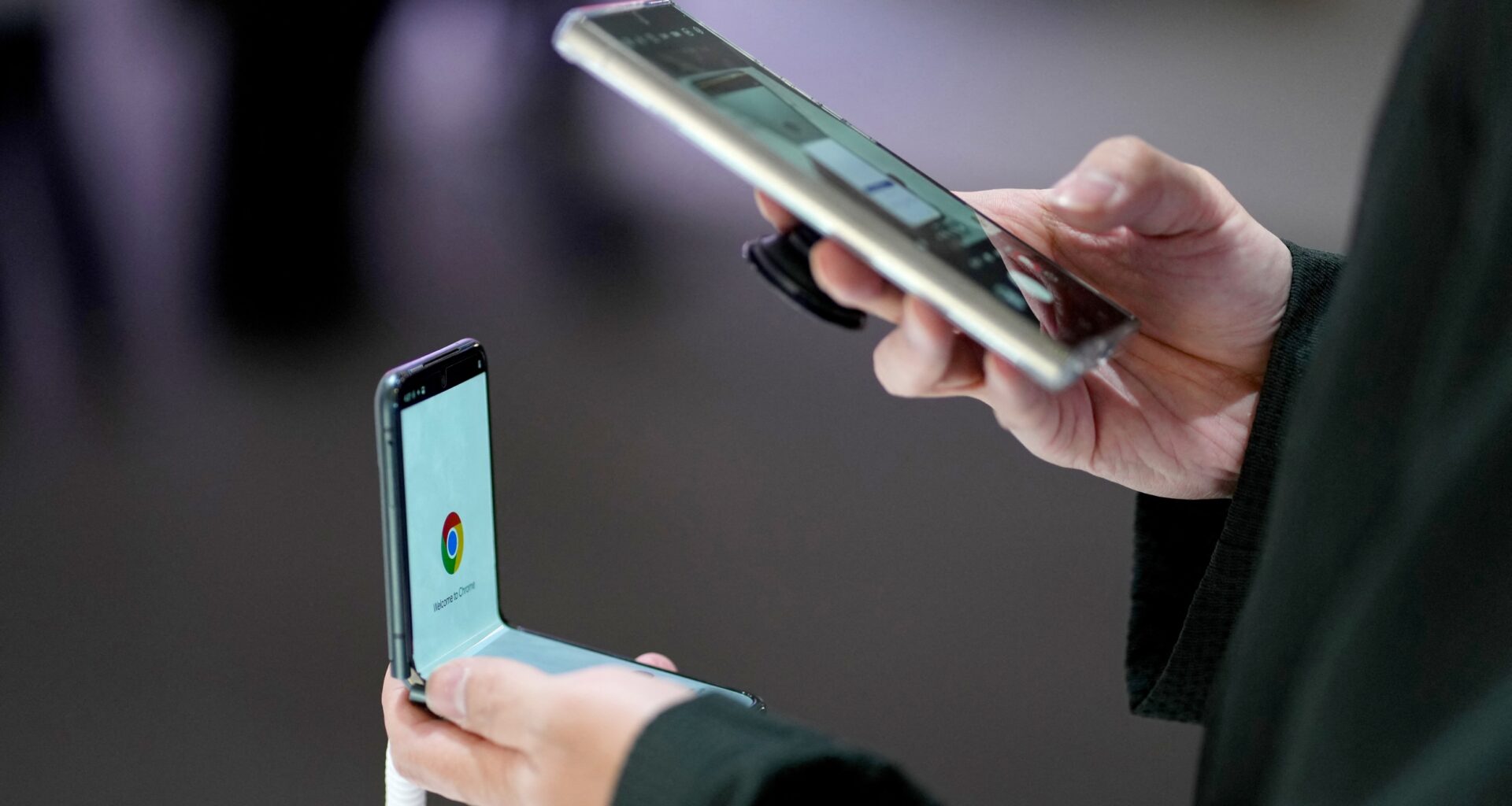
The Motorola Razr Plus 2026 is the best clamshell foldable you can buy right now — and that verdict comes with a deadline. Samsung holds its Galaxy Unpacked event in London on July 22, twenty days from now, where the Galaxy Z Flip 8 is expected to be announced. Anyone spending $1,099.99 on a flip phone today faces a real choice: commit to the most polished version of Motorola’s clamshell to date, or wait three weeks to see what Samsung brings. Two weeks of hands-on testing from multiple independent outlets, including Android Headlines, found a phone that delivers on build quality, display, and battery — but carries a software support commitment that falls four years short of what Samsung and Google now promise at the same price.
Complicating the calculus further, reports from two independent leakers now suggest the Galaxy Z Flip 8 could be Samsung’s final clamshell foldable before the company pivots its foldable lineup toward book-style and tri-fold formats. If that proves true on July 22, the Razr Plus 2026 stops being a phone you compare to Samsung’s next generation and starts being the only serious clamshell on the market.
Titanium Hinge Enabled a Battery Engineering Feat
Motorola made one structural change in 2026 that deserves more attention than it typically receives: replacing the aluminum hinge with a titanium one. Titanium is lighter than aluminum, and that weight saving is how Motorola fit a 12.5 percent larger battery into an identical chassis without adding a single gram. The Razr Plus 2026 weighs 189 grams — the same as the 2025 model — while carrying a 4,500mAh cell that is 500mAh larger than its predecessor.
The hinge itself snaps closed with consistent resistance and produces none of the creaks or wobbles that have plagued earlier foldables. The two halves sit nearly flush when closed, which blocks debris from reaching the inner panel. Water resistance is rated IP48, meaning full submersion protection in fresh water up to 1.5 meters in depth. The principal risk for any clamshell foldable remains unchanged: microscopic debris on the inner display before closing can permanently scratch the flexible panel.
The phone ships in a single color, Pantone Mountain View — a deep, textured forest green. The woven rear panel provides grip and resists fingerprints. Reviewers from Android Headlines and TechRadar reported zero visible scratches on the cover display glass after two weeks of daily use without a case.
Two Displays That Outclass Every Clamshell Rival
The 4-inch cover screen is where the Razr Plus 2026 most clearly surpasses Samsung’s competing designs. It runs virtually any Android application — Maps, YouTube, Chrome, Messages — at 1,200 nits of peak brightness. A long-press gesture forces any app into true full-screen mode on the outer panel, wrapping around the camera hardware. Continuity between displays works in both directions: start a task on the cover screen, unfold the phone, and the 6.9-inch inner AMOLED picks up exactly where you left off.
The inner display is a 10-bit AMOLED panel, an upgrade from the 8-bit panels on the 2024 and 2025 models. The earlier 8-bit displays used temporal dithering to simulate color depth, which generated eye-strain complaints during extended viewing sessions. True 10-bit color eliminates that. The crease — the visible fold line that remains the defining limitation of the category — is handled well: indoors during normal use, it is nearly invisible. It becomes apparent at extreme viewing angles or in direct sunlight, but reviewers across multiple outlets noted that the pre-applied screen protector maintains a smooth, oleophobic surface throughout extended use.
The Silicon-Carbon Battery Story Most Reviews Understate
The 4,500mAh capacity in the Razr Plus 2026 is made possible by a specific battery chemistry that neither Samsung nor Apple has deployed in their clamshell foldables: a silicon-carbon anode.
Standard lithium-ion batteries use graphite anodes, which store lithium ions at a theoretical maximum of approximately 372 milliamp-hours per gram of anode material. Silicon holds roughly ten times more lithium ions per gram, which is why it offers dramatically higher energy density. The engineering problem is that silicon expands significantly during charge cycles, which cracks electrodes and degrades the cell. Silicon-carbon composite anodes solve this by embedding silicon particles in a carbon matrix, which buffers that expansion. Commercial implementations achieve roughly 10 to 20 percent higher energy density than pure graphite anodes, depending on silicon content.
This chemistry is why Motorola increased battery capacity by 12.5 percent without changing the phone’s dimensions or adding weight — the same engineering advantage that has allowed Chinese manufacturers such as Honor, OnePlus, and Xiaomi to ship smartphones with 6,500mAh or larger batteries in slim bodies. Samsung and Apple have been slower to adopt silicon-carbon chemistry, with published reports citing long-term reliability concerns around high silicon content in consumer devices. The result is a measurable gap in the clamshell category: the Razr Plus 2026’s 4,500mAh silicon-carbon cell versus the Galaxy Z Flip 7’s 4,300mAh conventional cell, with the Razr also charging faster at 45W wired against the Flip 7’s 25W ceiling. Reviewers consistently reported all-day battery life under normal mixed use.
Performance: What Three Years Without a Chip Upgrade Actually Means
The Snapdragon 8s Gen 3 is the most pointed weakness in the Razr Plus 2026’s specification sheet. Motorola has used this chip for the third consecutive year across the 2024, 2025, and 2026 Razr Plus — the same processor without upgrade.
The “8s” designation signals a trimmed architecture from Qualcomm’s flagship 8-series: the 8s Gen 3 uses ARM Cortex CPU cores with a peak clock speed of 3.0 GHz and an Adreno 740 GPU, both stepping down from the full Snapdragon 8 Gen 3’s 3.3 GHz ceiling and Adreno 750. The current flagship Snapdragon 8 Elite, which runs in many 2025 and 2026 flagship phones, uses Qualcomm’s custom Oryon CPU architecture manufactured on a 3nm process node. Independent benchmarks show the Snapdragon 8 Elite delivering roughly 30 to 40 percent more CPU performance and 30 percent more GPU throughput than the 8 Gen 3 family the 8s Gen 3 sits below. PhoneArena’s tests found the Galaxy Z Flip 7’s GPU performance reaching approximately double the Razr Plus 2026’s score in sustained graphics workloads.
In daily use, the 8s Gen 3 paired with 12GB of RAM and UFS 4.0 fast storage handles streaming, navigation, social media, messaging, and casual gaming without friction. The gap opens in two specific areas: on-device AI processing speed, where PhoneArena’s quantized AI tests found the Razr Plus 2026 meaningfully behind same-price competitors; and sustained heavy gaming, where flagship-chip rivals maintain higher frame rates over longer sessions. For most buyers, those gaps are invisible. For buyers who plan to lean on the phone’s AI features or game heavily over a three-to-five-year ownership window, the chip’s aging trajectory is a real constraint.
Software: Clean Android, Short Commitment
Motorola’s Android skin is one of the brand’s most consistent strengths. The interface sits close to stock Android — multiple reviewers described the experience as comparable to a Google Pixel device — with full support for Android’s dynamic color theming across the system. There are no injected advertisements, no aggressive push notifications from pre-installed applications, and a small selection of bundled AI productivity tools that are unobtrusive by foldable-phone standards. Google Gemini integrates directly with the cover display for voice-triggered AI assistance without unfolding the phone.
The commitment problem is specific and consequential: Motorola promises three years of major Android OS updates and five years of security updates for the Razr Plus 2026. Samsung and Google both commit to seven years of OS updates and seven years of security patches for their equivalent flagship foldables. At the identical $1,099.99 price point, that is a four-year gap in supported software life. TechRadar described the Motorola commitment as “disappointing, even more so when you consider the nearly $1,100 price tag.” A Galaxy Z Flip 8 buyer receiving a seven-year commitment will have supported Android OS updates through 2033. A Razr Plus 2026 buyer is looking at OS support through roughly 2029.
Camera: Capable, With a Trade-Off Worth Naming
The camera system delivers capable results for its category. A 50MP f/1.8 main sensor and a 50MP f/2.0 ultrawide produce vibrant, detailed stills in good light with competent portrait processing. A 32MP hole-punch selfie camera sits on the inner panel.
The trade-off worth stating plainly: Motorola removed the telephoto lens from the 2026 Razr Plus and replaced it with an ultrawide. That is a meaningful change for buyers who regularly zoom in on subjects. There is no optical reach — only digital crop from the main sensor, which produces acceptable results in bright light and noticeably worse results in anything else. BGR called this “a real trade-off” and noted that no telephoto at this price point forces users to make sacrifices that buyers of comparably priced non-folding phones do not face. For wide-angle shooting and everyday photography, the 2026 system is improved over its predecessor. For versatility across focal lengths, it is a step back.
Ownership Disclosure: Motorola, Lenovo, and Chinese Data Law
Motorola is a brand owned by Lenovo, a company headquartered in Beijing, China. Lenovo’s largest single institutional shareholder is a subsidiary of the Chinese Academy of Sciences — a state-backed research institution — which holds approximately one-third of the company. Multiple US government agencies classify Lenovo as a Chinese-owned company for regulatory purposes, and Lenovo laptops are separately prohibited from use at the US State Department and Department of War.
This ownership has concrete legal implications that apply regardless of where Motorola phones are manufactured or sold. China’s National Intelligence Law (2017), Article 7, legally obligates all Chinese organizations and citizens to support, assist, and cooperate with national intelligence work. China’s Data Security Law (2021) and Cybersecurity Law (2017) additionally impose data localization requirements and government access provisions on companies operating under Chinese jurisdiction. These obligations apply to Lenovo as a matter of statute, not corporate policy — they cannot be waived by Motorola’s privacy policy, Lenovo’s US subsidiaries, or the geographic location of servers.
No confirmed backdoor has been identified in the Motorola Razr Plus 2026 specifically, and Motorola smartphones are not on the Federal Communications Commission’s Covered List of equipment designated as posing an unacceptable national security risk. A February 2026 class action lawsuit filed in California federal court alleges that Lenovo’s website tracking systems transmitted personal data to entities linked to the Chinese parent company in violation of the Department of Justice Data Security Program; that case has not been adjudicated. Motorola has denied that its devices send user data to Chinese government authorities.
Motorola’s moto AI features on the Razr Plus 2026 include cloud-connected functions. Standard Android and Google services on the phone operate independently of Lenovo’s Chinese infrastructure. Buyers who prefer devices not subject to Chinese intelligence cooperation laws should factor Motorola’s ownership structure into their decision.
Is the Razr Plus 2026 Worth Buying Before Samsung Unpacked?
For someone who prioritizes display quality, build durability, all-day battery, and a clean Android experience, the Razr Plus 2026 is the strongest clamshell foldable currently on sale. Its silicon-carbon battery and titanium hinge are genuine engineering improvements. Its 4-inch cover screen outclasses every competing clamshell’s outer display in practical usability.
For someone planning to hold their phone for five or more years, the three-year OS update commitment is a real constraint at this price — one the Galaxy Z Flip 8 is expected to resolve with a seven-year commitment at the same or a similar price point on July 22. Waiting twenty days costs nothing if your current phone meets your needs. For someone who cares about on-device AI processing speed or heavy sustained gaming, the Snapdragon 8s Gen 3 will fall behind flagship-chip rivals over the ownership window.
The strongest buy case is a first-time clamshell buyer or someone upgrading from a 2024 model or older: the 2026 Razr Plus is the most refined version of this phone Motorola has shipped, and its battery engineering advantage is real. The strongest wait case is anyone who can hold out for Samsung’s July 22 announcement before committing $1,099.99.
Frequently Asked Questions
Should I buy the Motorola Razr Plus 2026 now or wait for the Samsung Galaxy Z Flip 8?
If your current phone works and you can wait 20 days, wait. Samsung’s Galaxy Unpacked event on July 22 will reveal the Galaxy Z Flip 8 and its confirmed pricing. If Samsung holds the price near $1,099 and ships with a seven-year software commitment, the Razr Plus 2026’s update gap becomes the decisive factor for long-term holders. If Samsung raises the price significantly, or if early reports flag performance or build issues, the Razr Plus 2026 is an excellent phone to buy immediately at its current price.
How does the Razr Plus 2026 battery compare to the Samsung Galaxy Z Flip 7?
The Razr Plus 2026 carries a 4,500mAh battery compared to the Galaxy Z Flip 7’s 4,300mAh. More importantly, the Razr Plus 2026 uses silicon-carbon anode chemistry — a higher-density battery technology that enables larger capacity without increasing the phone’s size or weight. Samsung has not yet deployed silicon-carbon chemistry in its clamshell foldables. The Razr Plus 2026 also charges faster: 45W wired versus the Flip 7’s 25W ceiling, reaching roughly 70 percent charge in approximately 30 minutes.
Does the Razr Plus 2026 receive as many software updates as Samsung phones?
No. Motorola promises three years of major Android OS updates and five years of security updates for the Razr Plus 2026. Samsung and Google both commit to seven years of each for their equivalent flagship foldables at the same price point. That is a four-year gap in OS support. A buyer who holds the Razr Plus 2026 for its full supported software life will stop receiving OS upgrades around 2029.
Who makes Motorola phones, and what does that mean for data privacy?
Motorola Mobility has been owned by Lenovo since 2014. Lenovo is headquartered in Beijing, China, with the Chinese Academy of Sciences holding approximately one-third of the company as a major institutional shareholder. China’s National Intelligence Law (2017), Data Security Law (2021), and Cybersecurity Law (2017) legally compel Chinese companies to cooperate with government intelligence demands — obligations that apply to Lenovo regardless of where its products are sold. No device-specific backdoor has been confirmed in the Razr Plus 2026. Buyers who prefer phones from companies not subject to Chinese intelligence cooperation requirements should factor this ownership structure into their decision.