
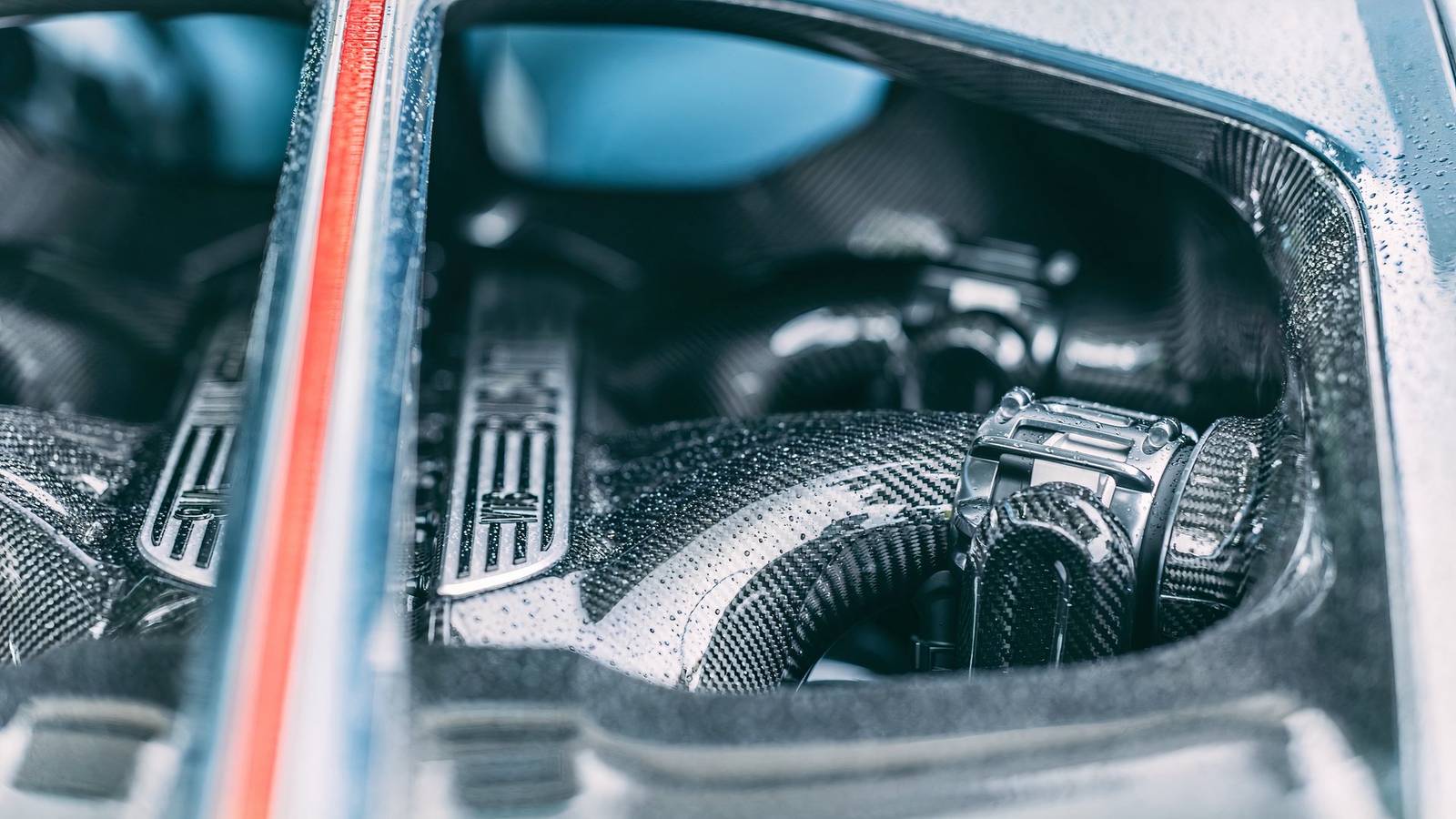
Trying to fit a very large engine into an only-slightly-larger engine bay turns the car design process into a highly complex puzzle. Nobody knows this better than Bugatti. The ultra-high-end automaker was faced with this very challenge with its most recent model, the Tourbillon. At the heart of this model we find a mighty V16 engine designed jointly by Bugatti and Cosworth; a replacement for the legendary W16 that had powered the Chiron, this engine is the crown jewel of the Tourbillon. It was optimized in all aspects: power, noise, size, weight, and even aesthetic appeal.
Making it small and light enough to fit in the engine bay required several complex design processes, which put both Bugatti’s and Cosworth’s engineering capabilities to the ultimate test. However, the Tourbillon passed with flying colors, and is a stunning hybrid hypercar that effortlessly combines performance and beauty. Let’s take a closer look at its engine and how it was created.
The Tourbillon’s Heart: The Cosworth V16 And How It Was Squeezed Into The Engine Bay
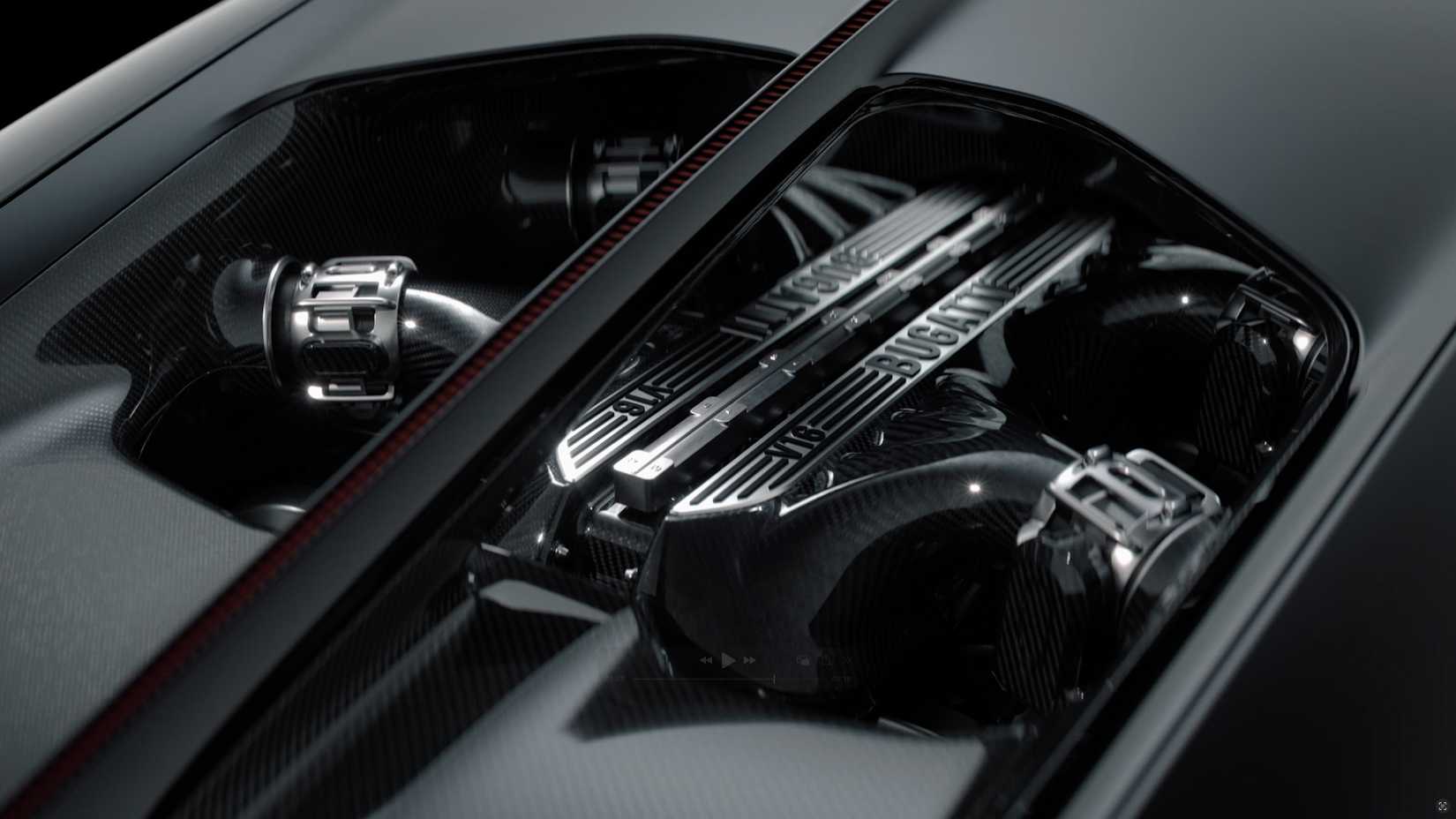
2026 Bugatti Tourbillon engine bayBugatti
Bugatti Tourbillon
Engine
8.3-liter V16 + three electric motors
Horsepower
1,800 hp (combined)
0-60
2.0 seconds
Top Speed
276 mph
The Bugatti Tourbillon is a striking car for plenty of reasons, and the V16 engine that powers it is definitely one of them. In order to bring this unique engine to life, Bugatti collaborated with a firm that knows a thing or two when it comes to building engines: none other than the legendary Cosworth. The result of this collaboration is breathtaking. An 8.3-liter, 90-degree V16 engine that produces 986 hp and 664 lb-ft of torque and revs up to 9,000 rpm. However, Bugatti did not stop there, adding three electric motors (two on the front axle, one on the rear) for a total output of a whopping 1,800 hp. An eight-speed dual-clutch transmission completes the picture.
This setup propels the Tourbillon from 0 to 60 mph in just two seconds; that speed can be doubled in a further three seconds. Top speed is 236 mph in most circumstances, but the Speed Key allows you to unlock the powertrain’s full potential, bringing top speed up to 276 mph.
This engine is certainly impressive in terms of power and performance, but Bugatti and Cosworth wanted to go further than that. Their creation had to go the extra mile in terms of style, noise, weight, and dimensions as well. The engine couldn’t just be powerful; it had to be beautiful as well. Several different design possibilities were explored before the final one was chosen.
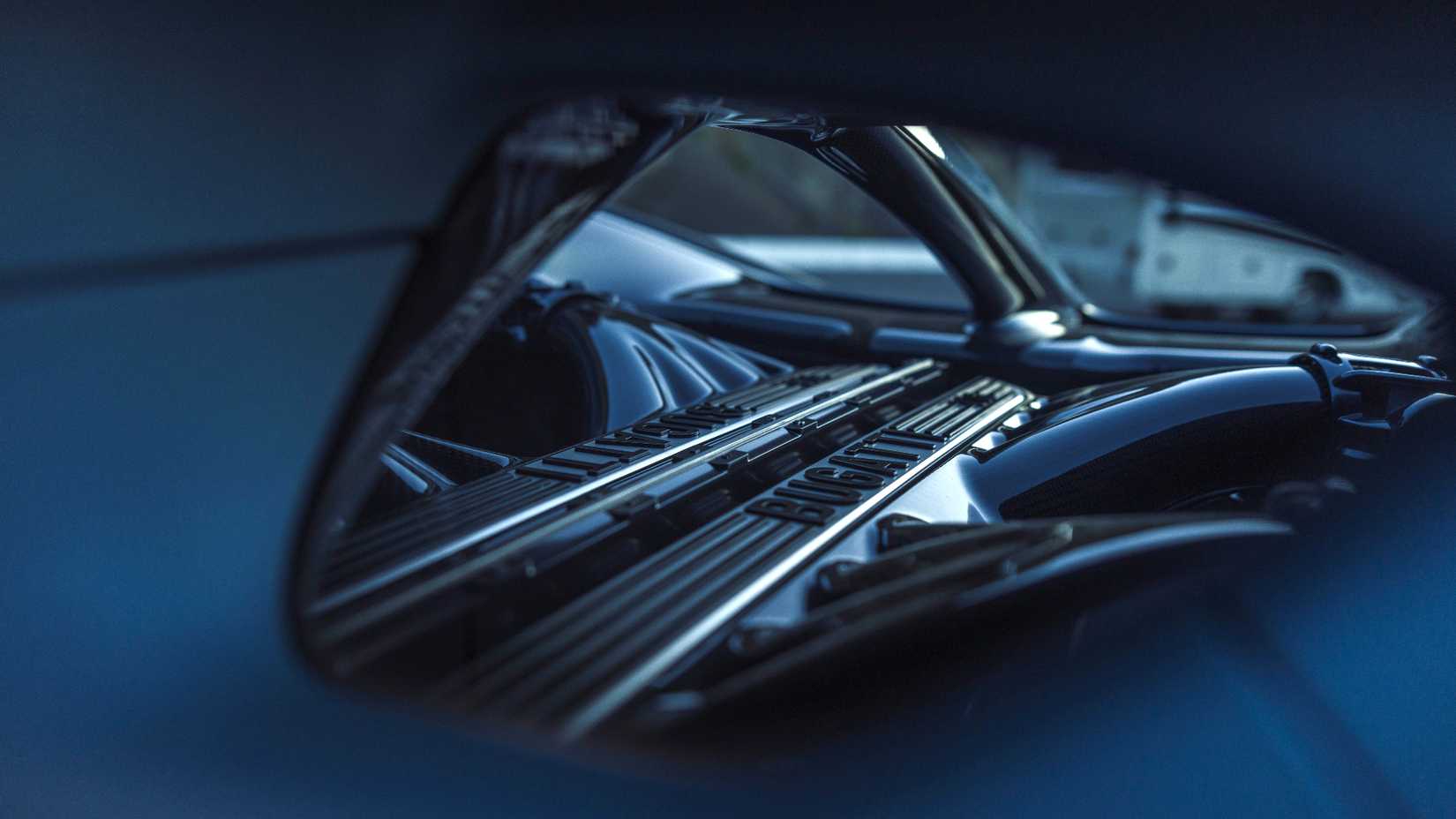
2026 Bugatti Tourbillon Engine bayBugatti
In order to manage harmonics and reduce noise and vibration, the engine uses a unique hybrid timing system that borrows technology from the world of Formula 1, combining both gears and a timing chain. This mitigates the vibration issues V16s are prone to due to their sheer size.
Size and weight were other major obstacles to overcome. The engine is nearly one meter (3.3 feet) in length, only just shorter than the Tourbillon’s engine bay: a tight squeeze. The Tourbillon’s mid-engined layout made things even more complicated, as the large engine would have to be squeezed between the cabin and the rear wheels. Some major steps had already been taken at the start of the engine’s design process: the four turbos and W-shaped layout of Bugatti’s W16 were ditched in favor of a slimmer, naturally aspirated V-shaped unit. But Cosworth had to go even further to make sure every component fit in its place, trimming the engine down without sacrificing its performance.
Rather than using traditional cylinder liners, the team sprayed the V16’s cylinders with a plasma coating. It didn’t just save some weight, but was also much thinner, saving 12mm per cylinder in terms of size. Heavy ancillary components, such as the alternator and starter, were eliminated from the equation, with their function being outsourced to the hybrid system instead. Titanium connecting rods, single valve springs, and a carbon fiber inlet plenum were used to save weight, bringing the engine down to 556 lbs.
A few years before the Tourbillon, Cosworth had shown it was the right firm for the job through its work on another high-performance engine: the 6.5-liter V12 at the heart of the Aston Martin Valkyrie. Although not quite as large and heavy as the Tourbillon’s V16, it was still fairly hefty. In order to make sure it was a good fit in the Valkyrie’s engine bay, Cosworth machined the engine’s major components from solid billets of aerospace-grade alloys, as well as giving the cylinders the plasma coating that would later be used in the Tourbillon. The Valkyrie’s success proved that Cosworth had the technical capability to reduce size and weight in a large engine without compromising on performance: the collaboration with Bugatti was a match made in heaven.
The Model Beyond The Engine: Bugatti’s Work Of Art On Wheels
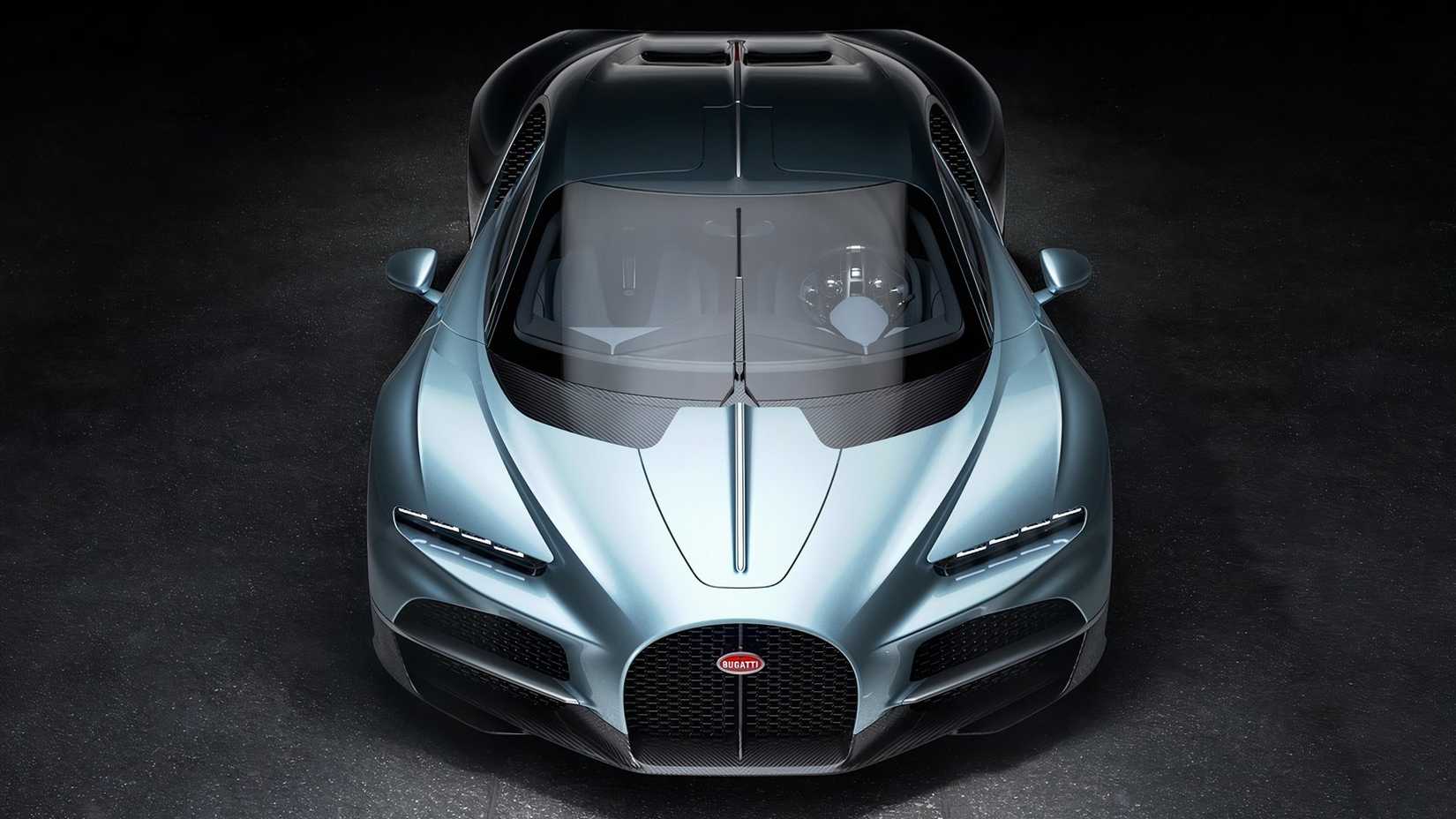
2026 Bugatti Tourbillon Blue High Front ViewBugatti
What surrounds the Tourbillon’s engine is just as much an engineering masterpiece as the engine itself. The Tourbillon is a hypercar that blends classic Bugatti elements with futuristic, flowing lines. Its design was guided by founder Ettore Bugatti’s principle: “Nothing is too beautiful.” The horseshoe grille visually categorizes the car as a Bugatti from the moment you lay eyes on it, while the butterfly doors contribute to its swooping, dynamic appearance.
Once you step inside the cabin, the origin of the car’s name becomes clear. A tourbillon is a mechanism used in high-end watches to improve their accuracy; the Tourbillon draws inspiration from the world of watchmaking, with timeless analog dials and vintage elements throughout the interior. The speedometer and tachometer are arranged to resemble a watch’s hands. For the instrument cluster, Bugatti also reached out to an external firm: Swiss watchmaker Concepto.
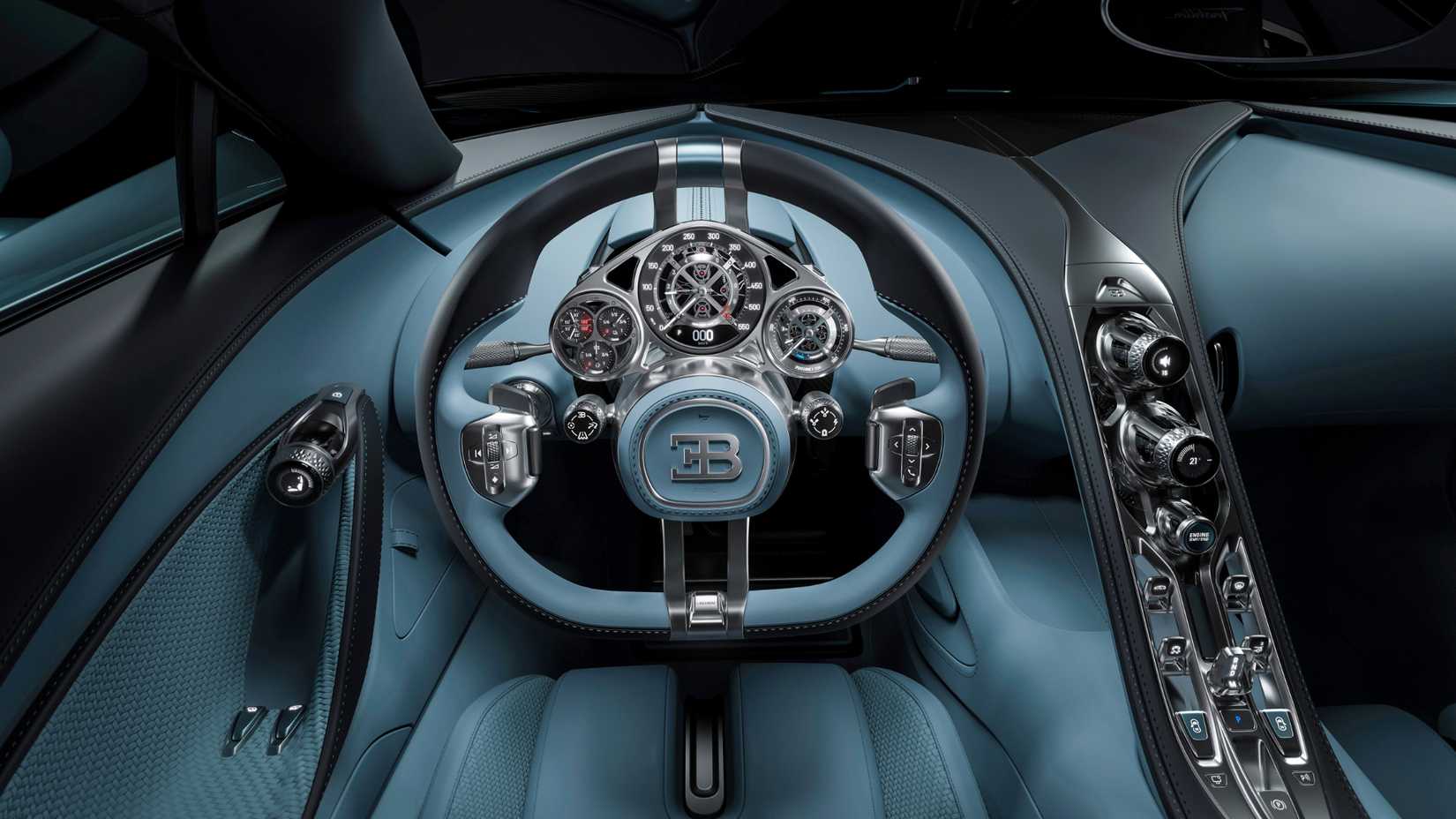
Bugatti Tourbillon interiorBugatti
The steering wheel is built in such a way that only the outer section rotates, while the central section remains fixed in place so the instruments are clearly visible at all times. Materials such as aluminum, titanium, and machined crystal glass are used to create the ultra-high-end feel of the Tourbillon’s cabin. The present day makes itself known in the infotainment screen, which retracts into the dashboard when it’s not being used.
The British Firm Behind The V16: Cosworth
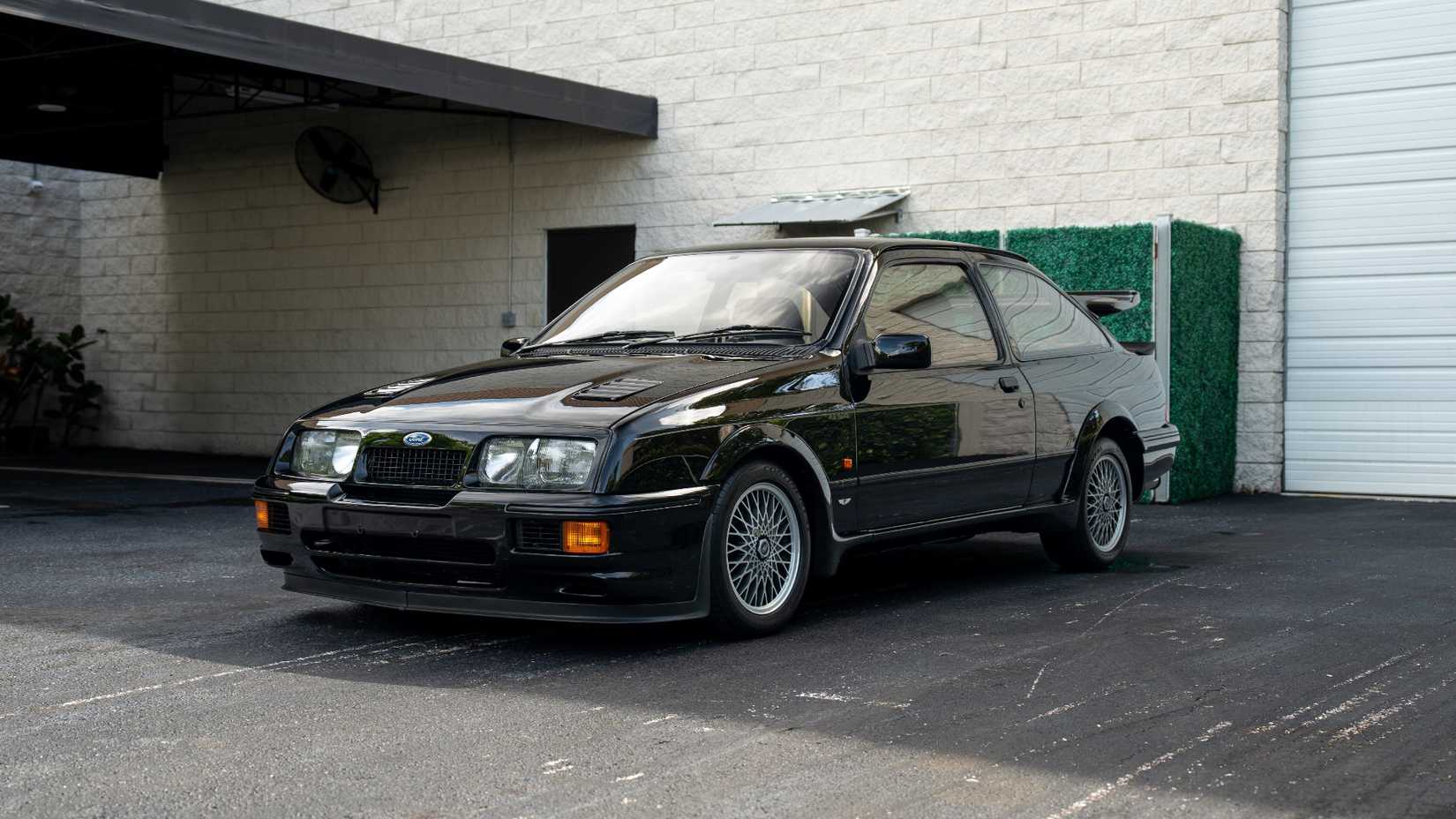
1978 Ford Sierra RS500 CosworthBonhams
The firm behind the Tourbillon’s incredible engine is one that will be familiar to most car enthusiasts. With a history spanning nearly seven decades, Cosworth is one of the most respected names in automotive engineering. The company has built countless successful engines, and its name is associated with motorsport accomplishments and world-famous road cars alike.
Cosworth was founded in 1958 by former Lotus employees Mike Costin and Keith Duckworth, who combined their surnames to create the company’s name. The company initially had a close association with Lotus, building engines exclusively for Lotus and its racing team. However, as the Cosworth operation grew, it eventually distanced itself from Lotus and struck out on its own.
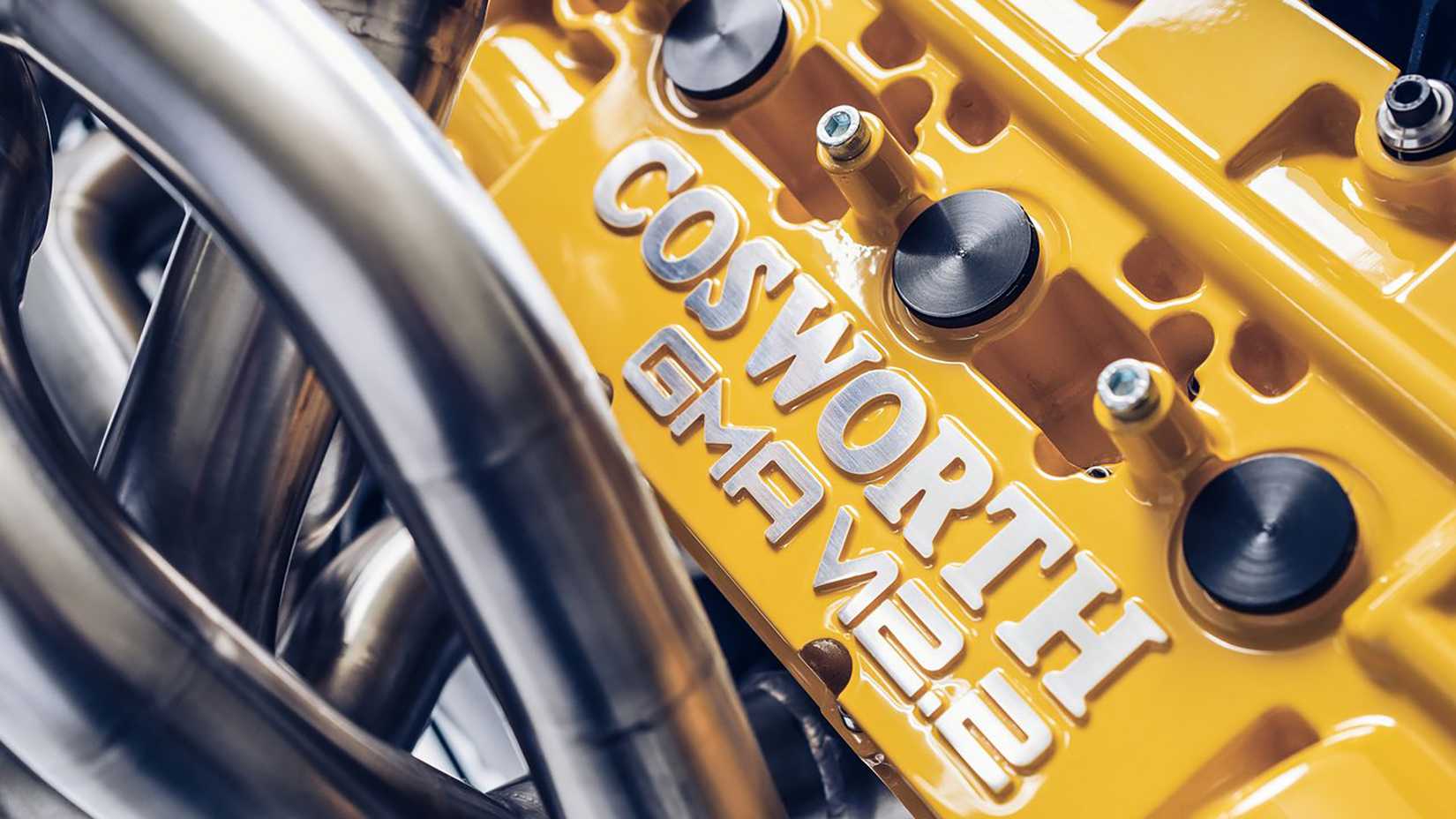
Gordon’s Murray latest T.33 is powered by a second-generation Cosworth GMA.2 V12 engine, revving past 10,000 rpm. It is coupled to a six-speed gearbox.Gordon Murray Automotive
Over the following decades, Cosworth became renowned for providing engines to Formula 1 teams. Its success reached a peak between 1968 and 1974. During this period, every Formula 1 Constructors’ Championship was won using a Cosworth engine. In the late ’70s and ’80s, Cosworth expanded into rallying and performance road cars, most notably with two homologation legends: the Ford Sierra RS Cosworth and the Escort RS Cosworth.
Today, Cosworth is still going strong, having expanded from engine supply into the world of engineering consultancy. The Tourbillon is one example of how the company has lent its expertise to build stunning mechanical creations.
The Rare V16 Engine: Sometimes Eight Cylinders Just Aren’t Enough

1931 Cadillac V16 Green Front Angled ViewRM Sotheby’s
The Tourbillon’s V16 may be a unique engine, but its unusual layout does have a few historical precedents. The V16 engine was first used in aircraft at the very beginning of the 20th century. It wasn’t until 1930, however, that it found a production application in the automotive world, with the Cadillac V-16. This model remained in production for a decade across two generations; however, the start of World War II eventually led to its discontinuation due to low sales.
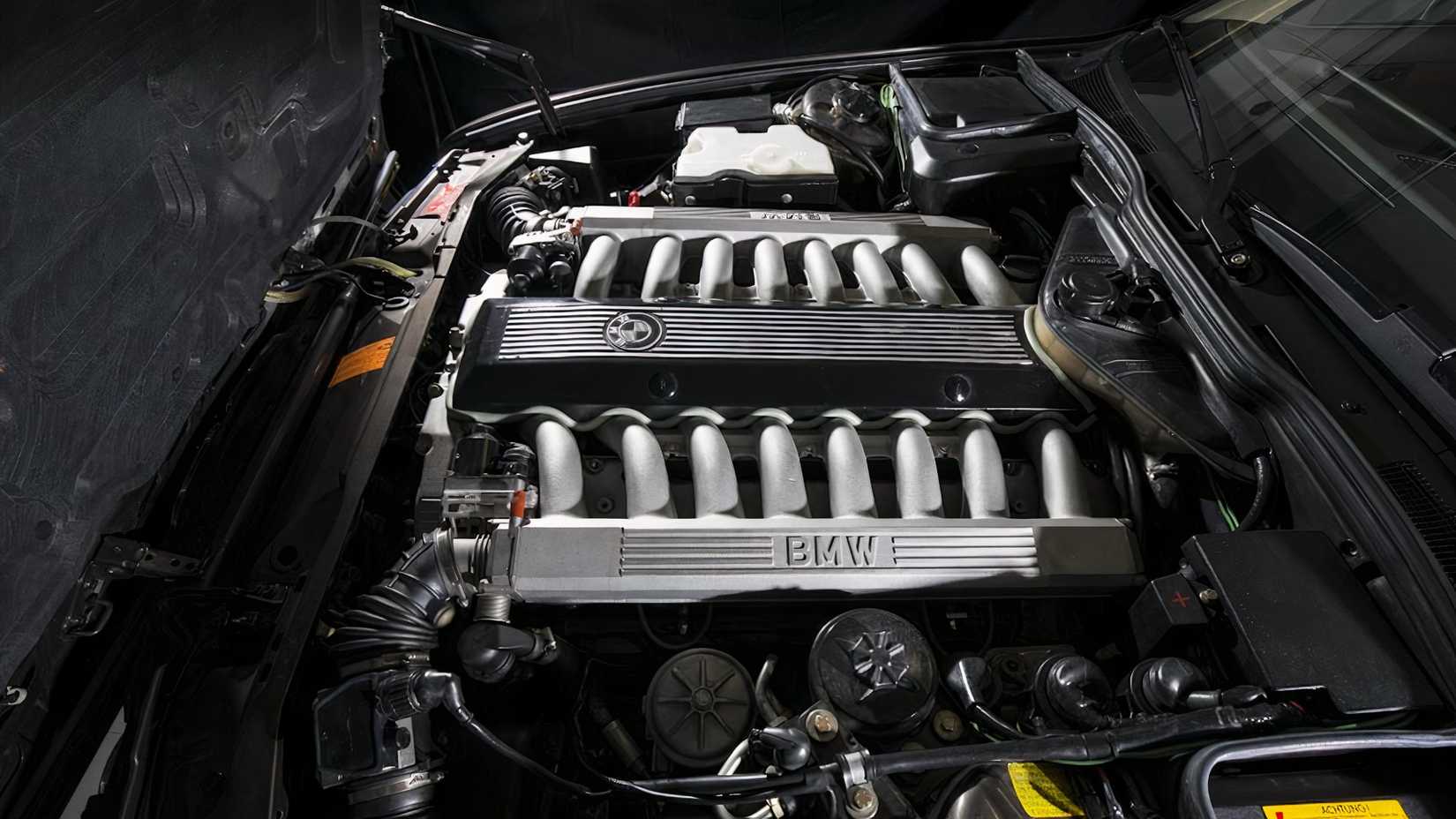
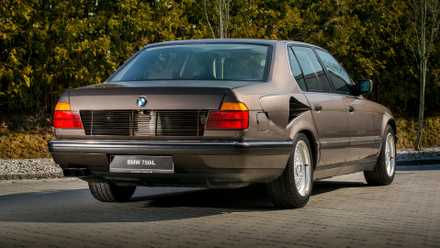
1988 BMW 7 Series E32 750iL Goldfisch 6.7L NA V16 EngineBMW Classic Collection
Another prominent example of a V16-powered car arrived over four decades later, in the mid-80s. This time it was a prototype, rather than a production model: the BMW “Goldfisch”, a prototype derived from the E32-generation 7 Series. The Goldfisch’s engine was a 6.7-liter V16 derived from a V12 engine (the M70), with two extra cylinders added to each bank. The Goldfisch was a striking concept car, painted in a gleaming metallic finish. However, the Goldfisch faced several complex engineering challenges. The engine, almost 12 inches longer than the M70, was so large that the cooling system had to be fitted into the trunk, making it impossible to transport any cargo. As a result, the prototype never resulted in a production model.
Related
BMW’s V16-Powered 7 Series Was A Practicality Nightmare
This Goldfisch never made it out of the bowl… and for a good reason.
In the UK, Rolls-Royce also experimented with several V16-powered prototypes. Four were built in the early 2000s as the brand considered installing a V16 in the Phantom VII. A few years later (in 2004 and 2006, respectively), the 100EX and 101EX concept cars were built to celebrate the 100th anniversary of the meeting that led to Rolls-Royce’s creation. 2011 brought about the creation of a one-off Phantom with a V16 engine for the movie Johnny English Reborn. Reportedly, dedicated car enthusiast Rowan Atkinson, who played the movie’s protagonist, personally asked Rolls-Royce to use the V16 engine.
Sources: Bugatti, Cosworth, BMW, Cadillac, Rolls-Royce