
On This Week: Irish moments from history (July 6th – 12th)
Welcome to On This Week, where we delve into the standout stories from the years gone by, featuring standout news stories, major sporting events, and pop culture highlights that helped shape Irish life. Here’s your dose of Irish history from July 6th- 12th.
This week in Irish life and news
1985: Travellers call for equal rights
On this week in 1985 Irish travellers called on the government to end discrimination and provide proper accommodation, health care and education for their community. Over 100 Travellers marched in protest at what they saw as their apartheid-style treatment in Dublin on 6 July 1985. The march was organised by Minceir Misli, Ireland’s first Travellers’ rights organisation.
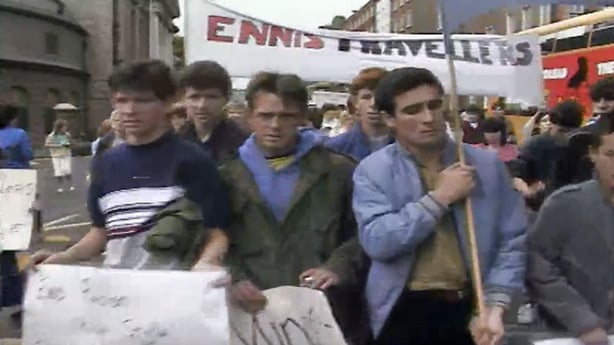
The march for Travellers’ rights marches through the streets of Dublin
Among those marching was Nan Joyce, who had been the first Traveller to stand for election to the Dáil in 1982. The purpose of the march was to highlight government inaction which they claim had led to desperate third world conditions among their people.
An RTÉ News reports broadcast on 6 July 1985. The reporter is Mary Fanning.
1985: Ryanair takes to the skies
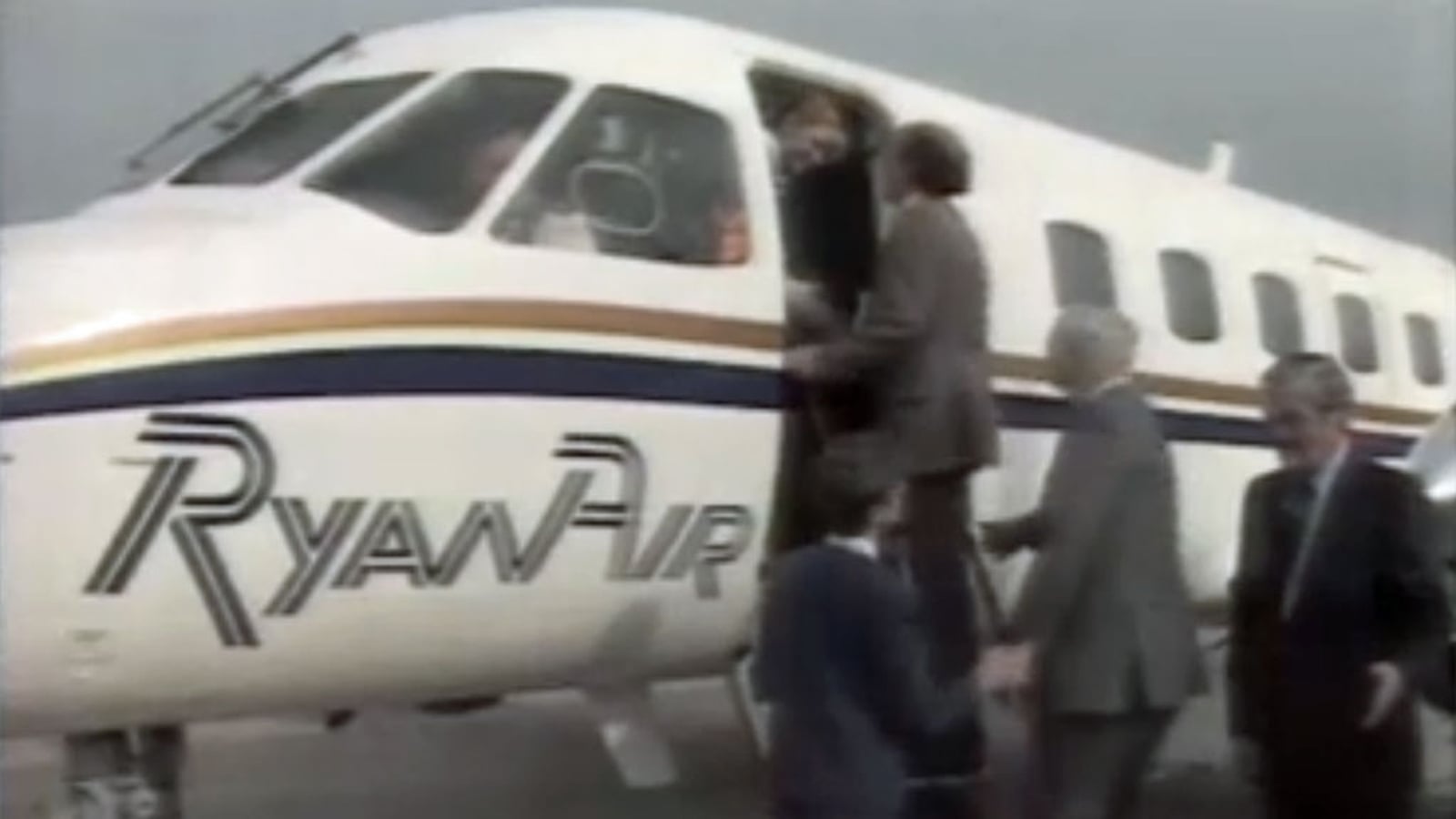
On this week 41 years ago, new airline Ryanair started its first scheduled service between Ireland and Britain. A daily service between Waterford and Gatwick Airport in London was the very first route launched by Ryanair, which would go on to transform air travel in Europe. On July 8 1985, a group of local businessmen boarded the 15-seater Embraer Bandeirante aircraft flying to London.
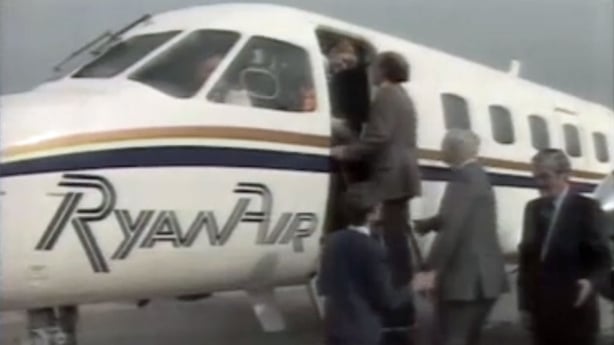
Passenders boarding the first Ryanair flight
The daily flights to Gatwick were the first international scheduled air service from Waterford, making it Ireland’s fourth international airport. It was hoped that the new route would make the southeast of Ireland more attractive to business and industry. The new service was initially aimed at businessmen, with an outward flight from Waterford at 8.30 am and a return one 12 hours later, so that they could have a full day in London without having to overnight. Ryanair flights from Dublin airport to Luton followed in May 1986.
An RTÉ News report broadcast on 8 July 1985. The reporter is Michael Ryan.
1999: Telecom Éireann goes public
In 1999 Telecom Éireann was sold off by the Irish state and the people of Ireland were given the opportunity to share the profits by investing on the stock market. With the promise of great reward from investment, the punters queued up to buy the shares.
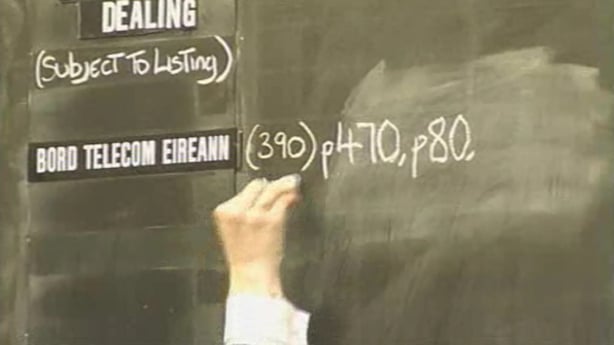
Telecom Éireann went public 27 years ago
Shares initially performed strongly on the international stock exchange. However, things would not go as hoped when share prices began to fall and most investors lost the bulk of their investment.
In this RTÉ News report broadcast on 8 July 1999, Richard Curran reported on the first day of trading and talked to Minister for Finance Charlie McCreevy and Yvonne Ruane of BCP Stockbrokers.
This week in arts and entertainment
1962: The Late Late Show begins
The Late Late Show was intended to be a summer “filler” but proved so successful with the public that it became part of the regular schedule. The idea for the programme came from the show’s producer, Tom McGrath, who wanted to present an Irish version of the American talk show ‘The Tonight Show’. Gay Byrne was to be the show’s presenter and would remain so for the next 37 years.
Tom McGrath’s original idea was that the show would be informal and have the feel of people dropping in for a chat. The Late Late Show became an important forum for the airing and debating of many issues in a changing Irish society.
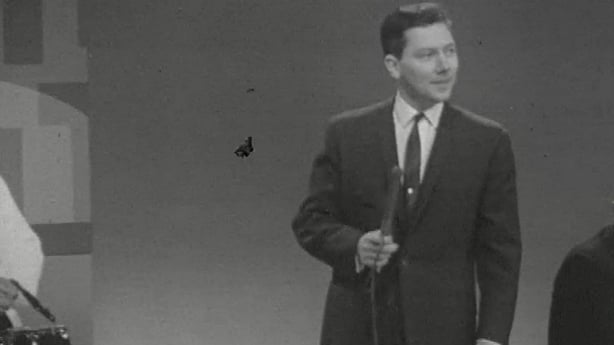
Gay Byrne on the Late Late Show in 1965
The first programme of The Late Late Show was broadcast at 11.20 pm, 6 July 1962. At the time, it was unusual to have a live talk and entertainment show on so late in the day’s viewing. On that first show, the guests were Count Cyril McCormack, Ken Gray, George Desmond Hodnett and Harry Thuillier. McGrath would go on to pioneer many other successful variety shows on Irish television.
Pat Kenny replaced Gay Byrne as presenter in 1999 and remained in that position for 10 years. In 2009 Ryan Tubridy became host of the show and remained in the presenter’s chair until 2023. The Late Late Show is still running today and the latest presenter is Patrick Kielty.
There is no surviving footage of the very first show, but the extract shown here is from a Late Late Show episode from 1965.
1986: Queen rock Slane Castle
On this week in 1986, an estimated 80,000 fans paid £15 to see legendary rockers Queen play at Slane Castle, County Meath. Gardaí reported that there was some trouble when part of a wooden barrier at the side of the stage was torn down and security men turned water hoses on a small group of people who were attempting to get backstage. Around seventy people were arrested for minor offences. A total of six hundred security guards and a thousand Gardaí were on duty at the concert to quell the trouble.
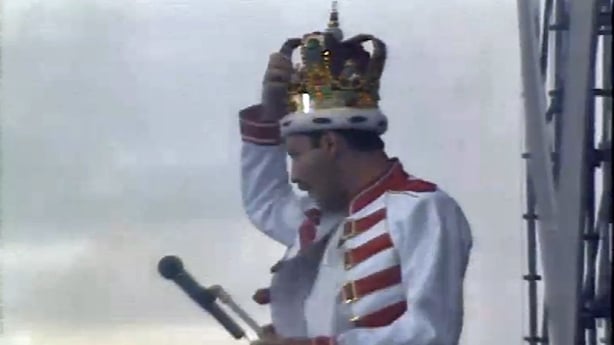
Freddie Mercury appeared on stage in a crown
The fans were in Slane to enjoy six hours of music. Other bands performing on the day included The Hits, Chris Rea, The Fountainhead, and The Bangles.
This RTÉ News report shows Queen arriving at the venue before taking the stage where lead singer Freddie Mercury appeared out of a puff of smoke wearing a crown. The opening number was ‘One Vision’. Despite this many music critics were unimpressed with Queen’s performance describing it as boring.
An RTÉ News report broadcast on 7 July 1986. The reporter is Joe O’Brien.
This week in sports
1972: Mumhammed Ali arrives in Dublin
On this week in 1972, Muhammad Ali lands in Dublin ahead of his fight against Al ‘Blue’ Lewis which would take place at Croke Park on 19 July. After disembarking from his Aer Lingus flight at Dublin Airport Muhammad Ali is greeted by fans and reporters.
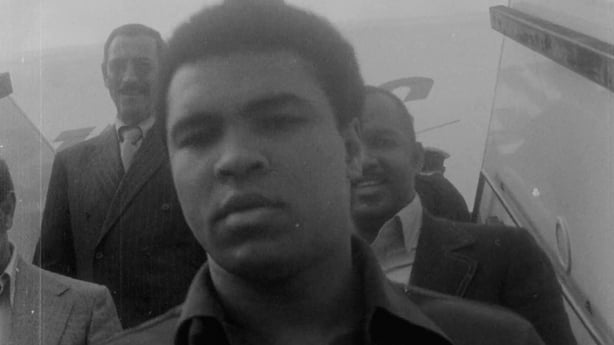
Muhammad Ali arriving in Dublin
In the week leading up to the fight, Muhammad Ali trained at the handball court in Croke Park. He also took time out to speak to RTÉ’s Cathal O’Shannon about boxing and his life outside the ring. Muhammad Ali went on to beat Al Blue Lewis with an 11th round technical knockout. The Croke Park fight later became the subject of the documentary film When Ali Came to Ireland.
An RTÉ News report broadcast on 11 July 1972. The footage shown here is mute.
1990: Paul McGrath is the hero of Italia 90
Ireland’s World Cup dream may have been over on this week in 1990, but RTÉ viewers picked Paul McGrath as their favourite Republic of Ireland player of the World Cup. McGrath was presented with a Tipperary Crystal trophy by Paul O’Shaughnessy, marketing director of Bord Gáis, in RTÉ’s World Cup studio. Fred Cogley of RTÉ Sport talked about why he thinks television viewers choose Paul McGrath as their Irish player of the tournament.
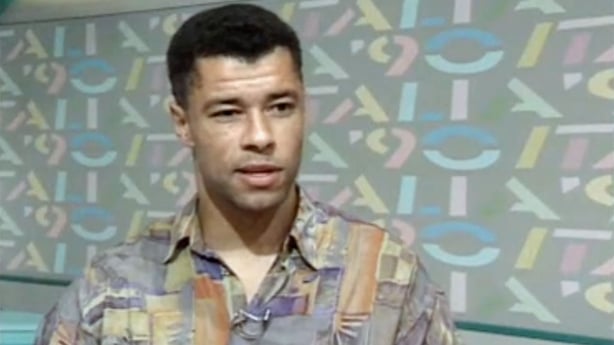
Paul McGrath was the viewers’ favourite
Accepting the award, Paul McGrath paid tribute to all the other members of the Republic of Ireland soccer squad..
We went out there to enjoy ourselves obviously, and we did that. But I think getting into the quarter finals and playing against Italy in Rome was something special.
An RTÉ News report broadcast on 8 July 1990. The reporter is John Murray.
What was Number 1 in Ireland this week?
1977: ‘Back Home’ by Dickie Rock
The showband legend was going strong in the seventies and was number one for four weeks in summer 1977.
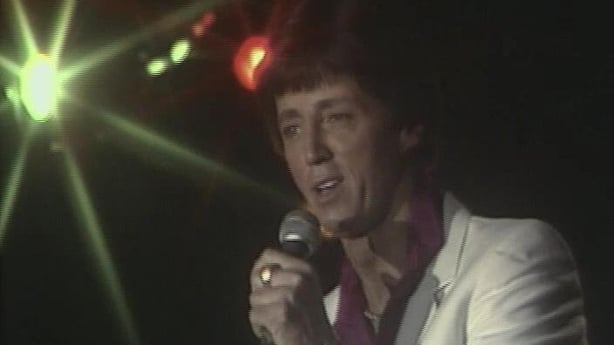
Dickie Rock belting out a song
1992: ‘Abba-esque EP’ by Erasure
The synth-pop duo’s only number one was this collection of ABBA covers. It was at the top of the Irish charts for five weeks in 1992.
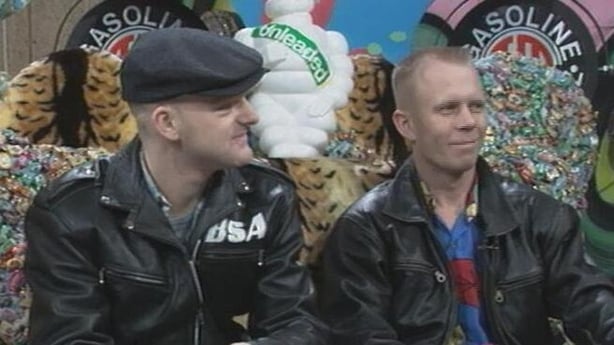
Andy Bell and Vince Clarke of Erasure
2003: ‘Crazy in Love by Beyoncé featuring Jay-Z
One of the most iconic songs of the noughties was number one for four weeks 23 years ago.
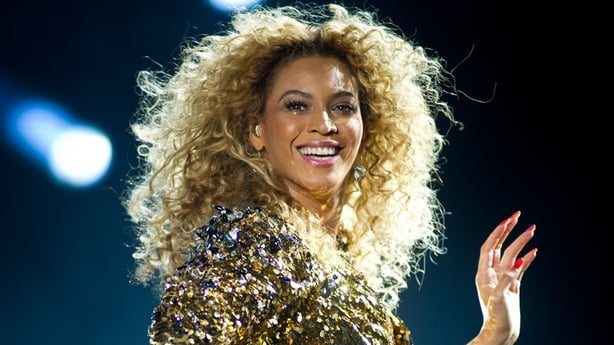
Queen Bey was a chart-topper in 2003
Famous Irish names celebrating birthdays this week
Eve Hewson
The Dublin actor turns 35 on July 7th.
Robbie Keane
The former captain of the Republic of Ireland football team celebrates his 46th birthday on July 8th.
Fiona Shaw
The Cork-born actor turns 68 on July 10th.